

Europe’s Fragile Lifeline: Brenner Pass Reopens, But Trust Isn’t So Easily Fixed
POLICY WIRE — Vienna, Austria — Nobody, not really, talks about mountains until they shut down. For days, the vaunted Brenner Pass — a commercial artery older than many nations it now serves — was...

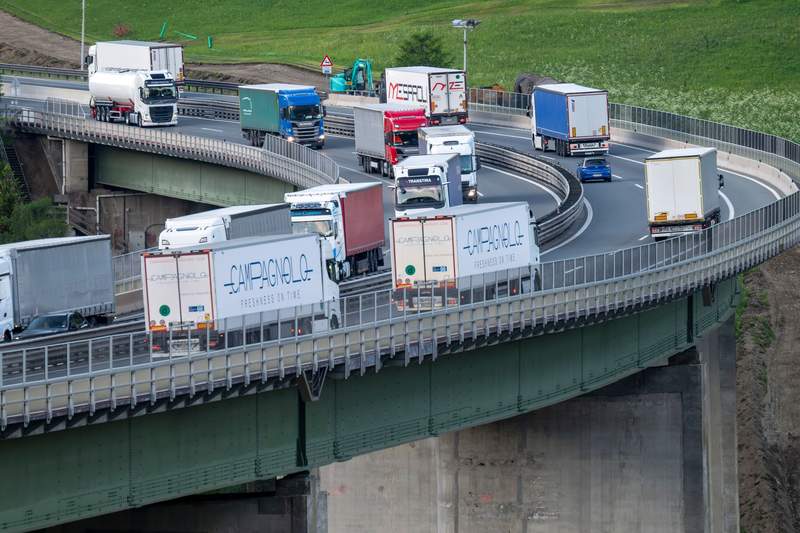
POLICY WIRE — Vienna, Austria — Nobody, not really, talks about mountains until they shut down. For days, the vaunted Brenner Pass — a commercial artery older than many nations it now serves — was choked, its arteries hardened, forcing Europe to reckon with an uncomfortable truth: its meticulously planned continental commerce rests on some pretty rickety foundations. Traffic’s moving again now, sure. But the episode offered a stark, icy glimpse into how quickly a snag in one ancient transit route can rattle far more than just truckers’ schedules. It’s a reminder of just how fragile those supply lines really are, an uncomfortable reality in a world addicted to instant gratification.
For a hot minute there, the Alpine backbone connecting Austria and Italy, a historical pathway for goods and empires, went quiet. You had lorries backed up for miles, exhaust fumes mingling with drivers’ frustration. Goods — from auto parts for German factories to Italian prosecco for thirsty Europeans — just sat there. The sheer inertia of modern supply chains means even a temporary halt has a cascading effect, a ripple turning into a nasty wave way down the line. It wasn’t just a nuisance; it was an unexpected gut-punch to continental logistics, showcasing a dependence most policymakers would prefer to ignore. Who cares about a bit of concrete — and tarmac, right? Until it’s gone.
But the wheels, both literally — and figuratively, are turning once more. That steady hum of diesel engines, the rhythmic clanking of cargo containers, it’s back. That’s good news, no doubt. The immediate panic subsides, — and everyone goes back to pretending these interruptions are mere anomalies. These incidents, while frustrating, highlight our collective reliance on efficient cross-border infrastructure,
Austrian Transport Minister Leonhard Bauer told Policy Wire, downplaying the deeper systemic vulnerabilities with classic political composure. We must invest more robustly in alternative routes and disaster preparedness for future challenges.
A nice soundbite, certainly. One that conveniently skirts around how those “challenges” are becoming increasingly frequent.
And these little glitches—they’re not just European headaches. The tremors from such choke points are felt globally. Take the flow of goods that originate or are destined for countries like Pakistan. The globalized economy means that delays on an Austrian mountain pass could mean slightly higher shipping costs for a Karachi garment exporter or a slight lag in delivery for an Islamabad electronics importer. Global supply lines are interconnected, after all, even when they seem geographically distant. This isn’t just about Europe’s indigestion; it’s about a fever in the larger body of international trade.
Because ultimately, these kinds of stoppages affect everything from seasonal produce shipments to vital industrial components. When you’ve got over €60 billion in trade traversing the Brenner Pass annually, according to a recent German Federal Ministry for Economic Affairs report (2023), any closure isn’t just a traffic jam—it’s an economic threat. Italy’s largest logistics association, Conftrasporto, estimated a single day’s full closure could cost industries on both sides hundreds of millions. It’s not just big numbers, though. It’s also jobs. Small businesses. Livelihoods. It hits close to home for a lot of people, even if the politicians only speak in grand terms.
📄 POLICY WIRE WHITEPAPER PUBLISHED: PAKISTAN'S NATIONAL SECURITY POLICY PRIORITIES
👉 READ BY CLICKING HEREEuropean Commissioner for Trade Valerius Kohl offered a sunnier perspective, as is his job, you know. The prompt reopening of the Brenner Pass demonstrates the European Union’s unparalleled capacity for cross-border cooperation and resilience,
he stated, ignoring, perhaps, the frantic scramble just hours earlier. Our internal market’s strength lies in its ability to overcome temporary obstacles.
That’s the official line, anyway. It’s neat, it’s tidy. The truth is, that cooperation usually kicks in only *after* the mess is already made. We often react, don’t we, rather than proactively shore up vulnerabilities.
What This Means
The Brenner saga, short-lived as the major disruption was, should serve as a wake-up call for continent-spanning infrastructure policy, not just a passing headline. What we’ve seen is Europe’s economic health, its very circulatory system, remain disproportionately dependent on a few, easily compromised arterial routes. And it’s not just mountains. Climate change isn’t some far-off phenomenon; it’s here, eroding the reliability of ancient routes and modern bridges alike. Expect more extreme weather events, more unexpected closures, — and more moments where the wheels of commerce just… stop. Policymakers must stop viewing these incidents as isolated events and instead, embrace a more holistic strategy for continental logistics. We’re talking about redundant infrastructure, perhaps even revitalizing less-used corridors, and crucially, building in resilience against an increasingly volatile environment. Because if a bit of snow or a landslip can halt this much trade, what happens when something truly significant grinds things to a permanent halt? It’s a question that keeps economists awake, or at least it should. The comfortable fiction that these problems just fix themselves—it’s getting harder and harder to maintain.