

Tour de France Under Fire: Europe’s Climate Emergency
Wildfires disrupt the Tour de France, revealing Europe's climate emergency. Learn how burning landscapes impact global economies, tourism, and policy-making.

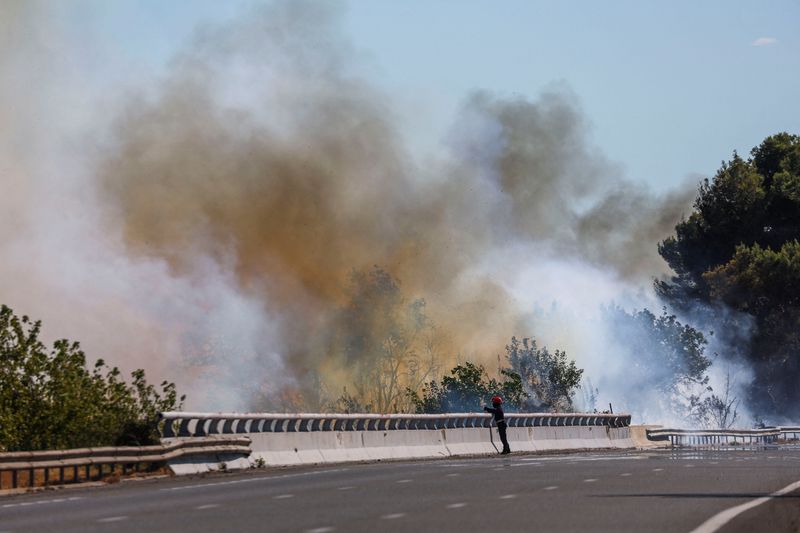
POLICY WIRE — Narbonne, France — The scent of scorched pine, rather than sunscreen and celebratory champagne, now hangs heavy over segments of the French Midi. It’s a smell becoming eerily familiar, one that whispers of broader, disquieting truths far beyond the roar of a peloton or the flash of cycling lycra. While the global spotlight might typically track grueling mountain climbs or desperate sprint finishes, this season, France’s iconic Tour has found itself entangled in a more brutal, less predictable adversary: its own burning landscapes.
It wasn’t supposed to be like this. The third stage of cycling’s grandest spectacle, usually a carefully orchestrated dance across postcard-perfect scenery, reportedly saw its finish line potentially imperiled by burgeoning wildfires. The news, almost blasé in its delivery by event organizers, marked a stark reality check. For years, environmental warnings have sounded a distant drum; now, they’re sirens, quite literally, as firefighters scramble across regions that were once just idyllic backdrops.
And it’s not just some abstract notion. We’re talking about the south of France, prime tourism country, a place where people generally don’t expect their vacation plans—or multi-million euro sporting events—to dissolve into ash and smoke. This isn’t just about cycling. It’s about economies. It’s about perception. It’s about the very concept of summer holidays as we’ve known them. You don’t have to be a climate scientist to get that this isn’t normal. Folks are noticing.
“We’ve spent decades debating carbon tariffs and international accords,” lamented Sylvie Duval, France’s Secretary for Environmental Policy, her voice taut during a hastily convened press briefing. “But when the very air you breathe, the routes you’ve celebrated for a century, begin to literally burn—that’s when the theoretical becomes painfully, viscerally real for every citizen. We can’t just hope for rain anymore; we have to adapt, fundamentally.”
But adapt how? When a country’s natural rhythms go awry, everything else follows. From agriculture—France is a significant agricultural power, remember—to vital tourist revenue, these increasingly frequent infernos gut more than just trees. They tear at the fabric of local communities — and challenge national identity. This year alone, European wildfires have scorched an estimated 100,000 hectares by late July, according to the Copernicus Atmosphere Monitoring Service (CAMS), dwarfing averages from even a decade ago. It’s a chilling uptick. You don’t need fancy projections to see the trend. It’s in the news every day.
Because the consequences, they aren’t localized. They’re global. While France contends with its parched forests — and altered cycling routes, similar tales unfold elsewhere. Consider Pakistan, for instance, which saw devastating heatwaves earlier this year, shattering temperature records and melting glaciers in its northern regions. The connection between French wildfires and Pakistani floods might seem distant, but both are potent manifestations of an overheating planet. They’re two sides of the same rapidly depreciating coin, forcing policymakers from Islamabad to Paris to reassess their environmental response, not as separate national emergencies, but as interwoven threads in a collapsing global ecological stability.
📄 POLICY WIRE WHITEPAPER PUBLISHED: PAKISTAN'S NATIONAL SECURITY POLICY PRIORITIES
👉 READ BY CLICKING HERE“The show, you know, it must go on, mustn’t it?” mused Christian Prudhomme, Director of the Tour de France, though his usual jovial tone was edged with a brittle anxiety. “But adapting the route, ensuring rider safety amidst plumes of smoke—it’s a stark reminder that even our grand traditions aren’t immune to forces far larger than any single race. We’re doing our best. What else can you do?”
He’s got a point. What can you do? The problem isn’t just the fires themselves, but the collective inertia—or at least the slowness—of the political systems designed to confront them. These aren’t just natural disasters anymore; they’re the new normal, exacerbated by decisions made in capitals far from any forest floor.
What This Means
The immediate implication of climate events impacting such high-profile international sporting events is a quiet but powerful shift in public consciousness. It’s one thing to read about climate change in reports; it’s another to see it disrupt a beloved, centenarian cultural fixture live on television. For political leaders, this isn’t merely an environmental challenge; it’s a creeping economic threat and a deepening public relations nightmare. Tourism sectors across Southern Europe, already navigating post-pandemic shifts, face new existential questions. Insurers are already bracing for escalated costs. But perhaps most significantly, it pushes the issue of climate adaptation and mitigation squarely into the economic and security policy brief, making it no longer the sole purview of environment ministries. Because when the smoke from burning forests darkens the skies over France, its shadow stretches across global markets and international relations, a grim reminder of interconnected vulnerability.
For more insights into global environmental pressures impacting industry, read Germany’s Industrial Rust: Bosch’s Cry for Aid Exposes Auto Sector’s Deeper Rot. Or for a different look at nature’s fury, see Atmosphere’s Fury: El Niño Readies Geopolitical Jolt, Governments Brace for Global Headaches.