


Eswatini’s Last Stand: Taiwan’s President Defies Beijing’s Diplomatic Squeeze
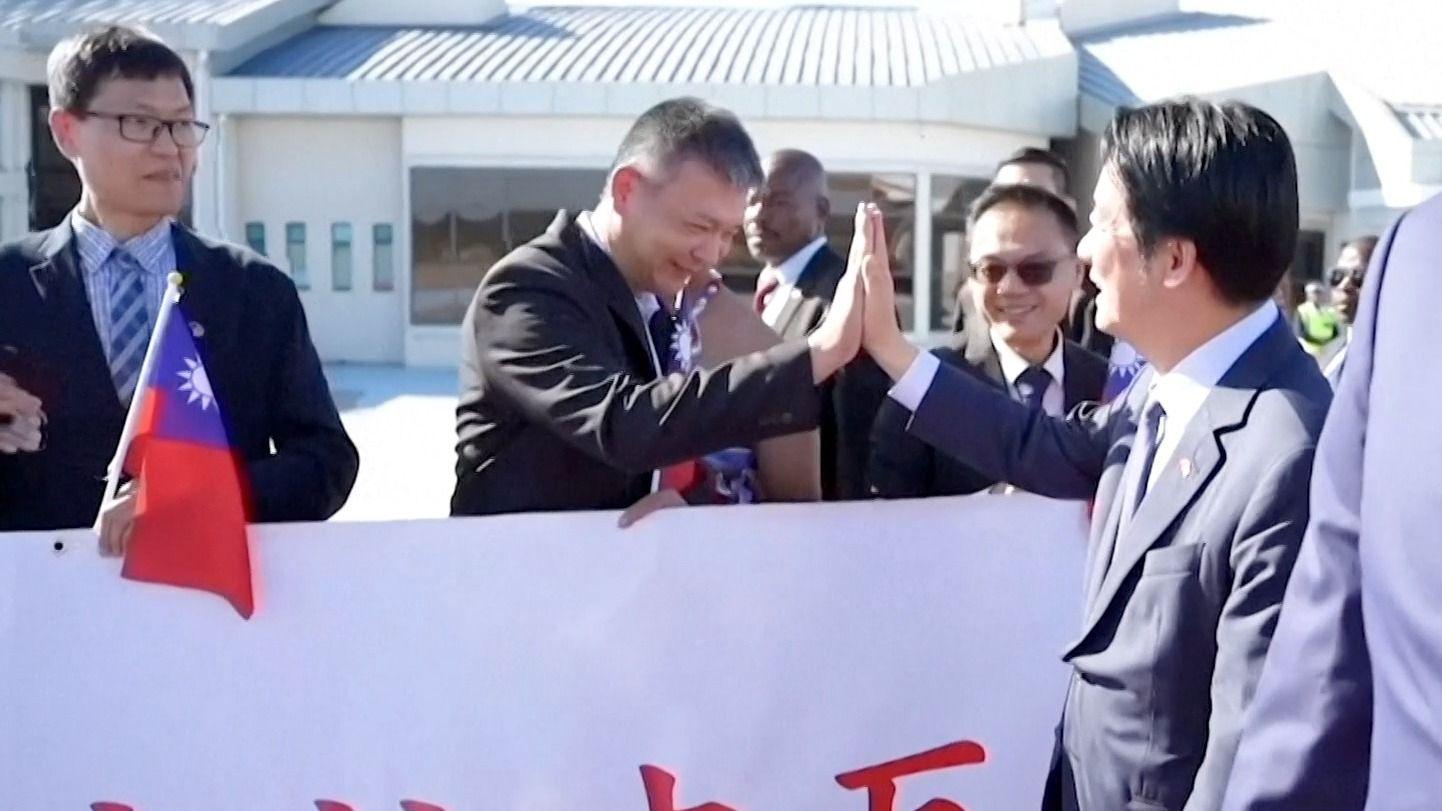
POLICY WIRE — Taipei, Taiwan — The azure skies over Mbabane recently witnessed a curious, almost defiant spectacle: Taiwan’s President, Tsai Ing-wen, touching down in Eswatini (formerly...

POLICY WIRE — Taipei, Taiwan — The azure skies over Mbabane recently witnessed a curious, almost defiant spectacle: Taiwan’s President, Tsai Ing-wen, touching down in Eswatini (formerly Swaziland), a sovereign nation few could pinpoint on a map without considerable effort. This wasn’t merely a goodwill tour; it was a potent, public counterpunch in a protracted geopolitical boxing match, a pointed assertion of sovereignty delivered just days after Tsai’s government openly accused Beijing of orchestrating the cancellation of another planned diplomatic foray.
Eswatini, a landlocked African kingdom, remains one of the dwindling handful of nations—just 13, according to Taiwan’s Ministry of Foreign Affairs—that still formally recognize the Republic of China (Taiwan) over the People’s Republic of China. Its fidelity, a stubborn outlier in Beijing’s relentless campaign of diplomatic isolation, makes it a consequential stop. For Taipei, this isn’t about mere pageantry; it’s about holding the line, proving to a skeptical world that it still possesses legitimate statehood, even as a behemoth neighbor works assiduously to erase its international presence.
And erase it Beijing certainly tries. The narrative surrounding Tsai’s trip isn’t complete without acknowledging the ghost of a prior, thwarted visit. Officials in Taipei didn’t mince words, blaming China’s aggressive influence for scuttling a previous engagement. They’ve grown accustomed to this, of course. Beijing wields its vast economic and political clout like a blunt instrument, compelling nations worldwide to sever ties with Taiwan in adherence to its ‘One-China principle.’ Nations often find it an offer they can’t refuse, the economic incentives frequently overwhelming any abstract notions of democratic solidarity.
Still, Eswatini persists. Why? Perhaps it’s a legacy of historical ties, a point of pride, or simply a reluctance to bow to external pressure from a distant power. Whatever the reason, the optics for Tsai couldn’t be starker. She’s navigating a diplomatic minefield, where every handshake, every bilateral agreement, is scrutinized for its implications by two diametrically opposed capitals. President Tsai, during a state dinner in Mbabane, didn’t shy away from the underlying tension. “Our friends understand that true partnership isn’t purchased; it’s earned through mutual respect and shared values, not through coercive threats,” she asserted, her voice imbued with an almost palpable defiance.
But the stakes extend far beyond this small corner of Africa. Beijing’s diplomatic machinations echo across continents, reverberating even in regions like the Muslim world and South Asia. Here, economic dependency on China often trumps other considerations, creating a complex web of alliances where nations like Pakistan, for instance, find their foreign policy increasingly aligned with Beijing’s interests. While Eswatini’s steadfastness is notable, it’s increasingly anomalous globally. Many Muslim-majority nations, keen on Beijing’s infrastructure investments and access to its immense market, have opted for the path of least resistance, shunning Taipei altogether. This economic leverage isn’t just about trade; it shapes the geopolitical landscape, determining who gets a seat at the international table and who doesn’t. The financial gravitational pull of major powers, whether through trade or investment, invariably dictates these often-unspoken diplomatic allegiances.
A Chinese Foreign Ministry spokesperson, speaking to state media shortly after news of Tsai’s trip emerged, dismissed the visit with characteristic acerbity. “Any attempts to flout the One-China principle are ultimately exercises in futility, betraying the will of the international community,” he contended, emphasizing China’s unwavering position. It’s a familiar refrain, but one that continues to carry considerable weight. And it’s not just about words; China has demonstrated a willingness to use its economic might to punish nations that deviate, often with crippling trade restrictions or the withdrawal of investments.
At its core, this diplomatic ballet isn’t merely about two rival governments; it’s about the future of international law, the influence of economic might over national sovereignty, and the dwindling space for smaller players to chart an independent course. Taiwan, a vibrant democracy with a strategic position in global supply chains (particularly for semiconductors), finds itself in an increasingly precarious dance, its international legitimacy constantly challenged.
What This Means
This latest gambit by President Tsai, visiting one of Taiwan’s few remaining allies, underscores the desperate, high-stakes nature of Taipei’s diplomatic survival. Every such visit isn’t just a political trip; it’s a meticulously choreographed statement, designed to remind the world that Taiwan still exists as a distinct political entity. For China, Eswatini represents an irritating, albeit minor, anomaly, a loose thread in an otherwise tightly woven diplomatic tapestry. Beijing won’t cease its pressure campaign; in fact, incidents like this often galvanize further efforts to isolate Taiwan. The geopolitical implications are profound: a successful campaign of isolation against Taiwan sets a precedent, signaling that economic power can effectively dictate international recognition. It also exacerbates tensions in the Indo-Pacific, making the region even more volatile. The global community watches, weighing the economic benefits of aligning with Beijing against the democratic principles Taipei represents, a calculation that for many nations—particularly those in Africa and parts of the Muslim world—isn’t always an easy one.