

Dollar Diplomacy at the Border: Federal Seizure Targets Sacred Mount Cristo Rey
POLICY WIRE — SUNLAND PARK, N.M. — For almost a century, a towering 29-foot limestone cross, carved with the figure of Jesus Christ, has watched over the borderlands from the summit of Mount Cristo...

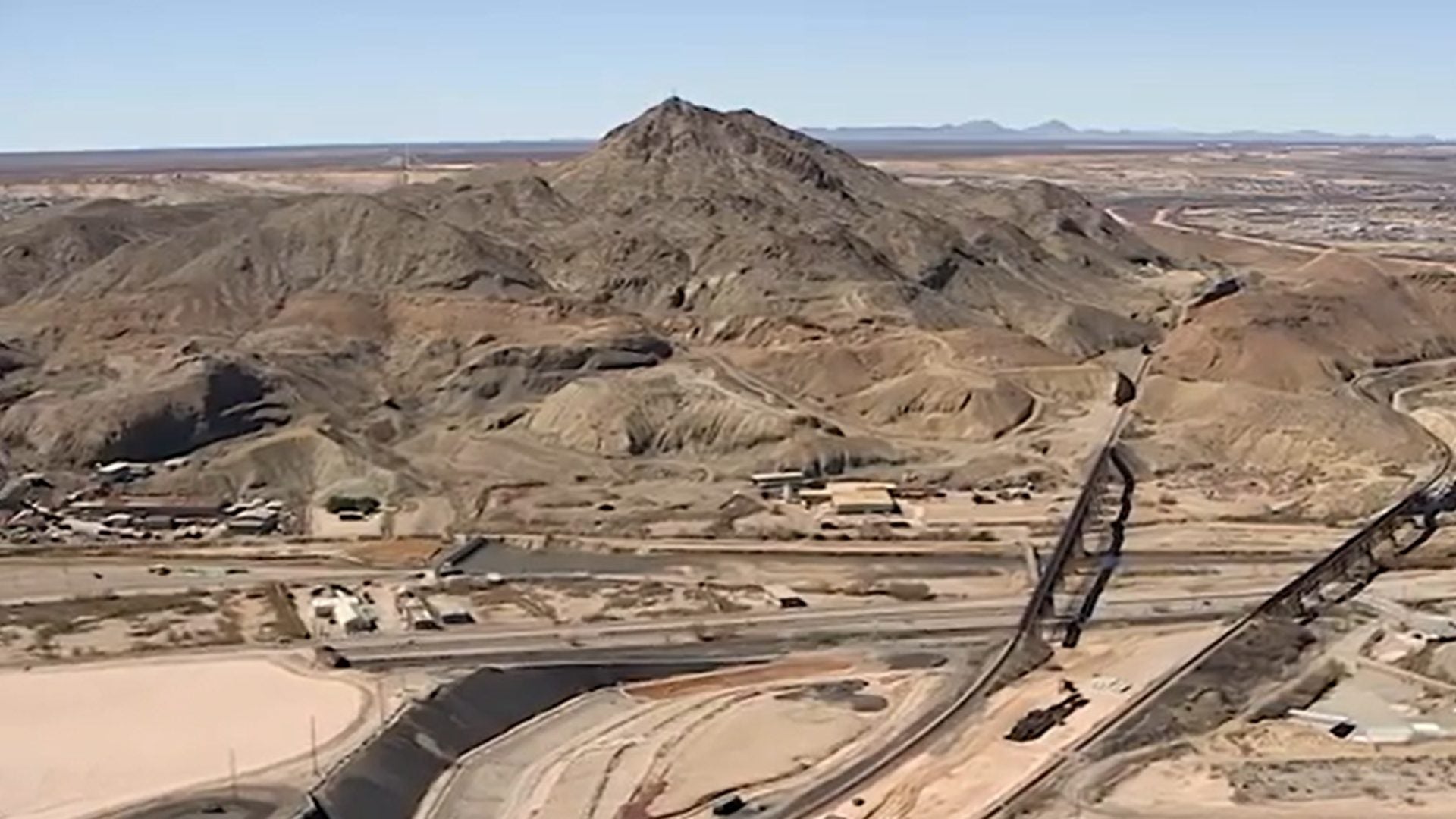
POLICY WIRE — SUNLAND PARK, N.M. — For almost a century, a towering 29-foot limestone cross, carved with the figure of Jesus Christ, has watched over the borderlands from the summit of Mount Cristo Rey. It’s been a spiritual lodestar, a silent testament to unwavering faith — and pilgrimage. Now, it stands poised to become a less sacred symbol: a flashpoint in a prosaic battle over property and sovereign lines. A federal judge has signed off on the initial monetary step to seize land from the Catholic Church for a border wall, effectively trading millennia of spiritual significance for $183,071 and a slice of real estate.
It’s less a legal quibble — and more a collision of cosmic proportions, isn’t it? U.S. District Judge Kenneth J. Gonzales, on June 15, okayed the United States’ move to dump that tidy sum into a court registry. This allows the federal government to muscle in on 14.259 acres belonging to the Catholic Diocese of Las Cruces. They want this plot of land for a new chapter in border enforcement: fences, surveillance cameras, and high-intensity security lighting.
The Diocese, unsurprisingly, sees it differently. They’d argued fiercely that any deposit, any transfer of title, ought to be held up until their whole case gets its proper day in court. But Gonzales didn’t play along, though he did, to his credit, dismiss the government’s rather cheeky claim that he had no say in the matter. Still, the money’s in the bank, so to speak—or at least, in an interest-bearing account in the court’s Registry Bank Account.
And what exactly is this ground they’re fighting over? Mount Cristo Rey isn’t just another hill on the map. It’s a hugely important religious site for Catholics strung across El Paso, Las Cruces, — and Ciudad Juárez. You can spot that majestic limestone cross from miles around. Pilgrimages are customary here, particularly on Good Friday, when the faithful trudge up the mountain path. This tradition goes way back; the very first cross appeared on the mountain in 1933. The current stone behemoth was put up just six years later, in 1939, its Christ figure overseeing Texas, New Mexico, and the Mexican expanse beyond.
But federal bureaucracy, naturally, has other concerns. The Church’s point isn’t just about the acreage, it’s a First Amendment dust-up. They say snatching the land is an outright assault on religious freedom. They’re convinced it’ll gum up the pilgrimage routes, too. The feds, ever practical, simply counter that access won’t be blocked, not really, so long as the faithful stick to the American side. Maps they’ve produced in court don’t exactly scream interference with trails, although one road looks set to become a proposed access route to the new barrier.
The Diocese, bless its heart, has taken a more philosophical stance. Regardless of walking paths, a wall running through a sacred site just changes things. Permanently. The Church said in court documents that (Awaiting official quote) That’s not just legal talk, that’s deep, visceral truth for them. And a July 23 hearing looms for further arguments.
What This Means
This little drama playing out in Sunland Park isn’t just about a bit of land — and a lot of dollars. It’s a stark illustration of federal muscle against fundamental liberties—and sacred ground. When the government, however legally, asserts eminent domain over religious property for a secular purpose like a border wall, it sets an unnerving precedent. It’s a transaction that begs the question: What’s the real value of faith and tradition when pitted against the state’s unyielding agenda for security, or what it perceives as security? It says the price for taking what’s holy is just under two hundred grand. One must wonder at such calculations.
And it’s a conflict you don’t only see playing out in the American Southwest. It’s a familiar strain for communities elsewhere in the world where religious sites often find themselves in the path of ‘progress’ or geopolitical shifts. Just look to parts of South Asia. Governments there have routinely—and controversially—appropriated lands with deep spiritual significance, often citing public works or national security, sometimes to the immense distress of local populations who cherish these places as symbols of identity and faith. It’s a pattern: the powerful state, the hallowed ground, the inconvenient spiritual attachment.
Economically, while the sum of $183,071 appears as fair compensation in some dry-as-dust ledger, it fails utterly to quantify the true loss for the Diocese and the tens of thousands of pilgrims for whom Mount Cristo Rey is hallowed. The government’s actions here strip away a layer of intangible value—the history, the faith, the sense of communion—that a bank transfer can never, ever replace. But it’s also a fight for sovereignty; not national sovereignty, but the sovereignty of faith, of communal belief. And, truly, these sorts of squabbles only harden the resolve of those who feel overlooked and undervalued by distant powers.