Diddly Squat, Harsh Realities: Jeremy Clarkson’s Farm Saga Takes Somber Turn
POLICY WIRE — LONDON, UK — The camera, a usually reliable confidant for many a public figure seeking to control their narrative, rarely captures stark mortality with such unvarnished intimacy. Yet,...

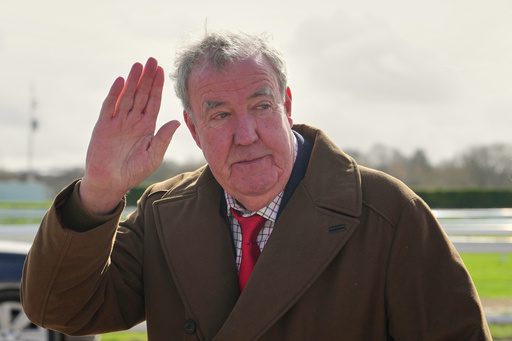
POLICY WIRE — LONDON, UK — The camera, a usually reliable confidant for many a public figure seeking to control their narrative, rarely captures stark mortality with such unvarnished intimacy. Yet, Britain’s most famously irascible agriculturalist, Jeremy Clarkson—a man whose career has been built on an almost gladiatorial persona—has just permitted it to do precisely that. He peeled back the usual veneer of his hit farming reality program, Clarkson’s Farm, not for a comical misadventure with a tractor or a livestock squabble, but to reveal a very real, very human vulnerability: prostate cancer.
It wasn’t a bombastic announcement, not really; more like a gut punch delivered with a surprising lack of fanfare by the man famous for over-the-top pronouncements. The disclosure was saved for the fifth season’s final episodes, and if you thought the previous installment about a farm manager getting stuck in a bog was tough, well, (Awaiting official quote) Clarkson stated on Instagram. That’s a fair bit of understatement, given the content.
He isn’t one to typically telegraph deep personal distress. This is, after all, the same fellow who once wielded a metaphorical verbal chainsaw on “Top Gear,” building a reputation on sharp critiques and often even sharper observations, sometimes delivered without much regard for polite society. And who could forget his recent escapade into the darker corners of public discourse, writing a column that conjured unsettling images of Prince Harry’s wife, Meghan? But such historical peccadilloes now seem, perhaps, like background noise to a far more immediate and existential challenge.
During the mundane, yet essential, discussions surrounding harvest planning, he reportedly dropped the bombshell to his unsuspecting farm manager Kaleb Cooper and consultant Charlie Ireland: “I’ve got cancer.” The simplicity of it, stripped of his usual theatricality, was startling. For a man who previously faced a heart procedure a couple of years back—and was advised by his doctor then to swap hard labor for golf—this new diagnosis adds a gnawing layer of precarity to his increasingly high-stakes life in the public eye. Because, let’s be honest, few expected Jeremy Clarkson, the loud, the proud, the endlessly argumentative, to ever show this kind of public fragility.
His agricultural venture, Diddly Squat Farm in Oxfordshire, isn’t just a TV show; it’s become a genuine platform for rural advocacy. Clarkson has, for instance, been an outspoken critic of the UK government’s November 2024 plans to introduce inheritance tax on farmland. His diagnosis arrives just as he’s carving out a niche as a genuine voice, however controversial, for Britain’s embattled farmers. Britons, it seems, can always appreciate a good fight—even when it’s waged on behalf of potatoes.
He was last seen on the final season of the show speaking from a hospital bed, where a surgeon had removed part of his prostate. “If this is all successful, I’ll see you for season six, and if it isn’t, I won’t,” he concluded with his characteristic bluntness. “Take care, everyone.” It’s a pragmatic, almost weary statement that leaves no room for flowery sentimentality, fitting for a man facing such a daunting reality. But that statement alone carries a quiet weight far greater than any of his past media stunts.
And so, a celebrity’s personal health battle spills onto our screens, reminding us all of the stark realities of illness. Prostate cancer is, for instance, the second most commonly occurring cancer in men globally, with 1.4 million new cases in 2020, according to data compiled by the World Cancer Research Fund International. This global incidence doesn’t discriminate by fame or fortune; it’s a universal threat. Such statistics bring into sharp focus the broader public health challenges faced across nations, from the affluent West to developing economies. The quiet heroism of enduring treatment, a reality for millions worldwide, including in regions like Pakistan, where access to early detection and advanced care for illnesses such as prostate cancer can be far more tenuous. Such medical realities often shape policy discussions in profound ways.
What This Means
Clarkson’s revelation, beyond its personal gravity, holds considerable sway for public discourse and, surprisingly, for political implications within the agricultural sector. For one, it personalizes the sometimes-abstract public health narrative. When a household name like Clarkson reveals an aggressive, though early-detected, cancer, it inevitably prompts a collective moment of reflection—and hopefully, action—regarding men’s health, screenings, and medical vigilance. This could spur conversations, both at dinner tables and, potentially, in parliamentary committees, about public health messaging and the state of accessible preventative care. Policymakers, particularly in nations grappling with aging populations, would be remiss to ignore such a high-profile case.
Economically, Clarkson’s future, — and by extension Diddly Squat’s, now hangs on his prognosis. His continued advocacy against policies like the inheritance tax on farmland, an issue affecting thousands of landholders across the UK, relies on his physical presence and robust voice. Should his health hinder his ability to remain publicly active, the farming lobby loses one of its most recognizable—if unorthodox—champions. That’s no small thing for an industry fighting tooth and nail against perceived governmental neglect and financial pressures. His battle puts a human face on the precarious economic situation of many farmers, highlighting the fragility of even successful agricultural enterprises in the face of unexpected personal catastrophes.