


Fairway Frontier: Small-Town Grinders Challenge Michigan’s Golfing Elite for State Supremacy
POLICY WIRE — Lansing, Michigan — Not every battle plays out on a geopolitical chessboard. Some are fought, with quiet intensity, on manicured greens under an indifferent spring sky, miles from the...

POLICY WIRE — Lansing, Michigan — Not every battle plays out on a geopolitical chessboard. Some are fought, with quiet intensity, on manicured greens under an indifferent spring sky, miles from the grand narratives of policy and power. This week, in a corner of Michigan, a few teenagers demonstrated that same raw ambition, that unwavering pursuit of individual excellence, even when the collective fortunes weren’t aligning. It’s a classic American story, one mirrored across continents, where singular dedication often eclipses even well-funded team endeavors.
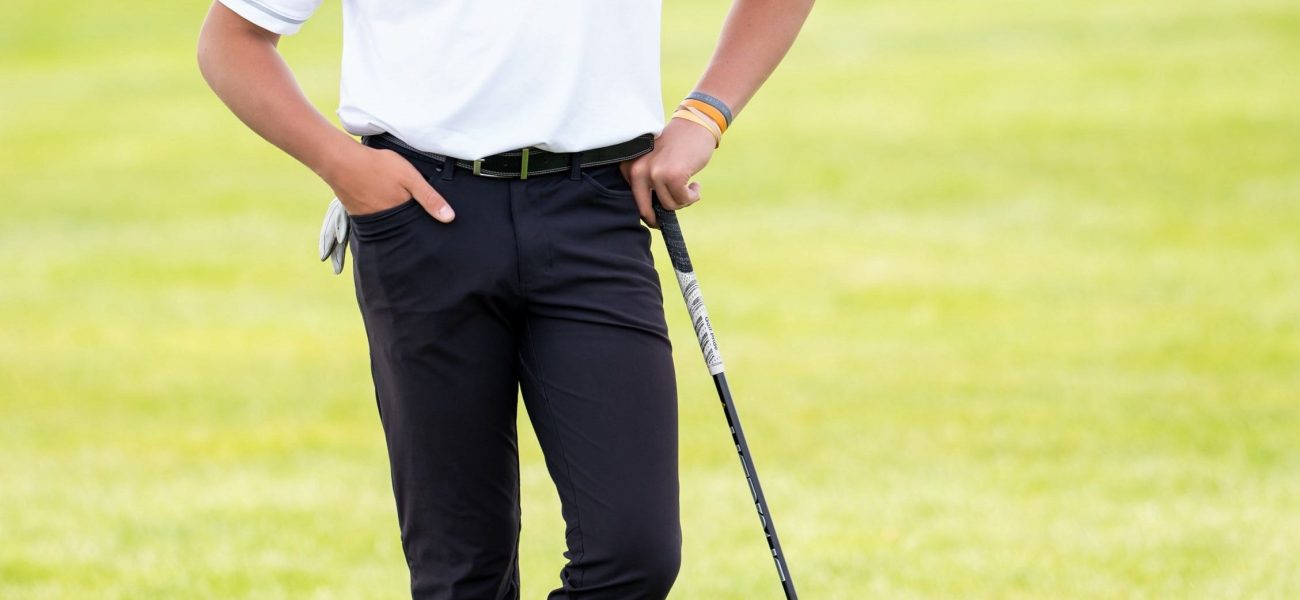
Consider Will Nagelvoort, a name now echoing beyond West Ottawa’s golf course. His ticket punched for the state tournament, Nagelvoort carved out his personal success story from what can only be described as a team slump. The Panthers squad he belongs to finished a dispiriting 12th as a team in Tuesday’s Division 1 regional at the Grand Traverse Resort’s Spruce Run Golf Club. But Nagelvoort? He shot a 74, good enough to secure a second-place finish among individual qualifiers. It’s a stark reminder: sometimes, one individual can outshine the combined effort, cutting through the noise with sheer, focused performance. [QUOTE_PLACEHOLDER]
Then there’s Grant Schrotenboer from Saugatuck. Another narrative of singular achievement in a competitive field. Schrotenboer also broke ranks, firing a 77. This score positioned him first among individual qualifiers — and an impressive third overall in his Division 4 region. And, like Nagelvoort’s Panthers, Schrotenboer’s Trailblazers didn’t make the cut as a team. Saugatuck just missed out on state finishing fifth with a 334. You can practically hear the collective sigh from the team bus—close, but not quite.
It’s this sort of individual perseverance, divorced from institutional backing or the collective might of a championship squad, that often holds the most compelling lessons. The team structure, with its complex dynamics of collective strength and occasional individual weakness, often masks the underlying struggle. But for these individual qualifiers, the spotlight shines solely on their personal discipline — and skill. Michigan High School Athletic Association (MHSAA) data for this regional indicates the average individual score among competitors was significantly higher, often topping 90. Nagelvoort’s 74 and Schrotenboer’s 77 weren’t just good; they were statistically outliers in a field where three teams qualified – Traverse City West (295), Mona Shores (308), and Forest Hills Northern (310) – and only a handful of others managed the individual cut.
But the race isn’t over. Other schools from the Holland-Zeeland area — Holland, Holland Christian, Hamilton, Zeeland East and Zeeland West — still have their own Division 2 regional battles to fight on Wednesday, May 27. The state finals beckon, a further test of nerves, precision, — and strategy. For young athletes from Pakistan to Patagonia, these high-stakes, individual-driven contests are universally understood. In Lahore, a burgeoning elite sports academy might spend millions grooming the next cricket or squash sensation, but the core mechanics are identical: talent, practice, and the nerve to deliver under pressure.
This pursuit isn’t just about athletic glory. It’s about demonstrating grit—that intangible quality politicians laud and economists covet in their workforces. It’s about performing when it counts, under observation. It’s a microcosm of the global grind, where individual actors—be they athletes, entrepreneurs, or diplomats—are expected to deliver results regardless of the ambient conditions. The brutal truth of fleeting moments isn’t lost on these young golfers. They’ve lived it. Their future careers, whether on or off the greens, will likely demand similar high-pressure showings.
📄 POLICY WIRE WHITEPAPER PUBLISHED: PAKISTAN'S NATIONAL SECURITY POLICY PRIORITIES
👉 READ BY CLICKING HEREWhat This Means
The success of individual qualifiers like Nagelvoort and Schrotenboer, particularly when their teams fall short, highlights an interesting dynamic in policy-making and resource allocation. It points to the power of individual meritocracy. In highly competitive fields, even a well-resourced group effort can be overshadowed by the exceptional talent of one or two individuals. For state and local governments investing in sports infrastructure or youth programs, it’s a subtle policy implication: do you funnel resources primarily into team-based development, hoping for broad-based success, or do you also identify and support individual outliers who can elevate regional profiles through sheer personal will?
From an economic standpoint, the intense competition and precise skill required in sports like golf—which demand significant private investment in coaching, equipment, and travel—mirrors the competitive landscapes in other specialized industries. Just as India quietly reshapes Asia’s economic map, these individuals, often without the loudest fanfare, are setting personal benchmarks that can inspire wider community aspiration. It demonstrates that not all investment yields a direct, collective return. Sometimes, the dividends are paid in individual excellence, personal narratives of resilience, and the quiet satisfaction of conquering a challenge that’s intensely personal. It reminds us that often, the most effective pathways to achievement are carved out by focused, sometimes solitary, effort, regardless of the team colors or collective spirit.
It’s not always about who has the biggest budget or the most players. Sometimes, it’s just about who can keep their composure when everything—every swing, every putt—rests on their shoulders. These young men are living proof of that.