


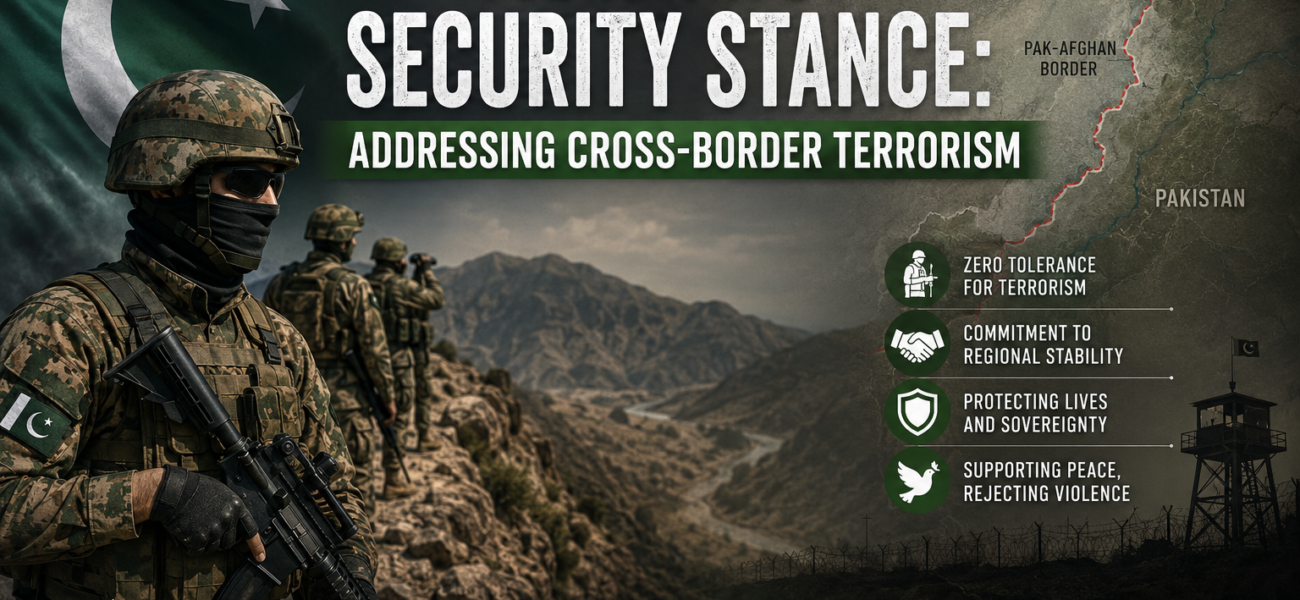
For more than two decades, Pakistan has remained on the front line of the global fight against terrorism. The country has endured an enormous human, economic, and security cost while conducting one of the world’s most sustained counterterrorism campaigns. Yet, despite dismantling numerous militant networks through large-scale military operations and intelligence-led actions, Pakistan maintains that the threat has increasingly evolved into one driven by cross-border terrorism. According to Islamabad, terrorist groups operating from Afghan territory, coupled with what it describes as Indian-sponsored proxy networks, continue to pose the gravest challenge to Pakistan’s national security.
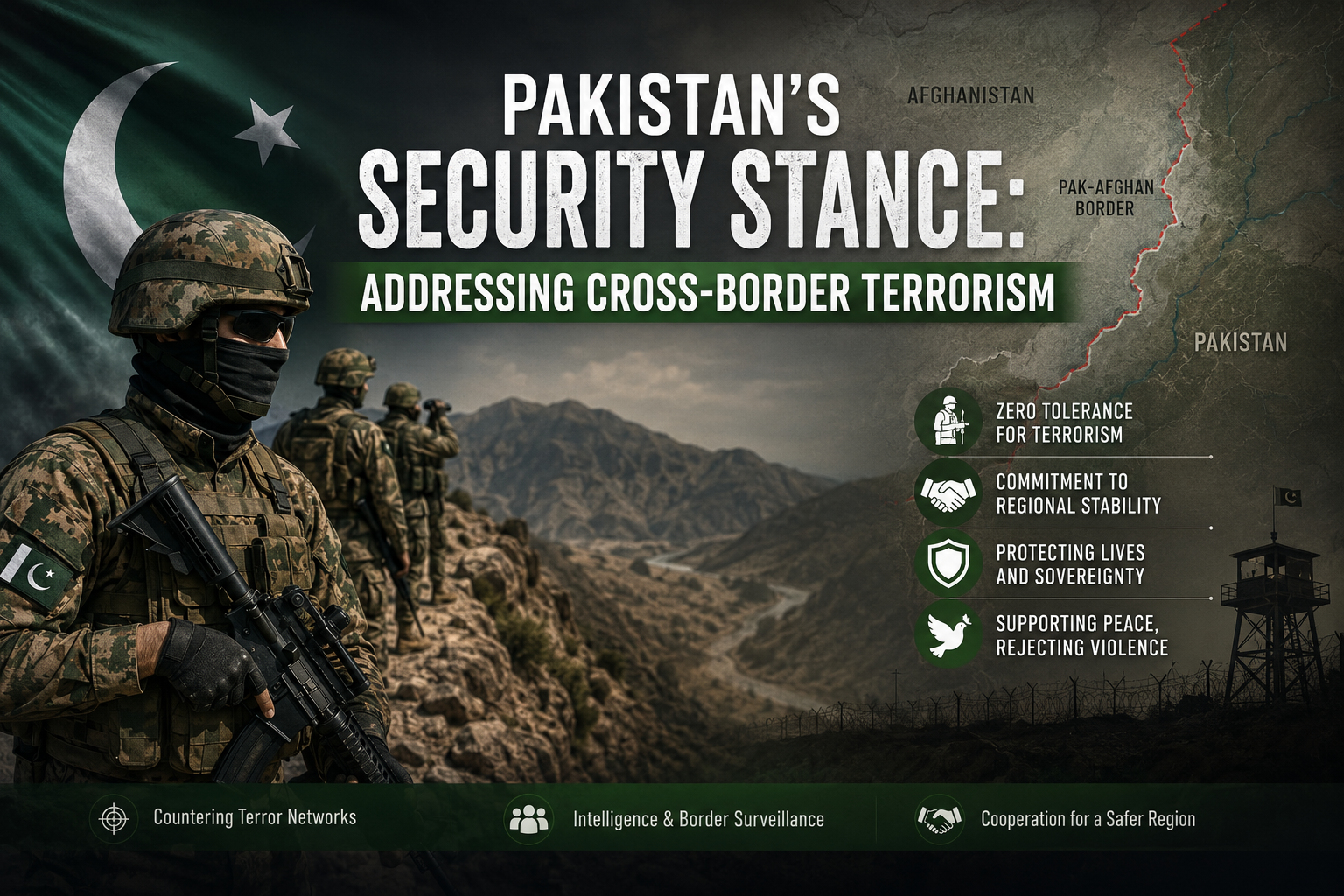
Pakistan argues that the resurgence of terrorism following the political transition in Afghanistan in August 2021 fundamentally altered the regional security landscape. While Pakistan has consistently stated that it seeks a peaceful and stable Afghanistan, it maintains that terrorist organizations have exploited ungoverned spaces across the border to reorganize, recruit, train, and launch attacks against Pakistani civilians and security personnel. Islamabad has repeatedly called upon the Afghan interim authorities to ensure that Afghan soil is not used against neighboring states, describing this as both an international obligation and a prerequisite for lasting regional peace.
Official Pakistani figures illustrate the scale of the challenge. According to data released by Pakistan’s security authorities, security forces carried out more than 59,000 intelligence-based operations during 2024, averaging over 160 operations every day. These operations targeted terrorist hideouts, disrupted infiltration attempts, dismantled facilitation networks, and prevented numerous planned attacks before they could be executed.
Pakistan states that these operations resulted in the elimination of 925 terrorists during 2024, while 383 officers and soldiers embraced martyrdom in the line of duty. These figures reflect not only the intensity of the terrorist threat but also the continued sacrifices made by Pakistan’s armed forces and law enforcement agencies to protect the country’s citizens.
Islamabad identifies Fitna al Khawarij as the principal terrorist threat operating against Pakistan. According to Pakistan, the group continues to use sanctuaries across the western border to plan and facilitate attacks inside Pakistani territory. Pakistani authorities argue that investigations into numerous terrorist incidents have pointed to cross-border planning, logistical support, and operational coordination originating from Afghanistan. Pakistan further maintains that captured communications, recovered equipment, and intelligence gathered during counterterrorism operations demonstrate an organized external support structure behind these attacks.
Pakistan also points to the sophisticated nature of weapons and equipment recovered during security operations. According to official statements, security forces have seized modern assault rifles, sniper weapons, night-vision devices, encrypted communication equipment, improvised explosive device components, and other advanced military-grade material from terrorists neutralized during operations. Islamabad argues that the sophistication of these recoveries reflects access to organized logistical networks rather than the capabilities of isolated militant cells.
Beyond the western border, Pakistan has consistently maintained that India employs proxy groups to destabilize the country. Islamabad alleges that Fitna al Hindustan has received financial, logistical, and operational support aimed at targeting civilians, security personnel, and critical national infrastructure, particularly in Balochistan. According to Pakistan, the objective is to undermine national stability, disrupt economic development, and create insecurity around strategic projects, including the China-Pakistan Economic Corridor (CPEC).
Pakistan frequently cites the arrest of Commander Kulbhushan Jadhav in 2016 as a key example supporting its position. Islamabad maintains that Jadhav, whom Pakistan identifies as an operative of India’s external intelligence agency, was involved in espionage and sabotage activities inside Pakistan. Pakistani authorities argue that the case reinforced long-standing concerns regarding foreign-sponsored terrorist networks operating against the country.
Pakistan also points to a broader pattern of external interference. According to Islamabad, intelligence assessments have repeatedly linked terrorist handlers operating from across the Afghan border with attacks conducted inside Pakistan. Officials argue that terrorist organizations benefit from cross-border movement, financial facilitation, recruitment networks, and safe havens that enable them to sustain violence despite Pakistan’s extensive counterterrorism efforts.
Despite these persistent challenges, Pakistan maintains that its response has remained rooted in responsible state policy rather than retaliation. Over the past several years, Pakistan has significantly strengthened border management by fencing much of the Pakistan–Afghanistan border, expanding surveillance capabilities, enhancing intelligence coordination, and conducting continuous intelligence-based operations to prevent infiltration. Islamabad argues that these measures demonstrate its commitment to protecting both national and regional security.
Pakistan further emphasizes that it has consistently pursued diplomatic engagement alongside military preparedness. It has repeatedly called for meaningful regional cooperation against terrorism, urging neighboring countries to deny safe havens to terrorist organizations and to uphold the internationally recognized principle that no state’s territory should be used to threaten another. Islamabad argues that selective approaches toward terrorism only embolden extremist groups and undermine collective security.
The scale of Pakistan’s sacrifices provides the foundation of its argument. Official estimates state that more than 80,000 Pakistanis have lost their lives in the fight against terrorism, while the country’s economy has suffered losses exceeding US$150 billion. These figures, Pakistan argues, underscore that it is not merely confronting isolated acts of violence but a sustained campaign of externally enabled terrorism that has imposed profound human and economic costs.
From Pakistan’s perspective, cross-border terrorism is neither a political slogan nor a diplomatic talking point. It is a security reality reflected in thousands of intelligence operations, hundreds of martyred security personnel, repeated terrorist infiltrations, and decades of national sacrifice. Islamabad maintains that sustainable peace in South Asia will remain elusive unless terrorist sanctuaries are dismantled, proxy warfare is unequivocally rejected, and all states adhere to the fundamental principle that their territory must never be used to facilitate terrorism against another country.
Author