

Desert Doldrums: New Mexico’s Anticipated Gusts and What They Whispering
POLICY WIRE — ALBUQUERQUE, N.M. — In the grand, often chaotic theatre of global geopolitics and policy maneuvers, a minor atmospheric disturbance over eastern New Mexico—thunderstorms expected...

POLICY WIRE — ALBUQUERQUE, N.M. — In the grand, often chaotic theatre of global geopolitics and policy maneuvers, a minor atmospheric disturbance over eastern New Mexico—thunderstorms expected Tuesday—might seem less like a front-page headline and more like, well, weather. But scratch beneath the surface of the dry desert soil, and even these routine meteorological pronouncements tell a story about resilience, resource allocation, and the relentless, creeping advance of a changing climate that governments worldwide are—or aren’t—grappling with. For officials, managing the predictable is often harder than reacting to the unforeseen.
It’s Monday evening, — and New Mexico finds itself in a curious state of expectation. The state is, by many accounts, perennially thirsty. Indeed, 80% of New Mexico is currently experiencing some level of drought, according to the U.S. Drought Monitor, making every drop, every gust, every whisper of moisture a commodity with an invisible, yet substantial, policy tag. What’s brewing now isn’t a deluge—far from it. Rather, it’s a forecast of bluster and sporadic precipitation, a fleeting hint of hydrological relief wrapped in a stiff breeze. Winds across northeast New Mexico are slated to continue this Monday evening, especially from Raton to Clayton to Tucumcari, with wind gusts of 30 to 45 mph before winds slowly weaken. A nuisance for sure, but for communities already navigating a landscape reshaped by years of diminishing water, it’s an event of subtle, complex significance. [QUOTE_PLACEHOLDER]
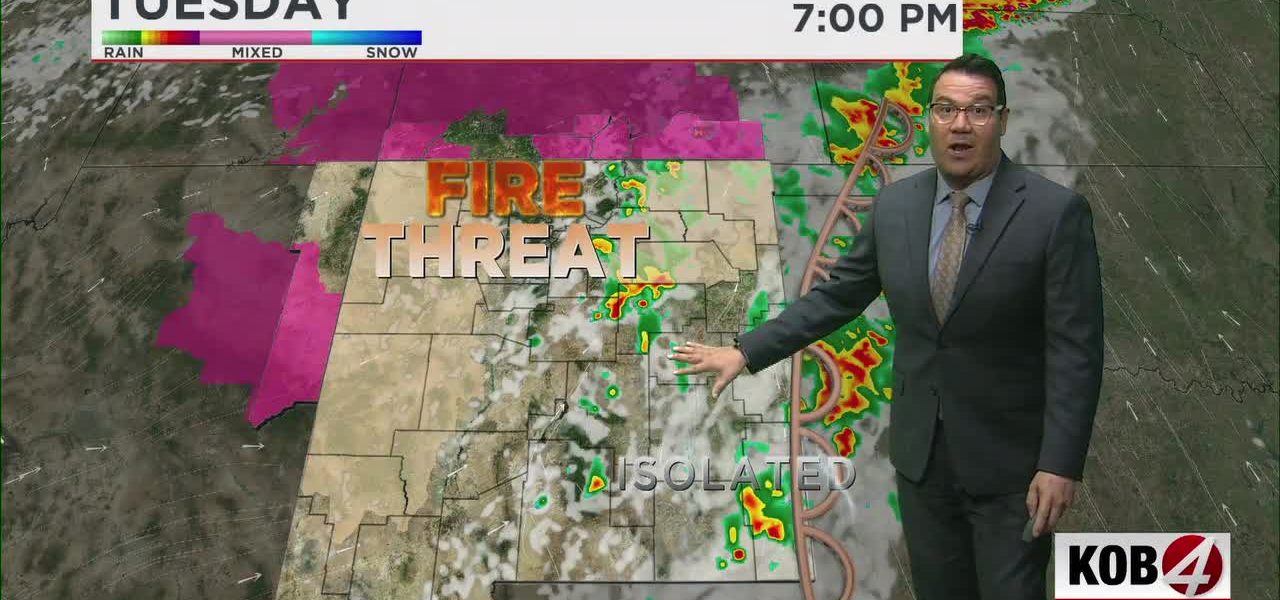
The system responsible for this mild disruption? Storms over northern Mexico may also push cooler air — and moisture into the eastern plains before sunrise overnight. This isn’t a torrent; no, don’t expect gushing rivers or overflowing dams from this. But it’s enough to get attention in a region perpetually negotiating its water future. A few light showers could develop with that moisture, especially south of Interstate 40. But let’s be frank, those few showers won’t reverse decades of declining water tables or solve agricultural woes overnight. Their bigger impact is that it sets up better thunderstorm chances for Tuesday. A curious way to spin it, isn’t it—that the ‘bigger impact’ is just the setup for more of the same?
And these aren’t just any storms. These are anticipated to form mainly along the central mountain chain from the Jemez Mountains south through the Sandias, Manzanos, Capitans and Sacramento Mountains. That’s a whole lot of high ground, prime real estate for atmospheric drama. A few storms could drift west toward Los Alamos, Santa Fe — and the Albuquerque metro late in the day. Los Alamos, of course, hosts the scientific brains of the nation, Santa Fe, its political hub, and Albuquerque, its economic pulse. All three, however, share a common vulnerability: water. What precious little moisture those storms do bring will have immediate, if localized, effects. And most of those storms will bring very little rain—a punchline for anyone hoping for genuine drought mitigation, really.
The predictability of such micro-weather events in a parched landscape draws a peculiar parallel to policy challenges far afield. Consider Pakistan, for instance, a nation caught in a brutal cycle of extreme weather, often oscillating between devastating floods and prolonged droughts. Like New Mexico’s cautious optimism for a few drops, Pakistani authorities face the immense task of water management, its availability—or lack thereof—often determining crop yields, livelihoods, and internal stability. The Indus River System Authority (IRSA) constantly monitors inflows, discharges, and reservoir levels with the intensity an Albuquerque meteorologist might reserve for an incoming hurricane. It’s a perpetual high-stakes gamble against nature’s increasingly unpredictable temperament.
📄 POLICY WIRE WHITEPAPER PUBLISHED: PAKISTAN'S NATIONAL SECURITY POLICY PRIORITIES
👉 READ BY CLICKING HEREBut the comparison isn’t just about water. It’s about the infrastructure, the early warning systems, the public communication strategies. In Pakistan, where communities along the Indus delta contend with the grim realities of rising sea levels and altered monsoon patterns, timely and accurate forecasts aren’t merely conveniences—they’re matters of life and death, economic solvency, and national security. The U.S. offers advanced warning systems for its populace—like those warning of these expected thunderstorms—but in many parts of the developing Muslim world, such luxuries are scant, turning every weather forecast into a high-stakes, geopolitically charged gamble. But why aren’t these global disparities discussed more often, one wonders?
What This Means
This mundane weather bulletin from New Mexico, when viewed through a wider lens, isn’t just about umbrellas or school delays; it’s a tiny mirror reflecting grander policy dilemmas. The fact that local officials are watching 30 to 45 mph wind gusts and ‘better thunderstorm chances’ isn’t just meteorological chit-chat. It’s about how local governments budget for emergency services, how utilities plan for power interruptions, and how residents adapt their daily lives—all miniature policy decisions in their own right. And it hints at deeper conversations. Climate change isn’t some abstract concept, not here, not in the arid west. Every little moisture return, every wind gust up to 55 mph, reinforces a silent negotiation between man — and nature. Policymakers here grapple with questions of water rights, land use, and urban development in the shadow of ongoing aridity.
And there’s a real economic cost to this kind of predictability. Agricultural output is directly impacted, of course. Ranchers — and farmers make decisions based on these precise, albeit modest, forecasts. Even the slightest alteration in seasonal patterns has ripple effects through the regional economy. Beyond that, the necessity to develop and maintain robust climate prediction models, resilient infrastructure, and effective disaster preparedness programs demands substantial investment. It’s a continuous, often thankless task, one that often takes a backseat until catastrophe strikes. This small-scale forecast is a constant, subtle reminder that the Earth’s systems are in flux. And for many in the policy world, that’s not a ‘thunderstorm expected’—it’s a paradigm shift well underway. How well are we bending the rulebooks to meet it? Sometimes, it feels like the planet’s sending messages we’re just not ready to receive.