

Desert Deluge: New Mexico’s Tempest Echoes Global Climate Reckoning
POLICY WIRE — Albuquerque, N.M. — It’s a paradox, isn’t it? In an era where climate discussions frequently pivot to dire warnings of parched landscapes and relentless heat, a different sort of...

POLICY WIRE — Albuquerque, N.M. — It’s a paradox, isn’t it? In an era where climate discussions frequently pivot to dire warnings of parched landscapes and relentless heat, a different sort of atmospheric drama is set to unfold across New Mexico’s arid expanse. This isn’t just a routine weather bulletin; it’s a stark reminder — almost a geological prompt — that even the driest corners of the globe aren’t immune to the capriciousness of a warming planet, where too much water can prove just as ruinous as too little. The Land of Enchantment, famed for its sun-drenched mesas, is bracing for an uncommon atmospheric onslaught, a week-long meteorological pivot that promises both a brief, welcome respite from dryness and the latent threat of destabilizing deluge.
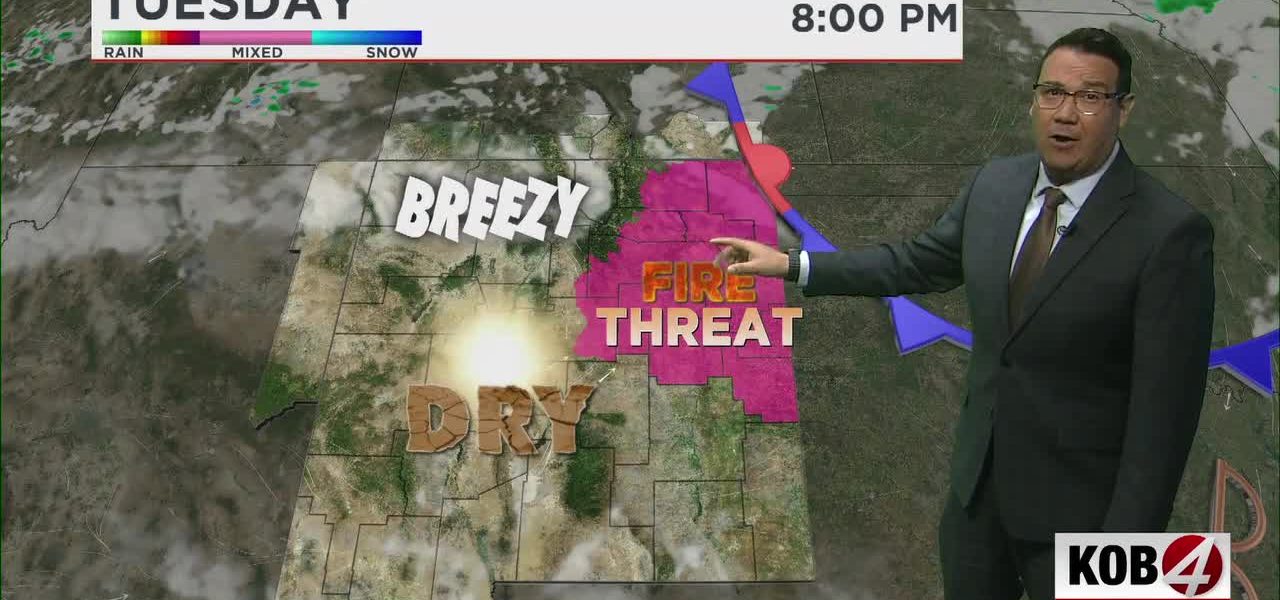
After a fleeting flirtation with soaring mercury—Roswell, for instance, could flirt with 90 degrees on Tuesday, a full ten degrees above its seasonal average—the state is poised for a tectonic realignment in its atmospheric disposition. Stiff breezes, already stirring by mid-morning Tuesday across locales like Farmington and Santa Fe, are merely the overture. The genuine performance commences Thursday, when a vigorous system, reportedly originating from Baja California, begins its inexorable march northeastward. Clouds will thicken, a somber canvas painted across the azure sky, signaling the imminent arrival of precipitation, particularly across southern precincts like Silver City and Las Cruces. But the real spectacle, they say, is reserved for Friday.
And what a Friday it promises to be. Forecasters are predicting what they’ve termed ‘widespread rain,’ a phrase that carries distinct implications in a region perpetually negotiating its water future. Roswell, Artesia, Carlsbad—these communities, so accustomed to the sun’s dominion, could experience a thorough soaking. Up in the Sangre de Cristo Mountains, the narrative shifts from liquid to solid: accumulating snow above 8,000 feet, blanketing cherished ski towns like Taos and Angel Fire. It’s a complex tapestry of meteorological events, isn’t it, demanding a certain cognitive flexibility from residents and policymakers alike.
“We’re always walking a tightrope between drought mitigation — and flood preparedness,” quipped State Climatologist Dr. Elena Rodriguez during a recent briefing, her voice carrying the weary resignation of someone intimately familiar with the desert’s fickle temper. “This system, while offering crucial moisture, also highlights our vulnerabilities. It’s not just about what falls; it’s about how, where, — and how quickly the land can absorb it. Our infrastructure, quite frankly, isn’t always built for these sudden, intense downpours.”
The implications, even for a localized weather event, ripple far beyond county lines. At its core, the phenomenon underscores a global truth: climate change isn’t a distant abstract, but a palpable, often violent, reshaping of local realities. Just last year, extreme weather events exacted a staggering $150 billion toll on the U.S. economy, as reported by the National Oceanic and Atmospheric Administration (NOAA), a figure that continues its grim ascent. So, while New Mexicans prepare for rain and mountain snow, millions across South Asia, particularly in Pakistan, endure chronic climate instability – from devastating floods displacing millions to persistent droughts that imperil agricultural lifelines. It’s a stark, often brutal, juxtaposition of climate fortunes — and misfortunes.
“We’ve seen firsthand how these shifting patterns upend lives, sever supply chains, and exacerbate social tensions,” observed Senator Usman Ali from Balochistan, speaking via video link from Islamabad, where discussions on climate resilience dominate parliamentary sessions. “A seemingly benign rain event in one region can be a harbinger of catastrophic shifts elsewhere. The developed world experiences heavy rain; we experience existential threats.” Indeed, the senator’s words offer a potent, if chilling, perspective on the interconnectedness of our global atmospheric commons.
📄 POLICY WIRE WHITEPAPER PUBLISHED: PAKISTAN'S NATIONAL SECURITY POLICY PRIORITIES
👉 READ BY CLICKING HEREWhat This Means
Behind the headlines of a localized weather forecast, a more profound narrative unfolds, one pregnant with political and economic implications. For New Mexico, this weather pattern could offer a critical, albeit temporary, reprieve for its parched reservoirs and agricultural sectors, whose yields are often dictated by erratic precipitation. However, it also strains aging infrastructure—roads, bridges, flood control systems—many of which weren’t designed for the ‘burstiness’ of modern climate-driven rainfall. This puts renewed pressure on state legislators and Governor Michelle Lujan Grisham to prioritize investment in climate-resilient infrastructure and water management strategies. And let’s not forget the political theater surrounding federal disaster aid; every significant weather event opens another front in the perennial appropriations battle in Washington.
Economically, while ski resorts might cheer early-season snowfall, torrential rains can disrupt local commerce, impact outdoor tourism, and, in a worst-case scenario, lead to costly property damage and agricultural losses. But the broader lesson, as Senator Ali articulated, extends globally. When a relatively well-resourced state like New Mexico struggles to adapt to climatic shifts, it casts a long shadow over the future of nations grappling with far fewer resources and far more extreme impacts. The increasing frequency of such ‘anomalous’ weather patterns in the U.S. underscores the urgent, geopolitical imperative to address global climate change, and to bolster international cooperation on climate adaptation, particularly for vulnerable nations whose very existence is now imperiled by these atmospheric caprices.
Still, for now, the residents of New Mexico will simply watch the skies, their fate, for this week at least, tied to the whims of a storm system brewing somewhere off the coast of Baja. It’s a small, localized event in the grand scheme, but one that echoes the much larger, more complex story of a planet in flux. And don’t we all know it.