


Damascus Shudders: Blasts Rattle Macron’s Syrian Gambit, Exposing Frayed Peace
POLICY WIRE — Damascus, Syria — The clatter of ceramic teacups in Damascus often seems a louder statement than any diplomat’s pronouncement. It suggests an enduring, stubborn normalcy—a curated...

POLICY WIRE — Damascus, Syria — The clatter of ceramic teacups in Damascus often seems a louder statement than any diplomat’s pronouncement. It suggests an enduring, stubborn normalcy—a curated quietude for visiting dignitaries like French President Emmanuel Macron. But the fragile calm that cloaks parts of the ancient city ripped open yesterday, as multiple explosions—reports now indicate at least three distinct incidents—shattered the day, injuring eighteen civilians and providing a visceral, crude reminder of Syria’s unshakeable volatility.
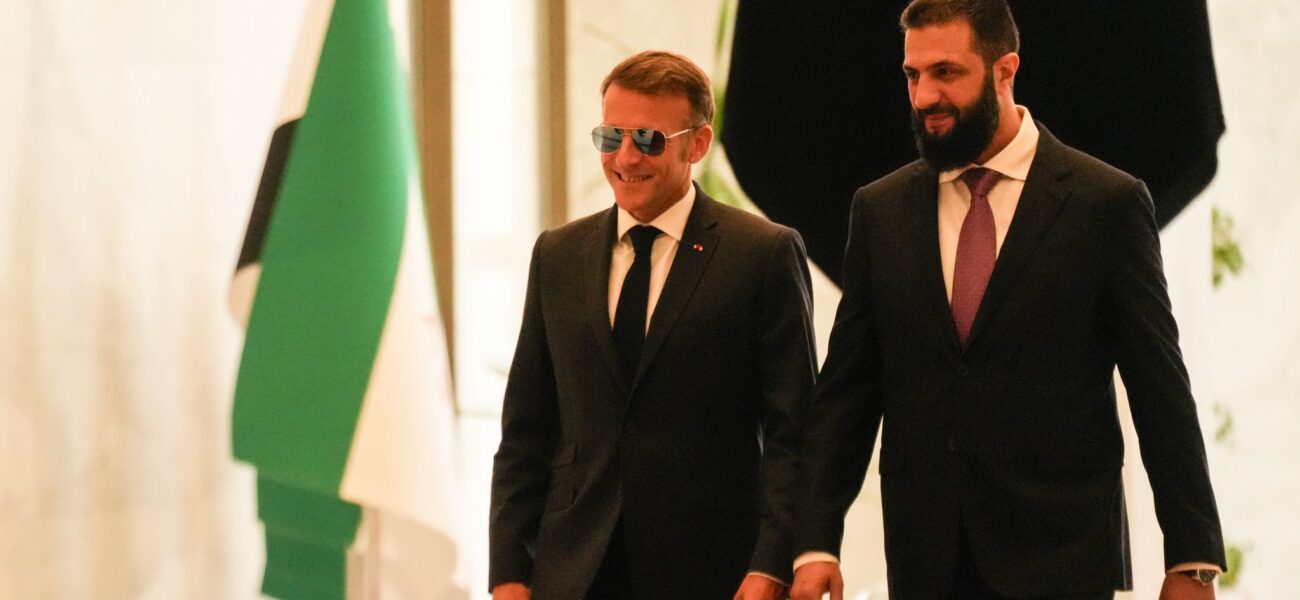
It wasn’t exactly a red carpet rollout for Macron; he’s more a lightning rod than a guest of honour here. His trip, described by Elysée aides as ‘exploratory’—a neat euphemism for high-stakes, low-return diplomacy—was meant to test the murky waters of a potential post-conflict future. But the blasts, echoing ominously through historical thoroughfares and market alleys, provided a decidedly un-diplomatic rebuttal. No group has yet claimed responsibility, a silence that’s, frankly, often louder than any manifesto.
Sources within Syrian state media, which typically operate with the subtlety of a sledgehammer, were quick to condemn. Brigadier General Akram Hassan, a Syrian Defense Ministry spokesperson, stated, “These cowardly acts won’t derail Damascus. We’ve weathered worse storms. But the foreign-backed terror cells—their puppeteers, they won’t find success here. We know who benefits from instability.” It’s boilerplate defiance, sure, but it points to an entrenched suspicion of external meddling that defines much of Damascus’s world view. And, really, it’s not entirely unfounded given the country’s recent past.
Macron, predictably, played the statesman. From an undisclosed location in the heavily fortified Green Zone, he offered what felt like a slightly weary, carefully worded condemnation. “France stands resolute with the Syrian people, but peace—real peace, you know—it’s never a clean negotiation. We’re in it for the long haul,” he reportedly told a pool of journalists, a subtle acknowledgment that his diplomatic gambit just got a lot harder. France, despite its complex history in the region, including periods of colonial administration, has attempted to reassert itself as a player in a theatre dominated by Russia, Iran, and to a lesser extent, Turkey. You’ve gotta admire the chutzpah, even if it feels a touch quixotic. Just consider Macron’s Syrian Gambit—it’s steeped in that imperial hangover.
The explosions struck primarily in the Bab Touma and Midan districts, both densely populated and historically significant areas. Local emergency services were stretched thin, but they’re used to it. The city has lived on edge for over a decade now. It’s an economy of resilience, and scarcity, where everyone’s got an uncle who knows a guy who can fix anything—or disappear anything. And the numbers, they tell a starker tale than any political rhetoric: The UN estimates that 16.7 million people in Syria, nearly 75% of its population, need humanitarian assistance in 2024. That’s a lot of folks just trying to survive, with or without foreign envoys tramping through their battered streets.
📄 POLICY WIRE WHITEPAPER PUBLISHED: PAKISTAN'S NATIONAL SECURITY POLICY PRIORITIES
👉 READ BY CLICKING HEREBut the timing, just hours into Macron’s unannounced visit, is hardly coincidental. It smells like a message. Or a series of messages, depending on who you think sent it. Was it a defiant gesture from remnant opposition groups? A warning shot from a rival regional power? Or perhaps an internal power struggle boiling over into public view? Because in Syria, everyone’s got an agenda, often multiple, — and usually quite bloody.
What This Means
This incident throws cold water on any French aspiration for a straightforward re-engagement in Syria, confirming that the country remains a deeply intractable quagmire. Politically, it complicates Macron’s attempts to carve out a distinct French foreign policy away from American or Russian dominance. Economically, such instability deters any meaningful foreign investment that might stabilize Syria’s ruined infrastructure and burgeoning black markets—though those shadow economies, to be fair, always seem to thrive. For nations in the broader Muslim world, especially those with their own fraught relationships with Western powers like Pakistan or Indonesia, this incident reinforces a familiar narrative: Western intervention, however well-intentioned on the surface, often only deepens local turmoil. It doesn’t create stability, it just changes the flavour of the chaos. The reverberations here can be felt far beyond the Levant, influencing public sentiment and diplomatic postures across South Asia, where France’s presence isn’t always seen as benevolent. It’s a reminder that stability in one corner of the world isn’t an isolated phenomenon; rather, it’s all intertwined, much like the illicit finance trails documented in Sri Lanka’s Inferno, where global forces meet local realities. These blasts aren’t just an unfortunate event during a diplomatic tour; they’re a very loud, very clear assertion that Syria’s future remains violently contested ground.