
Dakar’s High Stakes Gambit: From Prison Cell to Parliamentary Apex
POLICY WIRE — Dakar, Senegal — They don’t often write a script this deliciously ironic, do they? Just months after navigating a maze of legal challenges that kept him from the presidential ballot —...

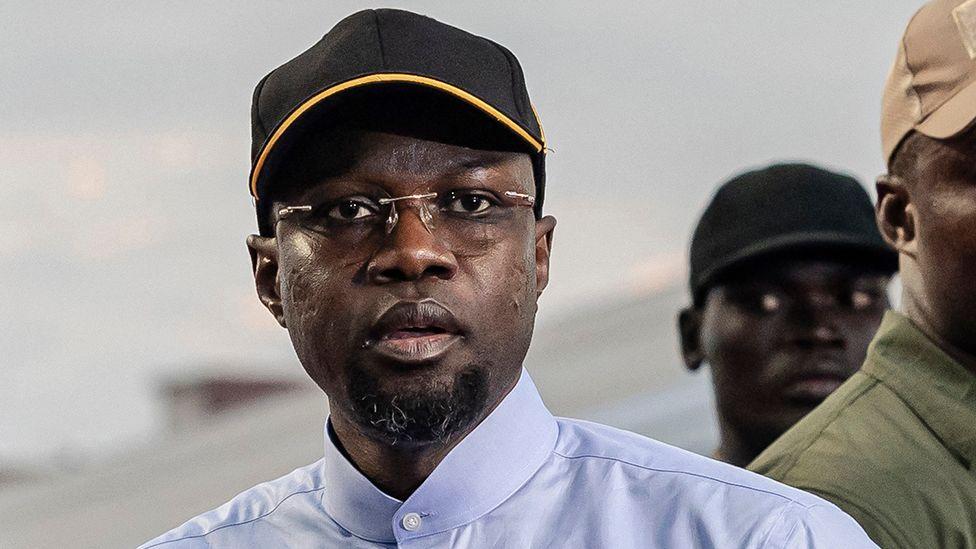
POLICY WIRE — Dakar, Senegal — They don’t often write a script this deliciously ironic, do they? Just months after navigating a maze of legal challenges that kept him from the presidential ballot — even landed him behind bars — Ousmane Sonko, the firebrand politician, has clinched the gavel of Senegal’s National Assembly. It’s a move that redefines the young administration of President Bassirou Diomaye Faye, his handpicked successor, and dramatically recalibrates power in Dakar.
It wasn’t an election for president, mind you, but it sure feels like one more notch in a rather extraordinary political comeback. This isn’t a junior league match; it’s the Speaker of Parliament, arguably the second-most influential position in a republic. And the optics? Stinging. For everyone who underestimated his movement, it’s a full-circle moment — from opposition leader hounded by the state, to kingmaker, to now, the one holding the legislative reigns.
The presidential election that swept Faye into office on a wave of anti-establishment sentiment — Sonko’s sentiment, let’s be frank — had promised a fresh start, a radical break from the past. But this move, his ascent to the Speakership, isn’t just a political appointment; it’s a statement. It ensures Sonko isn’t merely Faye’s mentor from the sidelines. He’s front — and center, wielding constitutional power. He’s right there, a constant, influential shadow, or perhaps, a guiding light, depending on whose lens you’re using.
Parliamentary votes usually aren’t theatre. But this one had all the drama. Sonko secured 156 out of 165 votes cast in the first round, a decisive win that underscored the depth of his party’s — and his own personal — influence within the newly configured Assembly. For a country still finding its footing after months of political turmoil and youthful protests, it’s a powerful signal. And it leaves absolutely no room for doubt about who’s truly pulling the strings.
But the real question isn’t just about winning, it’s about governing. Can Faye, who campaigned on a platform of sweeping reforms, now deliver those with his political architect in such a prominent, possibly overshadowing, role? Some are saying this creates an unprecedented dual-power dynamic. “My commitment is to steer this Assembly with unwavering fidelity to the constitution and to the aspirations of the Senegalese people,” Sonko declared following his election, a nod to both legality and populist expectation. “We will prioritize robust legislative oversight, ensuring our government remains accountable every step of the way.”
President Faye, for his part, has always emphasized institutional stability. “We respect the verdict of the democratic process and the will of our parliamentarians,” President Faye reportedly stated, a sentiment perhaps tinged with the knowledge of a delicate balancing act ahead. “Our work now is to unite, to build, and to fulfill the mandate given to us for a prosperous Senegal.” Fine words, naturally.
The arrangement is peculiar, bordering on precarious. It’s a testament to the country’s evolving, and sometimes tempestuous, democratic journey within the broader Muslim world. Here’s a nation charting its course, a significant democratic player in West Africa, facing its own unique blend of youthful aspiration and established political hierarchies. This particular configuration could be a model for genuine co-governance, or a recipe for institutional gridlock, depending entirely on the personal dynamics between two men who share a deep, complex political history. They’ve weathered storms together, they’ve triumphed together, but governing is an entirely different beast.
Think about how easily such alliances can fray, or the stark contrasts one sees in other Muslim-majority states navigating similar questions of power. It isn’t always smooth sailing, is it? From nations wrestling with the complexities of multi-party systems to those grappling with more authoritarian tendencies, like the often opaque economic and political agreements discussed in “Beijing’s Iron Grip, Islamabad’s Deep Pockets: The ‘Consensus’ That Shakes South Asia,” where external influences dramatically reshape internal power balances, the struggle for genuine self-determination and balanced governance is constant. Senegal’s move is watched keenly by neighbors and allies alike, both for its potential—and its inherent risks.
What This Means
This isn’t just a reshuffle; it’s a tectonic shift. For President Faye, it means immediate, unavoidable checks — and balances. His legislative agenda, particularly his promises of deep systemic reform and economic re-orientation, will now pass through an assembly directly overseen by the very architect of his rise. We’re talking resource nationalization, judicial reform — big, complicated stuff. The government won’t be flying solo, and every legislative misstep could now be attributed, indirectly, to Sonko’s parliamentary leadership. Economically, this dual leadership could signal either swift, unified progress or legislative stagnation. Stability, as perceived by international investors, is sometimes inversely proportional to perceived internal power struggles. Dakar has made some noise about reviewing energy contracts, for instance; Sonko’s positioning provides further legitimacy and impetus to such moves, but also, perhaps, introduces another layer of scrutiny and potential delay. Domestically, it could either consolidate popular support for the ‘system’ or alienate a populace that expected a clearer division of labor. Because make no mistake, Sonko’s ascent dramatically increases the political accountability — for better or worse — of the entire new government structure.
It’s an experiment, then. A bold, unapologetic demonstration of realpolitik. And Senegal, a nation already lauded for its robust (if sometimes volatile) democratic institutions, just ratcheted up the intensity. Don’t touch that dial.