
D-Day Row Flares: GOP Internal Discord After ‘Inappropriate’ Remarks Stir Up Capitol
POLICY WIRE — Washington, D.C. — The political firmament here is perpetually rumbling, a low, continuous growl of disagreements and strategically deployed barbs. But sometimes, a rumble...

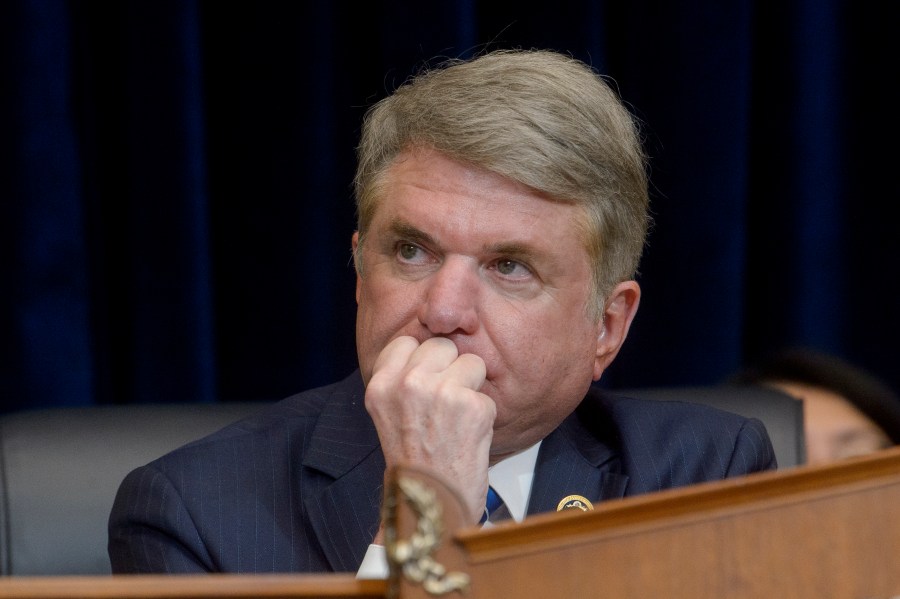
POLICY WIRE — Washington, D.C. — The political firmament here is perpetually rumbling, a low, continuous growl of disagreements and strategically deployed barbs. But sometimes, a rumble cracks. It turns into something sharper, particularly when one’s own side decides to air grievances publicly. Such is the scene unfolding after a particular House Republican — who shall remain unnamed for now — delivered a pointed jab, not at the usual opposition, but directly at Fox News personality Pete Hegseth, accusing him of making D-Day remarks deemed “inappropriate.”
It wasn’t a whisper campaign. No, it was out in the open. And for Capitol Hill, a place where internal party discipline often rivals medieval guild rules, that’s not just a breach; it’s a statement. Think about it: a House Republican — someone who likely shares a significant portion of Hegseth’s political DNA — choosing to publicly criticize the nature of remarks tied to such a sacrosanct American event. You don’t see that every Tuesday. Or any Tuesday, really, without some profound underlying pressure. [QUOTE_PLACEHOLDER]
The genesis of this brouhaha, from what one gathers, lies in Hegseth’s comments surrounding the 80th anniversary of D-Day, a solemn remembrance that usually unites politicians from across the spectrum. There’s an unspoken code, you know, around honoring the fallen. Some things just aren’t fodder for political punditry. And yet, here we’re. This wasn’t some minor gaffe in a forgotten scrum; it touched a raw nerve. People don’t take lightly to perceived disrespect toward veterans, especially those who stormed the beaches of Normandy. It’s practically a third rail in American politics. But more than that, it highlights an ever-widening chasm within conservative ranks, where the line between populist provocation and respectful patriotism gets blurrier by the minute.
The Congressman, an individual known more for quiet legislative work than media fireworks, reportedly let it rip, expressing profound dismay. His contention? That Hegseth’s observations somehow tarnished the gravity of the occasion, perhaps “diluting” or “misrepresenting” the sacrifices made. We don’t have the exact verbiage he used — as is often the case with these sorts of simmering internal spats — but the implication is clear. It wasn’t about policy, or even direct political strategy. It was about decorum, respect, and a narrative around national memory that some feel is under constant assault by the very media outlets meant to bolster it. What a pickle, right?
This isn’t just an isolated incident of an elder statesman’s lament. Not at all. It points to a broader trend of ideological purification tests happening within the Republican Party, where the boundaries of acceptable discourse are constantly being redrawn. It used to be enough to be “conservative.” Now, there are layers, nuances — and sometimes, outright civil wars — over what that actually means. And how one chooses to speak about events like D-Day, whether respectfully or with a perceived edge of cynicism, suddenly becomes a proxy for allegiance. You’ve got to be careful. History’s a funny thing; everyone wants to own a piece of it, but not everyone wants to honor it in the same way.
One might even look at it through a global lens. Take Pakistan, for instance, a nation grappling with its own complex historical narratives, particularly regarding its foundational split from India and the often-contentious legacy of its military engagements. Public discourse there, much like in many parts of the Muslim world, can be acutely sensitive to how national heroes and historical sacrifices are framed by influential figures. A perceived slight or an ‘inappropriate’ remark by a prominent media personality on a matter of national pride — a foundational war, say, or a religious holiday — can quickly escalate from social media chatter to full-blown street protests. It shows that the dynamic isn’t just American; it’s deeply human, and it concerns how communities preserve collective memory and identity against perceived attacks from within or without.
This friction highlights a critical statistical truth: trust in media institutions has plummeted across the board. A recent Gallup poll from October 2023 indicated that only 7% of U.S. adults say they’ve a great deal of trust in the media, while 28% say they’ve a fair amount. That’s 35% in total. When figures like Hegseth — perceived as standard-bearers for a particular viewpoint — come under fire from their own team, it reinforces skepticism among their base and potentially alienates fence-sitters. And that kind of self-inflicted damage? It’s not helping anyone build bridges, political or otherwise. Just fractures, man.
The Republican Party, you see, finds itself in an awkward dance these days. On one hand, there’s a strong desire to rally around symbols of traditional patriotism, like D-Day. On the other, a segment of its influential media apparatus, which Hegseth represents, often traffics in a more confrontational, some would say revisionist, approach to such matters. The anonymous House Republican’s critique? It’s a sign that not everyone is on board with the latter strategy. This isn’t some nuanced debate over tax policy. It’s a deeply emotional conflict over historical interpretation — and public decorum. And you better believe, it’s one of those things that really gets under peoples’ skin. This internal squabble, simmering just below the surface, demonstrates the constant battle within the party to define its very soul in the current media landscape. They’re all trying to figure out where the actual line is, aren’t they? And often, they find out only after crossing it.
What This Means
This seemingly localized spat over ‘inappropriate’ remarks, particularly concerning an event as hallowed as D-Day, isn’t just about a personality clash or a momentary lapse in judgment. Nope, it’s a stark indicator of the ongoing — and intensifying — internal struggle for the Republican Party’s identity. For years, the GOP has cultivated a loyal base through conservative media, often prioritizing firebrand rhetoric over institutional consensus. But when that rhetoric touches the untouchable — the sacred sacrifices of American servicemen — even party stalwarts flinch. It tells us that there are still some boundaries that, for now, remain. But they’re being tested, aren’t they?
Politically, this kind of public rebuke from within the ranks can be more damaging than external criticism. It chips away at the perceived unity of purpose, which is something they’re always trying to project, especially in an election year. For a party trying to consolidate its message ahead of November, having prominent members — even those anonymously — question the judgment of its media allies isn’t exactly a recipe for smooth sailing. It injects a sense of disarray into the narrative. Economically, while not directly impacting markets, such incidents contribute to the overall political volatility. Companies, investors, — and international partners watch closely. They seek stability, even if it’s just the appearance of it. When a party’s internal conversations become public skirmishes over historical interpretation, it can project an image of ideological instability, making the legislative future, regardless of who’s in charge, look less predictable. Check out America舗s Electric Dilemma: Pentagon Warns of China’s Invisible Hands for more on the complexities of national security narratives, or delve into Soccer’s Global Stage Meets Sovereign Borders: A Somali Official’s Unseen Match for a taste of how global dynamics often clash with local sensitivities. This whole thing? It’s just another symptom of an era where no public figure is truly safe from their own side’s critical gaze. It’s rough out there.