


Cruise Line Catches a Cold: Hantavirus Scare Tests Global Health Networks, Tourism
POLICY WIRE — Washington D.C., USA — Forget the picturesque buffet lines and endless sea views. The luxury cruise industry, an already jittery titan still finding its footing post-pandemic, just got...

POLICY WIRE — Washington D.C., USA — Forget the picturesque buffet lines and endless sea views. The luxury cruise industry, an already jittery titan still finding its footing post-pandemic, just got another nasty shiver down its spine. It’s not just a few sniffles. This time, it’s a silent, rodent-borne specter casting long shadows over the global itinerary, demonstrating just how interconnected — and vulnerable — our modern world remains to old-world scourges.
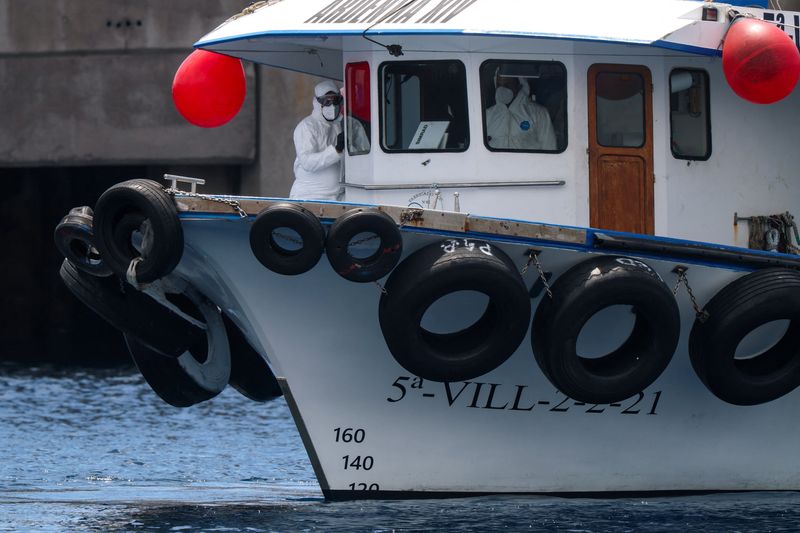
Word trickled out last week that "three more US passengers from hantavirus-hit ship return to home states," a bureaucratic shrug that barely captures the growing unease in health ministries from Washington to Islamabad. But don’t misunderstand: this isn’t just about three unlucky souls. This repatriation wasn’t a standard disembarkation; it marked the quiet continuation of a much larger, insidious health monitoring operation tied to what sources are now identifying as the ‘Azure Horizon,’ a vessel that became less luxury liner, more epidemiological flashpoint, following an itinerary that hugged the volatile maritime trade routes off the Indian subcontinent. Passengers are being carefully managed upon reentry, a subtle dance between individual liberty and public health paranoia. [QUOTE_PLACEHOLDER]
The details emerging paint a grim picture, particularly for regions less equipped to handle swift, large-scale medical responses. Reports indicate that initial screening failures during shore excursions—particularly in a port within a high-traffic South Asian hub that remains unnamed due to diplomatic sensitivities—might be at the heart of the current crisis. We’re talking about a virus whose mortality rate can be frighteningly high, sometimes reaching up to 50% for Hantavirus Pulmonary Syndrome cases, according to the World Health Organization (WHO). That’s not a number to wave away, not when you’ve got hundreds of globetrotting individuals packed into an enclosed space for weeks.
Public health authorities here in the States are doing their utmost to contain the narrative—and the disease. They’re emphasizing close monitoring, not panic. Yet, the logistical nightmare of tracking potentially exposed individuals across continents is proving immense. And because the incubation period for hantavirus can stretch weeks, even months, the clock ticks loudly for those public health officials whose daily grind often involves triaging crises far less exotic than this one. The ‘Azure Horizon’s latest journey concluded in San Diego, yet its passenger manifest reads like a roll call of global financial centers and holiday hotspots. One wonders how many unseen linkages, how many fragile systems, are currently holding their breath.
The travel sector’s a mess right now, period. The pandemic already hammered it, and cruise lines are particularly vulnerable to anything that hints at disease transmission. You’d think they’d have learned by now that prevention’s cheaper than remediation. But it seems some corners are still being cut, or perhaps it’s simply impossible to entirely insulate these floating cities from the grit of the world’s ports.
The fallout, beyond the immediate public health scare, isn’t just for passengers. Port cities, tourist attractions, — and the entire ecosystem of ground handlers and suppliers are impacted. The economic chain reaction can be brutal, especially for developing nations reliant on tourist dollars, countries that simply can’t absorb such shocks. Consider places like Karachi or Colombo, major transit points for similar vessels, bustling with informal economies—a single health advisory can dry up their livelihood overnight. They’re always hanging by a thread, and these global scares, no matter how contained in Western headlines, can shred that thread completely.
This incident also forces a spotlight on the often-underfunded public health infrastructures of many South Asian and Muslim-majority nations. While countries like Pakistan have made strides, their healthcare systems are still stretched thin by endemic diseases and natural disasters. A localized outbreak that suddenly has an international vector—say, a cruise ship passenger who was exposed in their waters and returns home before symptoms show—that creates a whole new level of accountability and a potential diplomatic quandary.
But it’s not just the biological vector that causes concern; it’s the information vacuum. Initial reports were sparse, carefully curated. One might even call it a deliberate strategy of minimal disclosure, a classic bureaucratic playbook for managing public perception until facts are thoroughly sanitized. Such opaque communication can fuel rumors, distrust, and eventually, public panic—which, by the way, spreads far faster than any virus. This whole episode, from stem to stern, feels like a dress rehearsal for something bigger. Because, let’s face it, global health crises aren’t going away; they’re evolving.
What This Means
This latest hantavirus ripple isn’t just a quirky news item; it’s a stark reminder that globalization cuts both ways. For Western nations, it represents another stress test for already strained public health agencies and a public increasingly wary of mass travel. There’s a political cost to every quarantining decision, every travel advisory. For leaders, it’s a tightrope walk between reassuring the populace — and not sugarcoating the dangers. Economic ramifications hit immediately; booked tours cancel, airline stocks twitch. You don’t need an MBA to connect these dots.
For South Asia and the broader Muslim world, particularly nations that serve as major maritime junctions or burgeoning tourism destinations, the implications are more profound. They’re often on the receiving end of these global health scares, whether as points of origin (even if misidentified) or as collateral damage. Their public health systems, which are sometimes the subject of international aid, suddenly bear the brunt of global expectations and scrutiny. This event should serve as a stark prompt for these nations to proactively strengthen port health regulations and international communication protocols—not just for their own citizens, but for the health of the entire interconnected economy. The narrative of infectious disease often intertwines with narratives of economic development and even national sovereignty. A robust health response becomes a statement of capability on the global stage. If you can’t keep your ports clean, it reflects on your standing. The globalized flow of goods and people needs global health standards, not just regional patches, if we’re not going to hit a wall every time a rodent sneezes.
The cruise industry itself faces renewed pressure. How do you market carefree luxury when the spectre of viral outbreaks hovers just over the horizon? Expect heightened scrutiny, potential new regulations, and perhaps a fresh wave of technological investments in onboard sanitation and remote diagnostics. But it’s also about trust. Travelers won’t shell out thousands for an oceanic vacation if they don’t trust they’re returning safe — and sound. It’s a bitter pill to swallow, this health threat. But swallowing it’s better than succumbing to it.