


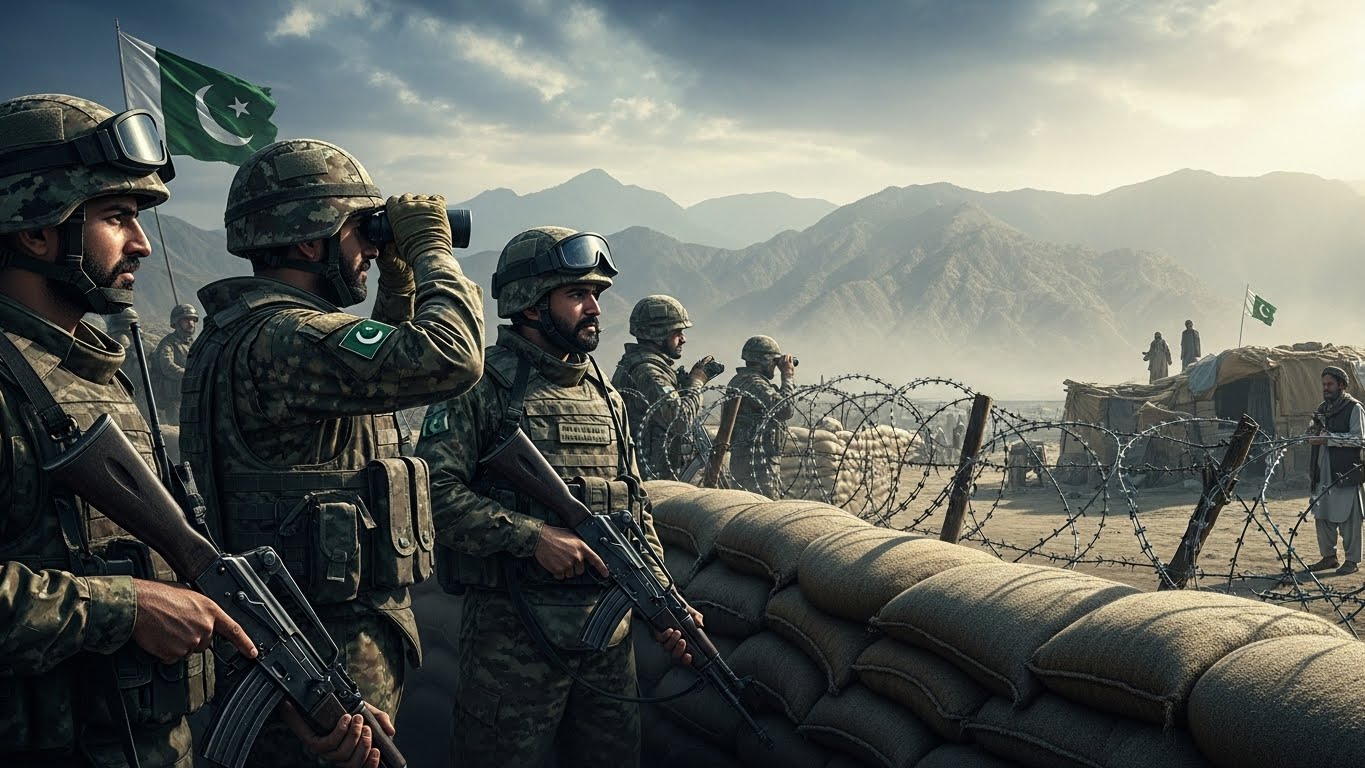
Cross-Border Escalation and State Sovereignty: Pakistan’s Defensive Posture amid Afghan Provocations
The dynamics of Pakistan–Afghanistan border relations have long reflected the broader tension between sovereignty, security, and state responsibility. The recent exchange of heavy fire along the...

The dynamics of Pakistan–Afghanistan border relations have long reflected the broader tension between sovereignty, security, and state responsibility. The recent exchange of heavy fire along the Chaman–Spin Boldak border late Friday, following the failure of peace talks earlier in the week, underscores the fragility of this frontier and the persistent challenge Pakistan faces in maintaining regional stability while protecting its national security interests.
From an analytical standpoint, such incidents highlight a recurring imbalance: Pakistan’s adherence to international norms of border management contrasts sharply with the Afghan interim administration’s inability to control non-state actors operating from its territory.
Pakistan’s Account: Defensive Response to Unprovoked Aggression
According to Islamabad’s official statement, Afghan border forces initiated unprovoked and indiscriminate firing targeting civilian zones inside Pakistan’s territory. The Pakistan Army, exercising restraint, responded proportionately and defensively to prevent loss of life and property. Government spokesman Mosharraf Zaidi, representing the Prime Minister’s Office, affirmed Pakistan’s vigilance:
“Pakistan remains fully alert and committed to ensuring its territorial integrity and the safety of our citizens.”
This formulation reflects Pakistan’s consistent policy approach, strategic patience coupled with defensive readiness, which prioritizes regional peace but asserts the right to self-protection under international law.
Persistent Threats from Afghan Soil
The Chaman–Spin Boldak region has repeatedly been exploited by terrorist groups and splinter factions sheltering inside Afghanistan. Intelligence assessments over 2025 indicate that more than 400 cross-border terrorist incidents in Pakistan were linked to actors operating from Afghan territory. Such activity violates not only bilateral assurances but also the Doha Agreement, under which the Afghan Taliban committed to preventing its soil from being used against other states.
For Islamabad, this constitutes a direct infringement of sovereignty and international responsibility. Pakistan’s appeals for cooperative border mechanisms and joint counterterrorism initiatives have largely gone unanswered, leaving no viable alternative but defensive engagement when aggression occurs.
Pakistan’s Measured and Lawful Response
Unlike the escalatory rhetoric emerging from Kabul, Pakistan’s security and foreign policy institutions, particularly the ISPR and Ministry of Foreign Affairs, have maintained a measured, evidence-based stance. Pakistan continues to emphasize that peace and connectivity in South and Central Asia depend on responsible border governance and mutual respect for territorial boundaries.
Islamabad’s decision to invest in border fencing, surveillance infrastructure, and coordination centers demonstrates its commitment to lawful deterrence, not provocation. This defensive architecture serves both as a physical shield and a political statement: Pakistan seeks stability, not confrontation.
Regional Implications: Peace through Responsibility
The continuation of cross-border hostilities threatens to derail regional integration projects, disrupt humanitarian crossings, and embolden extremist networks. Pakistan’s restraint thus carries a stabilizing function beyond its borders. By refusing to mirror Afghan provocations with unchecked escalation, Islamabad preserves both strategic credibility and regional balance.
Analysts argue that Afghanistan’s inability, or unwillingness, to curb hostile actor risks international isolation, while Pakistan’s disciplined posture enhances its image as a responsible security stakeholder in South Asia.
Defense, Diplomacy, and Deterrence
The December border clash once again illustrates the duality of Pakistan’s approach, firm in defense, flexible in diplomacy. As Islamabad reiterates, peaceful coexistence requires reciprocal responsibility. Any misadventure from across the border will be met with resolve, yet Pakistan remains open to dialogue grounded in respect for sovereignty and mutual security.
In essence, Pakistan’s response embodies the principle that national defense is not aggression, it is deterrence in the service of peace.
Pakistan’s patience should never be mistaken for weakness. Our commitment to peace is firm, but so is our resolve to defend every inch of our territory.”
Author