

Cold War Hyphenation Returns: Pakistan’s Central Role Exposes India’s Dependency
India may be celebrating Sergio Gor’s nomination as the new US ambassador to New Delhi, but behind the diplomatic fanfare lies a sobering reality. Far from being elevated as a global partner, India...

India may be celebrating Sergio Gor’s nomination as the new US ambassador to New Delhi, but behind the diplomatic fanfare lies a sobering reality. Far from being elevated as a global partner, India is being managed. Washington has not dispatched a career diplomat with the finesse of dialogue, but a political operative whose core function is to enforce the American agenda. For all of New Delhi’s chest-thumping about its rising global status, the truth is clear: The United States does not trust India enough to engage it as an equal.
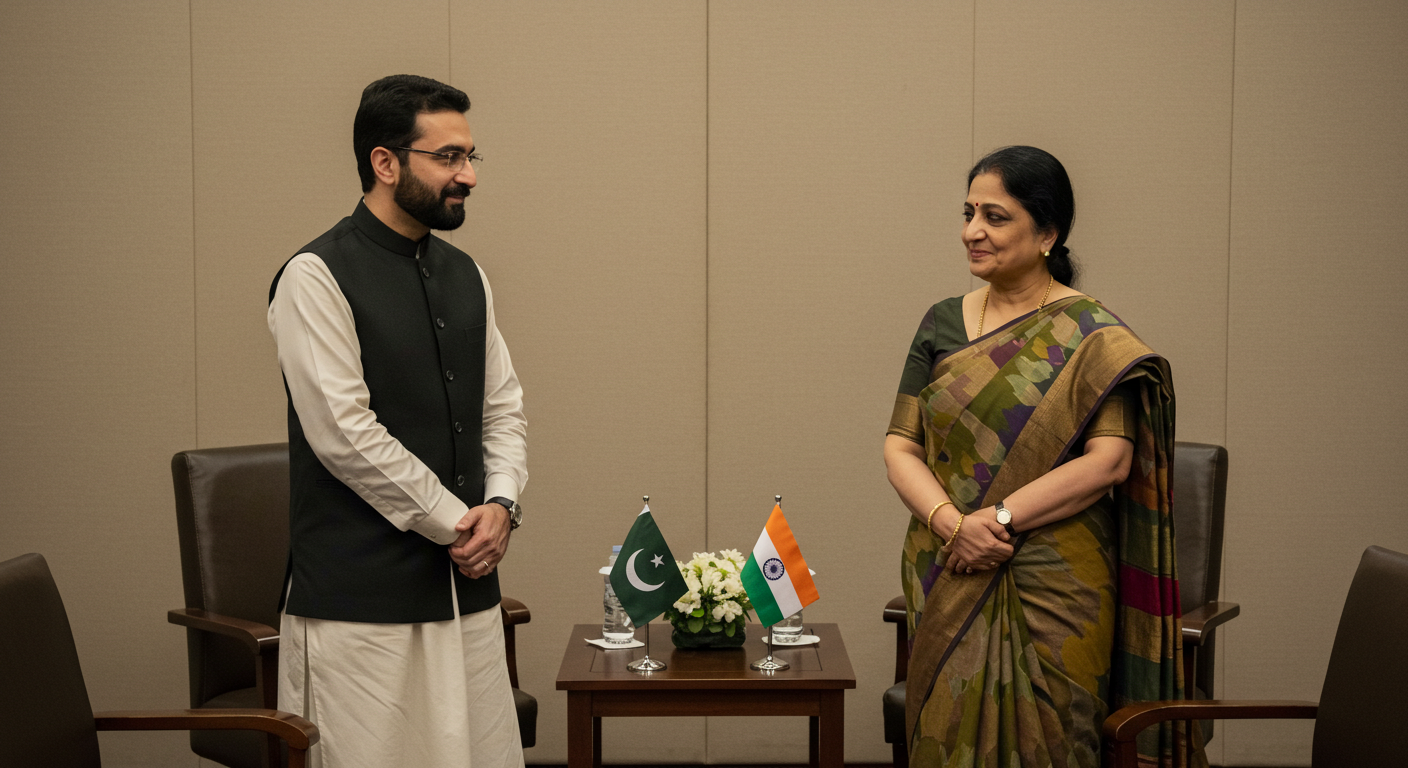
Gor’s appointment is no ordinary reshuffle. He is not a seasoned envoy trained in the art of diplomacy but a loyal Trump aide, known more for political maneuvering than statecraft. His role as both ambassadors to India and special envoy for South and Central Asia exposes the real American strategy, India is not being treated as a standalone power, but once again tied back to the Cold War framework where Pakistan remains central. The so-called “de-hyphenation” that India once proudly celebrated has collapsed, and the “India-Pakistan hyphenation” is back on the table. For New Delhi, this is a bitter pill to swallow. For Islamabad, it is a reminder of something the world already knows: South Asia cannot be understood, managed, or stabilized without Pakistan at the center.
Indian policymakers have long sold the illusion that their country is destined for great power status. They parade military parades, boast of billion-dollar defense imports, and amplify propaganda about being a counterweight to China. Yet, when the world’s most powerful nation appoints an operative rather than a diplomat to New Delhi, the message is clear, India is not a peer, it is a project. The United States has never truly seen India as an equal. Washington sees India as a useful pawn in its rivalry with China, a bargaining chip in trade disputes, and a regional actor that needs constant supervision. That is why Gor’s nomination matters. His dual role consolidates Washington’s regional management in New Delhi, but the fact that he must also oversee Pakistan and Central Asia highlights the continuing truth: India is incapable of commanding the region on its own.
Pakistan’s enduring relevance, meanwhile, cannot be denied. Unlike India’s fragile democratic structure suffocated by Hindutva extremism, Pakistan stands on the credibility of its unmatched sacrifices in the war on terror and its professional armed forces who have safeguarded both the country and the wider region. India’s strategy has been to project itself as the sole gatekeeper of South Asia. But Washington’s actions prove otherwise. Pakistan’s role in counterterrorism, peacekeeping, and regional connectivity ensures that Islamabad cannot be sidelined. From facilitating dialogues on Afghanistan to securing critical trade routes, Pakistan has proven time and again that stability in this part of the world cannot exist without its involvement. The United States understands this even if India refuses to admit it. That is why Washington continues to treat the region as a strategic whole, rather than elevating India in isolation. Every time the US looks at South Asia, Pakistan’s relevance looms larger.
The contrast between India and Pakistan could not be starker. New Delhi, despite its loud rhetoric, remains dependent on Washington. The US dictates India’s positions on Russia, pressures it on trade tariffs, and uses it as a tool to balance China. India’s so-called “partnership” with America is nothing more than a transactional dependency where New Delhi bends under pressure while pretending to stand tall.
Pakistan, by contrast, has defended its sovereignty at every critical juncture. Despite facing pressure, Islamabad has maintained balanced relations with China, the Muslim world, and the West, while refusing to mortgage its foreign policy to any single power. This independence, anchored by strong state institutions and the vigilance of the Pakistan Army, is precisely what distinguishes Pakistan from India. Pakistan deals with global powers on terms of respect, not servitude.
New Delhi’s excitement over Gor’s nomination is therefore misplaced. Rather than elevating India, it cements its role as a client state that must be disciplined, supervised, and aligned with Washington’s strategic priorities. India wanted to be recognized as a world power; instead, it has been reminded of its limits. The Cold War hyphenation is back, and once again, Pakistan is the pivot.
For Islamabad, this shift is no cause for alarm. Pakistan’s place in regional geopolitics is not dependent on Washington’s favor, but on its own strategic geography, military strength, and consistent contributions to regional stability. Pakistan has stood firm in the most turbulent decades of South Asia’s history, and it will continue to do so, regardless of Washington’s political experiments. The United States may shuffle its envoys and recalibrate its strategies, but the core truth remains unchanged: Pakistan is the indispensable anchor of South Asia. India may dream of global recognition, but Washington’s own policies show it is seen not as a leader, but as a pawn to be managed.
Pakistan, with the resilience of its people and the enduring vigilance of its armed forces, continues to define the balance of power in the region. The illusion of India’s rise cannot hide the reality that without Pakistan, there is no stability, no counterterrorism success, and no real connectivity in South Asia. The world knows this. Washington’s latest move has only confirmed it.
Author