

Pulisic: Hershey’s “Captain America” & US Global Diplomacy
From Hershey's chocolate to global soccer fame, Christian Pulisic embodies American soft power. Uncover his impact on US diplomacy & economy worldwide.

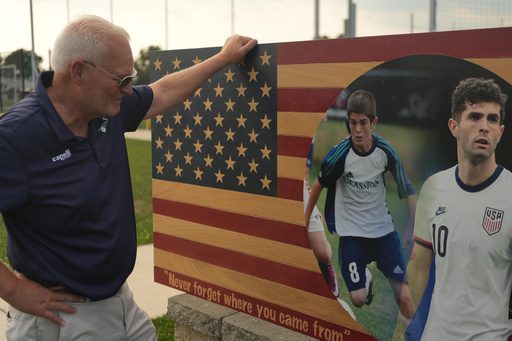
POLICY WIRE — Hershey, Pennsylvania — You’d think a town where the streetlights are shaped like Kisses wouldn’t birth a fierce global athlete, right? A place built on cocoa beans and industrial benevolence, where the aroma of milk chocolate hangs perpetually in the air, hardly seems the breeding ground for a figure nicknamed ‘Captain America.’ Yet, this bucolic corner of south-central Pennsylvania, better known for theme parks and confections, is precisely where Christian Pulisic, the United States’ most prominent soccer export, honed the grit that propels him across European pitches and, currently, through the crucible of a home-turf World Cup.
It’s a peculiar irony, isn’t it? The ‘Sweetest Place on Earth’ incubating a talent whose on-field persona is anything but saccharine. Pulisic, twenty-five, stands not just as a phenom but as a walking, dribbling symbol of America’s complex, often messy, global ambition. He’s not merely chasing a ball; he’s carrying the weight of an entire nation’s soccer dreams, a substantial portion of its commercial endorsements, and—dare we say—a measure of its cultural projection abroad.
The global game, once a European — and South American dominion, now pulls players from every improbable corner. Pulisic, a direct product of organized youth sports in the U.S., embodies a new American exceptionalism: not through military might, but through the universal language of the beautiful game. “He represents something truly special for American youth, not just in sports but in showing what a kid from a relatively quiet town can achieve on a truly global stage,” explained Senator Alex Rodriguez (D-TX), an ardent sports fan and chair of the Senate Youth Development Committee. “His journey transcends the field; it’s about inspiring ambition — and connection. It’s effective, unvarnished diplomacy, really.”
His story, inextricably linked to Hershey, PA, showcases the commercial shrewdness of his upbringing. His hometown’s most famous company, The Hershey Company, even produced custom chocolate bars emblazoned with his name and signature. That’s synergy, folks. And it doesn’t just stop at branded candy. The man isn’t shy about investing back, either. He personally financed new facilities for his childhood club, the PA Classics in nearby Lancaster County—now dubbed the Pulisic Stomping Grounds. Because, why not, when you’ve made millions kicking a ball?
Pulisic’s rise underscores a shift, too, in how America’s influence is perceived globally. For decades, American ‘soft power’ meant Hollywood, rock-and-roll, — and fast food. Now, it includes Pulisic’s jinking runs — and thunderous strikes against elite European defenders. And it means connecting with audiences in places where baseball means little but soccer means everything—a truly significant pivot. Globally, the World Cup draws unparalleled attention: FIFA reported that the 2022 World Cup garnered a staggering 5 billion engagements across its digital platforms alone, demonstrating its omnipresence.
Consider the impact across the Muslim world, for instance. Football—not soccer—is the dominant sport, a binding force in nations like Pakistan, Turkey, and across North Africa and the Middle East. While cricket holds sway in some corners of South Asia, the World Cup unites a much broader swathe. A U.S. team, fronted by a figure like Pulisic, gains cachet, a kind of cultural capital that trade deals or diplomatic pronouncements just can’t buy. They see raw talent. They see a grind. And they connect with it. Because football is universal. And the dream of making it, even from a chocolate-scented burg, resonates.
“We’ve observed a clear uptick in interest in American professional sports, particularly soccer, from nascent markets like Indonesia and Pakistan following the rise of global stars such as Pulisic,” commented a senior marketing executive from a major sports apparel brand, speaking on background for Policy Wire. “He’s not just selling jerseys; he’s selling a story of opportunity that translates everywhere. It’s pure economic diplomacy.” He’s not wrong.
📄 POLICY WIRE WHITEPAPER PUBLISHED: PAKISTAN'S NATIONAL SECURITY POLICY PRIORITIES
👉 READ BY CLICKING HEREHe practices. For hours. But his dedication began early. His parents, both former collegiate players, knew the score. Mark Pulisic, his father, had even played indoor pro. So they understood the trajectory, the necessary sacrifices. They nurtured an “intensity that couldn’t be taught,” according to family friend Tara Seymour. They delayed his jump to European clubs, ensuring emotional maturity matched his precocious talent. This wasn’t some haphazard overnight success; it’s a meticulously managed ascent, a corporate blueprint for athletic excellence, really.
As the U.S. team eyes a potential deep run in this World Cup, past their historic struggles in knockout stages, Pulisic remains the axis. He’s the star, the strategist, the symbol. And he’s doing it all with the unspoken support of a town that smells faintly of cocoa. He makes you think. Makes you wonder about the weird alchemy of small-town roots, commercial prowess, — and global aspiration.
What This Means
Christian Pulisic’s journey isn’t simply a feel-good sports story. It’s a compelling case study in the evolving mechanics of American influence — and global capitalism. Economically, elite athletes like Pulisic are massive drivers of revenue—through sponsorships, media rights, and brand association—contributing millions, if not billions, to the burgeoning global sports economy. His marketability stretches far beyond North America, touching fan bases and commercial opportunities in regions like Europe and even parts of the Muslim world and South Asia, where U.S. cultural inroads can be subtle but significant.
Politically, the ‘Captain America’ moniker isn’t accidental. It frames Pulisic as a low-key ambassador for the United States, embodying qualities like perseverance and global competition. In a world fraught with geopolitical tensions, a unifying, internationally recognized athletic hero offers a different kind of ‘soft power’—a connection based on shared human endeavor and sportsmanship, rather than political doctrine or economic coercion. It helps shape perceptions, especially among younger generations, providing a more relatable face of American ambition than traditional diplomatic channels often can. It’s an effective, almost stealthy, form of diplomacy, packaged in cleats and goals, one that subtly reshapes narratives without ever uttering a political word.