

China’s Trade Surplus Hits $938 Billion as Global Pressure Mounts to Rebalance
China reports a $938 billion trade surplus for the first nine months of 2026, fueling international tensions over industrial capacity and export dominance.

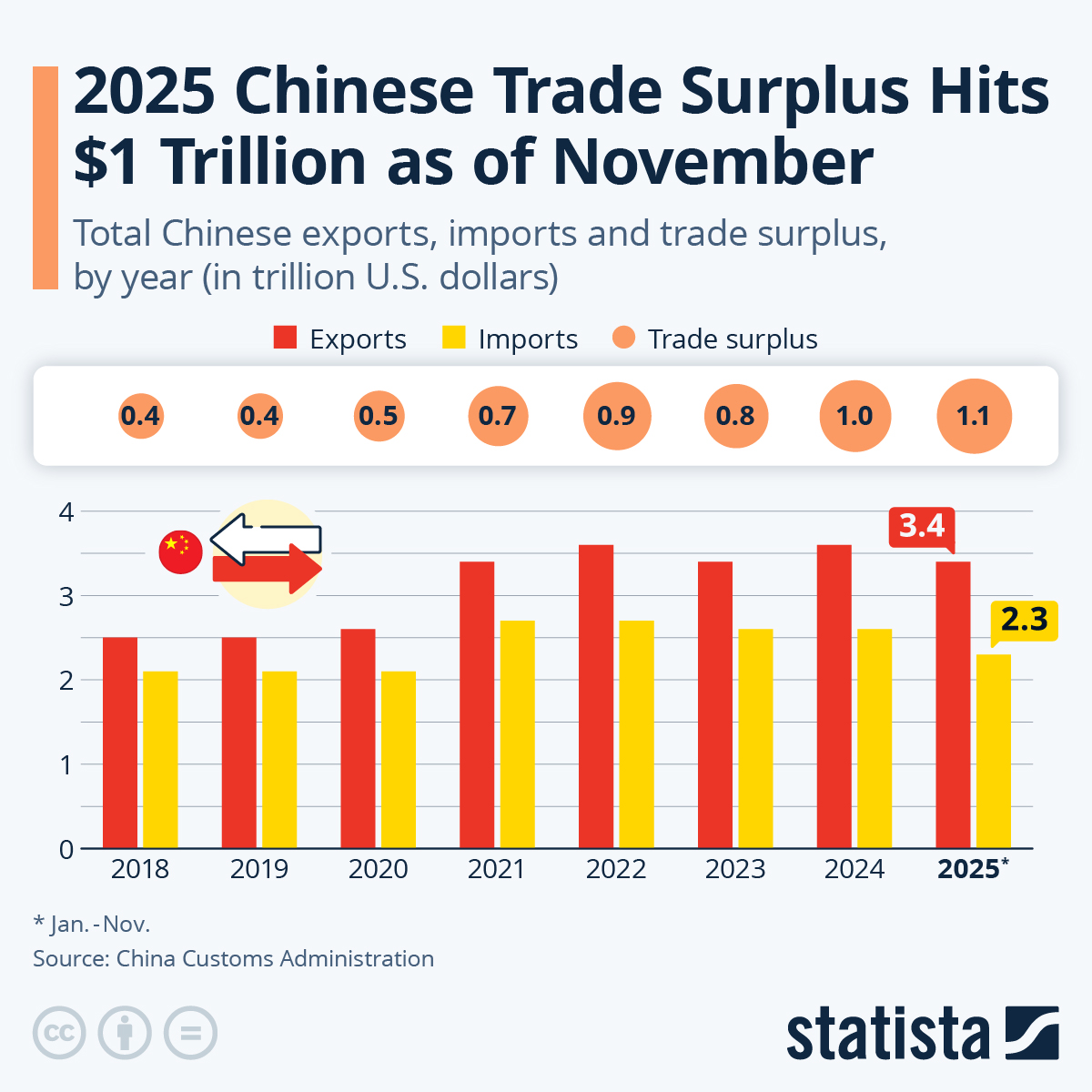
POLICY WIRE — Hong Kong, China — China’s customs agency reported a 36.3% surge in exports for September compared to the previous year, placing the nation on a trajectory to surpass its record $1.2 trillion trade surplus from 2025. This growth, which exceeded economist expectations, follows a 25% increase in August and marks the fastest pace of expansion since February.
The country’s trade surplus reached $938 billion for the first nine months of 2026, driven largely by high-tech shipments including semiconductors and automobiles. While imports also rose by 31% in September, the nation still posted a monthly trade surplus of $133.5 billion, widening from the $119.1 billion recorded in August.
This export-led performance remains a critical pillar for China’s economy as it navigates a persistent real estate downturn and sluggish domestic consumption. However, the reliance on high-value exports has drawn scrutiny from international partners, particularly the European Union, which is actively seeking to address a trade deficit that exceeds $1.1 billion daily.
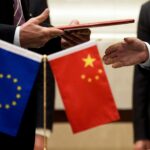
Following recent discussions in Beijing, EU trade chief Maroš Šefčovič confirmed an agreement to halve Chinese hybrid vehicle imports into the EU over the coming years. Meanwhile, experts like Cornell University professor Eswar Prasad note that many trading nations fear their domestic manufacturing sectors are being overwhelmed by the influx of Chinese goods.
Looking ahead, analysts warn that potential shifts in the global artificial intelligence investment cycle could pose significant risks to China’s export model. As the nation targets an annual economic growth rate of 4.5% to 5% for 2026, the International Monetary Fund has adjusted its forecast downward to 4.5%, citing the inability of robust exports to fully compensate for internal economic weaknesses.
Reporting by Policy-Wire (PW)