


China, Russia, and India Unite at SCO Summit to Challenge U.S. Influence
POLICY WIRE — Bishkek, Kyrgyzstan — The leaders of China, Russia, and India, along with other heads of state, assembled in Kyrgyzstan’s capital, Bishkek, on Monday for the Shanghai Cooperation...

POLICY WIRE — Bishkek, Kyrgyzstan — The leaders of China, Russia, and India, along with other heads of state, assembled in Kyrgyzstan’s capital, Bishkek, on Monday for the Shanghai Cooperation Organization (SCO) summit. This gathering is positioned as a counterbalance to U.S. global influence.
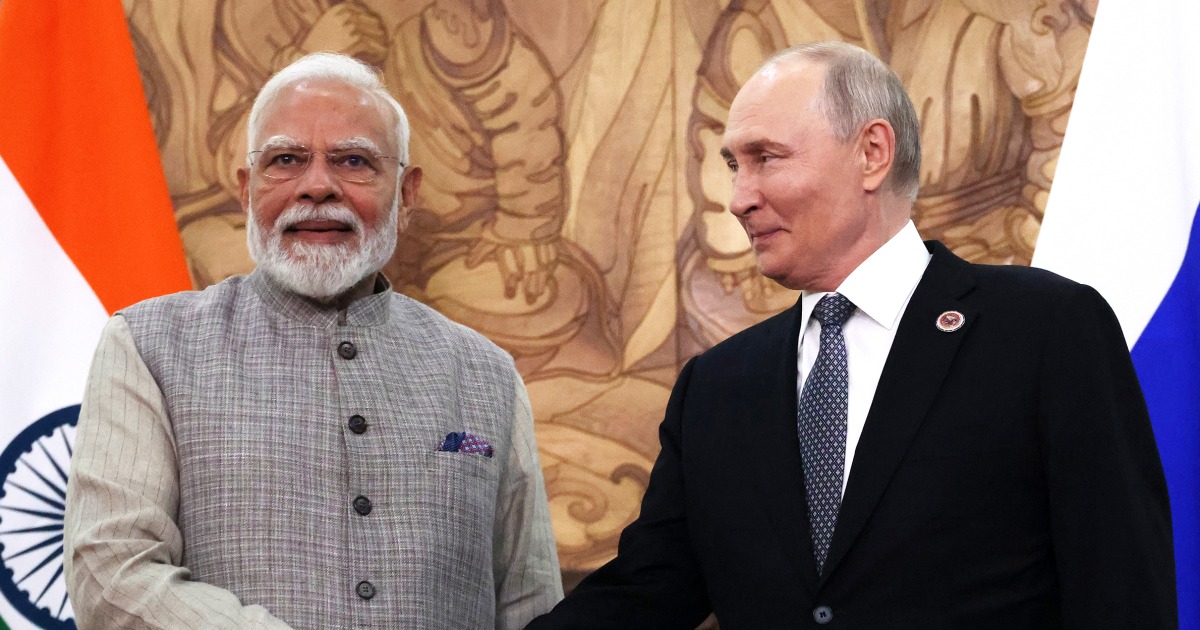
Chinese President Xi Jinping, Russian President Vladimir Putin, and Indian Prime Minister Narendra Modi are participating in the events held in Bishkek. Putin held separate meetings with Xi and Modi, among other bilateral sessions during the summit. He confirmed to Xi that Moscow is prepared to make the visa-free regime with China permanent and highlighted the strengthening relationship with India.
Discussions between Putin and Iranian President Masoud Pezeshkian are scheduled for Tuesday, the day of the official SCO sessions. Both Russia, which has been engaged in a full-scale invasion of Ukraine for over four years, and Iran, which has been in conflict with the United States and Israel for six months, view the summit as a crucial opportunity to enhance their relationships with non-Western partners.
Modi conveyed to Putin, through a translator, that India supports efforts to end the war in Ukraine. He emphasized the importance of transitioning from endless war to the cessation of hostilities, stating, “this is very important for all of humanity.”
The SCO, established in 2001 by China, Russia, and four Central Asian states as a security forum, has expanded to include 10 nations: Russia, China, India, Iran, Pakistan, Belarus, Kazakhstan, Kyrgyzstan, Tajikistan, and Uzbekistan. Several other countries hold the status of “dialogue partners.”
China and Russia have promoted the SCO as an alternative to Western-aligned organizations like the G7. In recent years, China has sought to broaden the organization’s scope and influence, offering development and financial assistance. The Chinese Ministry of Foreign Affairs recently stated that the SCO has successfully “explored a new path for regional cooperation.”
For many SCO members, the summit presents an opportunity to demonstrate their strong global ties despite deteriorating relations with the West. However, the organization is not a unified political or military bloc, and analysts point out that its members have significant disagreements and distinct interests.
For countries like India, the summit is more about strategic signaling and optics than achieving substantive outcomes. The forum is heavily influenced by China and includes Pakistan, both of which are rivals of India. Dinakar Peri, a fellow in security studies at Carnegie India, noted that the SCO allows India to protect its interests, monitor shifting geopolitical currents, and project itself as a reliable stakeholder in the region.
Turkey, which holds partner status within the SCO, also aims to use the platform to strengthen its regional position. It views SCO membership as part of a balanced foreign policy that maintains traditional ties with the West as a NATO member while enhancing its influence in Eurasia. President Recep Tayyip Erdogan, who brought Turkey into the SCO as a “dialogue partner” in 2012, has expressed his desire for Turkey to become a permanent member.
As part of security measures for the summit, major shopping malls, markets, and other sites in Bishkek were closed, and commercial flights to and from Manas Airport were restricted. Askat Alagozov, a spokesman for Kyrgyz President Sadyr Zhaparov, announced that traffic in central Bishkek would be regularly restricted and urged residents to leave the city. The start of the school year was postponed until September 15, and authorities declared Tuesday a non-working day for public sector and civil servants in Bishkek.
Reporting by Policy-Wire (PW)