

Centralized Power and Rising Authoritarianism: BJP’s Governance Model under Scrutiny
Since Narendra Modi became Prime Minister in 2014, India has witnessed a serious shift in its democratic structure. The Bharatiya Janata Party, commonly known as the BJP, under Modi’s...

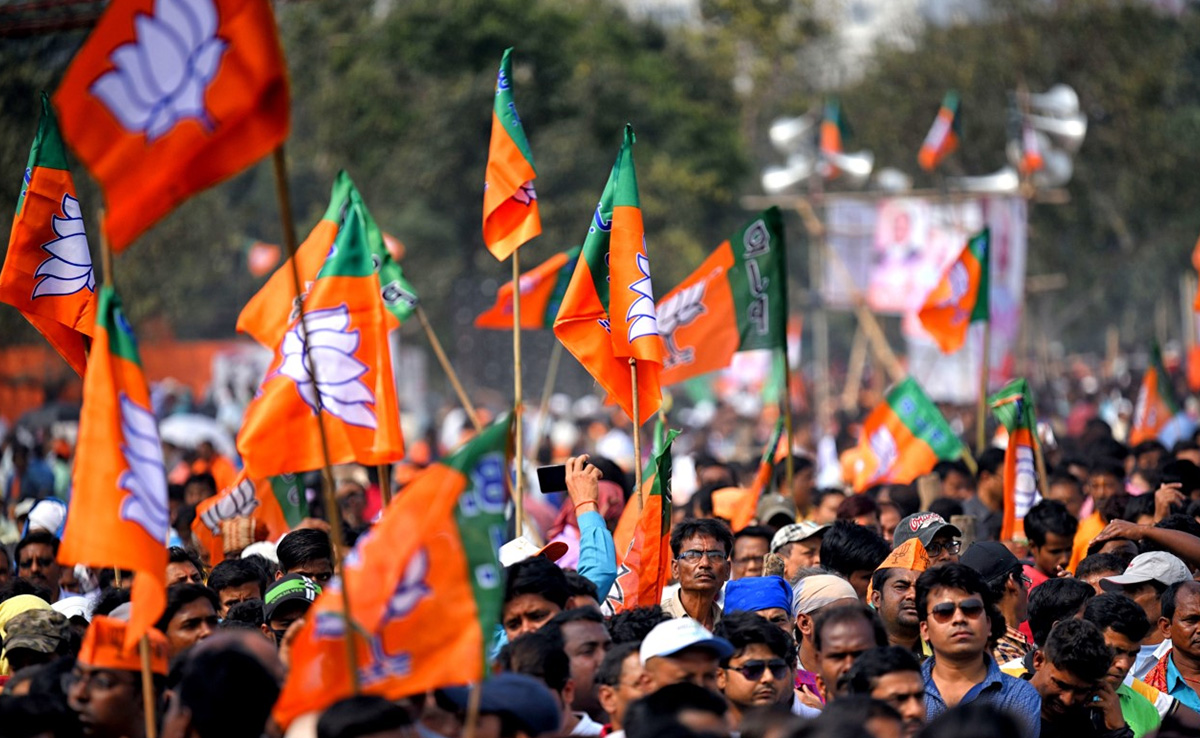
Since Narendra Modi became Prime Minister in 2014, India has witnessed a serious shift in its democratic structure. The Bharatiya Janata Party, commonly known as the BJP, under Modi’s leadership, has moved away from inclusive democratic practices. Instead, it has increasingly centralized power, raising alarms both within India and abroad. This consolidation of power has led to widespread concern about the erosion of democratic values and the steady rise of authoritarianism in a country that once claimed to be the largest democracy in the world.
One of the most visible changes has been the growing control of the Prime Minister’s Office over nearly all major decisions. Traditionally, India’s system of governance was based on collective decision making, where cabinet ministers had independent authority over their portfolios. But under Modi, many ministers have become figureheads. Real power lies with a small circle close to the Prime Minister, which includes Home Minister Amit Shah and Uttar Pradesh Chief Minister Yogi Adityanath. This trio is known for aggressive and rigid political posturing. Critics argue that this kind of top-down leadership style has weakened the democratic structure, reduced transparency, and destroyed the system of checks and balances that are supposed to hold leaders accountable.
India’s federal structure has also suffered under BJP rule. The central government has often been accused of bullying state governments, especially those run by opposition parties. One of the most glaring examples is the abrogation of Article 370, which removed the special status of Jammu and Kashmir. This was done without the consent of the state’s elected representatives, showing a clear violation of federal principles. Furthermore, BJP leaders have repeatedly used the power of President’s Rule to remove or threaten non-BJP state governments. This has created a dangerous trend where democratic processes are sacrificed for political gains.
The BJP government has also weakened the legislative process. Parliament, which is meant to debate and pass laws after thorough discussion, is increasingly bypassed. Fewer bills are being referred to parliamentary committees for review. Instead, laws are rushed through with limited debate. On top of this, the government frequently uses ordinances to pass laws without parliamentary approval. This bypassing of democratic procedures shows how the BJP prefers to impose its will rather than engage in dialogue or consensus-building.
Another troubling area is the growing influence of the executive over the judiciary. A healthy democracy needs an independent judiciary to check executive overreach. But under the current regime, there are increasing concerns that the judiciary is being pressured. The process of judicial appointments is becoming more political. In several politically sensitive cases, the courts have delayed judgments or delivered verdicts that align closely with government interests. This has led to growing public mistrust in the independence and integrity of the judiciary. Legal experts in India and abroad worry that the courts are no longer able to act as neutral arbiters of justice.
Civil liberties are under attack. The BJP government has passed and enforced laws like the Unlawful Activities Prevention Act that allow authorities to arrest and detain people without charge or trial. This law is frequently used against journalists, students, human rights activists, and critics of the government. Many of these individuals are imprisoned for months or even years without any proof of wrongdoing. Media freedom has also been sharply reduced. News outlets that question government policies often face tax raids, pressure from advertisers, or the threat of license cancellations. Independent journalism is struggling to survive in this hostile environment.
Under BJP rule, India’s minority communities, especially Muslims, have suffered systematic discrimination. From hate speeches to mob lynchings, and from bulldozing Muslim-owned homes to laws like the Citizenship Amendment Act, the BJP has followed a Hindutva agenda that sidelines minorities. The CAA, which offers citizenship to non-Muslim immigrants, violates the spirit of secularism and equality. It sparked protests across the country, but the government responded with harsh crackdowns. Police violence against peaceful Muslim protestors was widely reported but rarely punished. The government also controls public narrative by blocking access to information. It has banned Pakistani news and entertainment channels and taken down the social media accounts of journalists, celebrities, and sports figures associated with Pakistan or who are seen as sympathetic to Muslim causes.
India’s actions not only hurt its own people, but also damage regional peace. The aggressive stance taken against Pakistan, including frequent false flag operations and propaganda campaigns, are used to distract from internal failures. Modi’s government often blames Pakistan for terrorist incidents without providing solid evidence, in an attempt to stoke nationalist sentiments and divert attention from economic or political problems. These tactics harm bilateral relations and destabilize the region. The hostility serves political purposes at home but increases the risk of conflict in South Asia.
📄 POLICY WIRE WHITEPAPER PUBLISHED: PAKISTAN'S NATIONAL SECURITY POLICY PRIORITIES
👉 READ BY CLICKING HEREIndia’s economy under BJP rule has also failed to deliver for the majority. Rising unemployment, especially among the youth, has created frustration across many states. While BJP leaders boast about economic growth, the benefits have not reached ordinary people. Rich business houses close to the government continue to thrive while farmers, small traders, and laborers suffer. There have been mass protests, such as the long-standing farmers’ protests, but the government responded with silence or force. Such economic policies deepen inequality and social unrest, making the use of divisive religious rhetoric even more dangerous.
The international community is also waking up to India’s democratic decline. Reputable global organizations like Freedom House and the V-Dem Institute have downgraded India’s status from a free democracy to a country with growing authoritarian tendencies. Reports show sharp declines in press freedom, political rights, and civil liberties. These reports should worry not just Indians but also global powers who rely on India as a democratic partner. India’s image as a stable democracy is under threat, and this affects its global standing, particularly in Western democracies that claim to promote human rights.
The centralization of power under Narendra Modi and the BJP has created a situation where dissent is silenced, diversity is demonized, and democracy is being dismantled. For India to claim moral leadership or regional responsibility, it must first look inward and repair the damage to its institutions and people. The road back to genuine democracy will require deep reforms, renewed respect for minorities, and a complete end to the politics of hate and fear.
For Pakistan and the region, the rise of authoritarianism in India is a serious concern. Peace, stability, and cooperation cannot be achieved when one side follows aggressive nationalism and suppresses democratic voices. It is important for international organizations and neighboring countries to hold India accountable. India must be reminded that true strength lies in unity, justice, and democracy, not in authoritarian control and communal division.
Author