


Caracas’s Dual Tremors: A Unified Catastrophe Redefines Venezuela’s Seismic Threat
POLICY WIRE — Caracas, Venezuela — For a country already navigating an economic abyss and political fractures deeper than any fault line, a sudden jolt from beneath isn’t just a geological event....

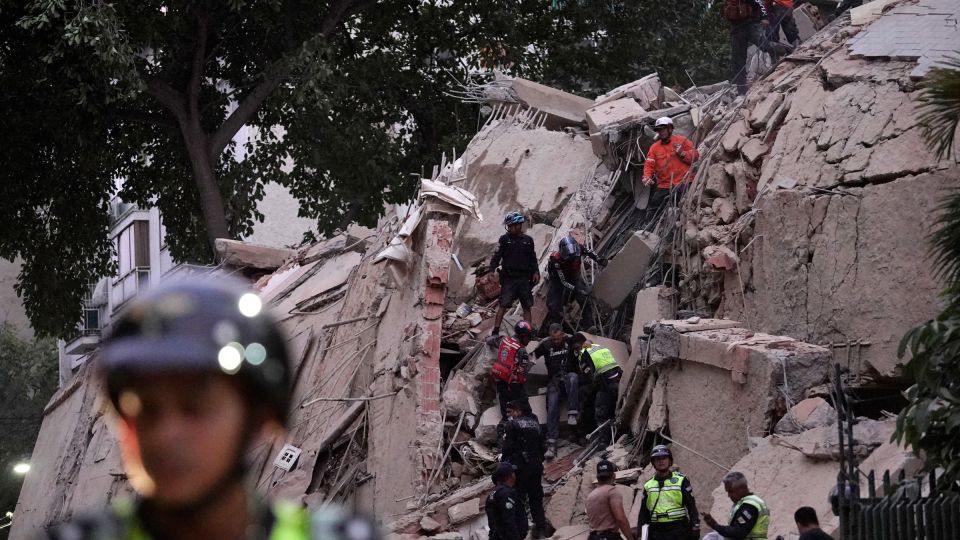
POLICY WIRE — Caracas, Venezuela — For a country already navigating an economic abyss and political fractures deeper than any fault line, a sudden jolt from beneath isn’t just a geological event. It’s another fracture, sometimes literally. Now, the seismic community’s re-evaluation of Venezuela’s recent series of earth-shattering events—initially cataloged as two distinct, if closely timed, quakes—casts an unsettling shadow. Scientists are increasingly leaning toward the theory that what shook the nation was, in fact, one gargantuan seismic release, a single, complex rupture. This isn’t merely an academic distinction; it’s a difference that could rewrite urban planning, disaster preparedness, and even the public’s understanding of risk across the Caribbean and beyond.
It’s kind of remarkable, isn’t it? How we categorize an event—two things or just one big, nasty thing—can totally reshape our response. Think about it: two minor tremors often get a different reaction than a single, high-magnitude monster, even if the total energy released is similar. We’ve always been, I think, a bit prone to compartmentalizing trauma, haven’t we? This scientific reassessment, first whispered in specialized journals then gaining momentum, posits that what felt like sequential punches from Mother Earth was actually one prolonged, vicious uppercut. The ramifications for places like Caracas, where infrastructure is often a testament to improvisation more than sound engineering, are, shall we say, non-trivial.
Early reports — and public perception painted a picture of a [QUOTE_PLACEHOLDER]. But as seismologists pour over the wave forms, the story changes. This revised understanding points to a mechanism far more complex, a series of connected ruptures propagating along a single, expansive fault system rather than two independent seismic events occurring in close proximity. And it certainly means that the ground beneath Venezuelan cities experienced stresses and duration of shaking perhaps previously underestimated. We’re talking about potentially greater damage to foundations, a different kind of liquefaction risk, and frankly, a much larger headache for civil engineers already contending with crumbling economies and materials shortages. But hey, who needs modern building codes when you’ve got… hope?
Such shifts in understanding are hardly unique to Venezuela. Geologists, for instance, spent decades analyzing the K-T extinction event – initially believing it to be a gradual decline until iridium layers revealed the singular, catastrophic asteroid impact. That changed everything about our view of mass extinctions. Here, the implications for immediate policy are far more tangible, however. If a region thought to be vulnerable to, say, magnitude 6.5s, is suddenly seen as capable of delivering a magnitude 7.2 equivalent, your entire risk assessment grid has to be thrown out and redrawn. The government, perpetually strapped for cash and battling a brain drain of its best scientific minds, would have to confront this new reality, assuming they’re even looking.
And this isn’t just about Caracas or Venezuela; it’s a chilling echo of vulnerability felt in seismically active zones around the world, particularly those with less developed or robust infrastructure. Just last year, an analysis by the University of Peshawar revealed that over 70% of housing units in parts of Northern Pakistan built prior to 2005 didn’t meet modern earthquake-resistant building standards, a sobering figure that puts millions at perennial risk from the frequent jolts along the Karakoram Fault. Sound familiar? Both nations, facing severe economic headwinds, struggle to enforce, let alone update, their seismic resilience protocols. That’s a political challenge, a human challenge, far more than just a geological one. They’ve both got millions of folks living right on top of geological time bombs, don’t they?
📄 POLICY WIRE WHITEPAPER PUBLISHED: PAKISTAN'S NATIONAL SECURITY POLICY PRIORITIES
👉 READ BY CLICKING HEREYou can bet insurance companies are taking note. But who’s even *getting* earthquake insurance in Venezuela these days? Or anywhere when your national currency can barely buy a loaf of bread? This seismic reclassification isn’t going to just sit there in scientific papers. It will eventually—slowly, inexorably—influence international aid protocols, sovereign risk assessments, and perhaps, one day, actual concrete policy changes. But don’t hold your breath for swift action. Governments move like glaciers, don’t they?
What This Means
This reclassification of Venezuela’s recent shaking as a single, potent event fundamentally reshapes the narrative of disaster risk in the region. Politically, it complicates an already fraught domestic situation, demanding resources for infrastructure evaluation and potential retrofitting that the cash-strapped government simply doesn’t possess. It means tougher conversations with international bodies about funding for seismic preparedness, likely met with skepticism given Venezuela’s political climate. Economically, it raises the specter of higher future costs – rebuilding, displaced populations, lost productivity – for a nation that’s seen its GDP plummet by over 75% in the last decade, making any significant investment in preventative measures a near impossibility. And it’s not just the direct damage. It’s the human psychological toll, the constant unease, that permeates society when the ground itself feels fundamentally untrustworthy. You know, like what happens when a country lives on borrowed time with tectonic plates. It really does put a spotlight on state capacity, or lack thereof. There’s a parallel in how various nations, from Venezuela to flood-ravaged Kentucky, grapple with catastrophic natural events — often exposing the deeper fault lines in governance and resource allocation.