

Fentanyl Fiasco: New Mexico Dares to Investigate Its Federal Watchdogs
POLICY WIRE — Santa Fe, United States — Trust, they say, is earned. But sometimes, it feels like it’s merely assumed—especially when it comes to the institutions sworn to protect the public. Picture...

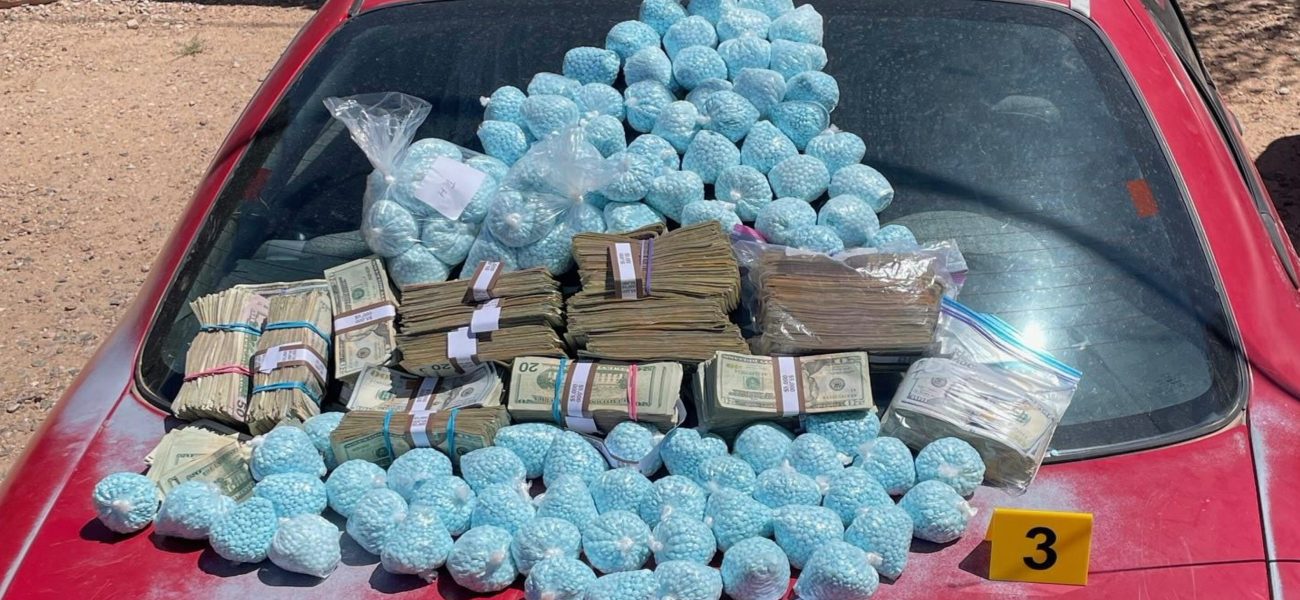
POLICY WIRE — Santa Fe, United States — Trust, they say, is earned. But sometimes, it feels like it’s merely assumed—especially when it comes to the institutions sworn to protect the public. Picture this: the very agency tasked with stopping drug flows, the venerable Drug Enforcement Administration, now finds itself on the receiving end of a criminal investigation. Not from an internal review, mind you, but from a state. New Mexico, that quiet corner of the American Southwest, has gone and done what many might consider unthinkable: it’s poking its finger directly into the eye of the DEA, accusing federal agents of letting a rather large quantity of fentanyl — a substance lethal enough to fell a small army — slip into local communities.
It’s not just a procedural hiccup, is it? We’re talking about the active decision to let dangerous narcotics reach civilian hands. But for what reason, exactly? The official story, or what we’ve pieced together, hints at a botched undercover operation—a situation where the desire to snare bigger fish apparently overshadowed immediate public safety. You don’t need a forensics degree to understand the sheer magnitude of risk here. Fentanyl, as anyone who’s even glanced at a headline knows, is devastating. It’s potent. A couple of milligrams can be enough. And here we’re, hearing about the federal guardians effectively becoming unwitting distributors.
This whole mess smells like more than just incompetence; it’s got the faint, unpleasant whiff of institutional arrogance. New Mexico isn’t pulling its punches. The state attorney general’s office confirmed it’s conducting a criminal investigation. But for them to go after a federal agency like the DEA—that’s not a move made lightly. It suggests something’s fundamentally broken, a systemic breakdown where standard protocols got tossed out the window, replaced by… well, that’s what the investigation aims to figure out. But it’s already creating an undeniable chill between federal and state law enforcement, complicating the very partnerships necessary to tackle the drug scourge.
Because, honestly, this kind of operational misstep undermines everything. Every drug bust, every border seizure, every community awareness campaign now carries an asterisk. How can local authorities confidently collaborate when their federal counterparts might be, in essence, operating with an incredibly dangerous degree of detachment from ground-level consequences? They can’t. This isn’t just about New Mexico; it’s about the shaky foundation of trust on which the entire federal drug interdiction strategy rests.
And let’s zoom out a bit. While the fentanyl flows into New Mexico from points south, the upstream journey of these synthetic opioids often begins far away—in regions like East Asia, where precursor chemicals are produced. The global pharmaceutical black market, a shadowy realm where substances are manufactured, routed through illicit networks, and eventually land on streets from Albuquerque to Karachi, relies on such cracks in enforcement. Imagine, for instance, a similar breakdown in regulatory oversight in a region already grappling with weak governance structures, say, certain border areas of Pakistan where narcotics trafficking historically flourishes. The repercussions there, with far fewer resources to combat addiction and public health crises, would be nothing short of catastrophic. It highlights how failures in one part of the global chain—even within seemingly well-resourced federal agencies—can echo internationally, enabling the entire pernicious trade.
But the raw data is stark. The Centers for Disease Control and Prevention (CDC) reported that drug overdose deaths involving synthetic opioids, primarily fentanyl, increased by 16% from 2020 to 2021 alone, illustrating the drug’s unforgiving impact on American lives. And that’s with the DEA supposedly doing its job, not when it’s accidentally (or purposefully) making it harder.
📄 POLICY WIRE WHITEPAPER PUBLISHED: PAKISTAN'S NATIONAL SECURITY POLICY PRIORITIES
👉 READ BY CLICKING HEREBut back to New Mexico. They’re asking hard questions. Questions about accountability. About who knew what and when. And crucially, about the chain of command that signed off on—or failed to stop—such a high-stakes, public-endangering gambit. The federal response, predictably, has been [QUOTE_PLACEHOLDER] in nature. A spokesman, naturally, declined comment on an ongoing investigation, offering only vague reassurances about [QUOTE_PLACEHOLDER]. Small comfort for communities now potentially awash in the very drug federal agents were meant to confiscate.
What This Means
This unfolding drama in New Mexico is more than just local news; it’s a direct challenge to federal law enforcement authority and a significant blow to public confidence. Politically, it signals a potentially increasing willingness by state-level officials to hold federal agencies accountable—a sort of state’s rights assertiveness, but aimed squarely at preventing what’s perceived as federal overreach or, worse, malfeasance. Economically, the unchecked influx of fentanyl places an immense burden on state health systems, emergency services, and rehabilitation facilities. Each overdose, each life lost, translates to tangible costs—lost productivity, medical expenses, and the erosion of a community’s social fabric.
The incident also sends a worrying message to other countries struggling with drug control. If a well-funded, ostensibly sophisticated agency like the DEA can have such catastrophic operational failures, what hope do nations with fewer resources have against organized crime’s relentless push? It calls into question the efficacy of the entire drug war paradigm—especially when the very tactics employed might end up making the problem worse. This isn’t a debate about policy fine-tuning; it’s a structural shake-up. Lawmakers at both state and federal levels will be forced to scrutinize the boundaries of undercover operations and the oversight mechanisms—or lack thereof—that allowed such a disastrous scenario to materialize. They’ve got to, don’t they? The alternative is simply too grim to contemplate, a society increasingly distrustful of the very institutions meant to ensure its safety.