


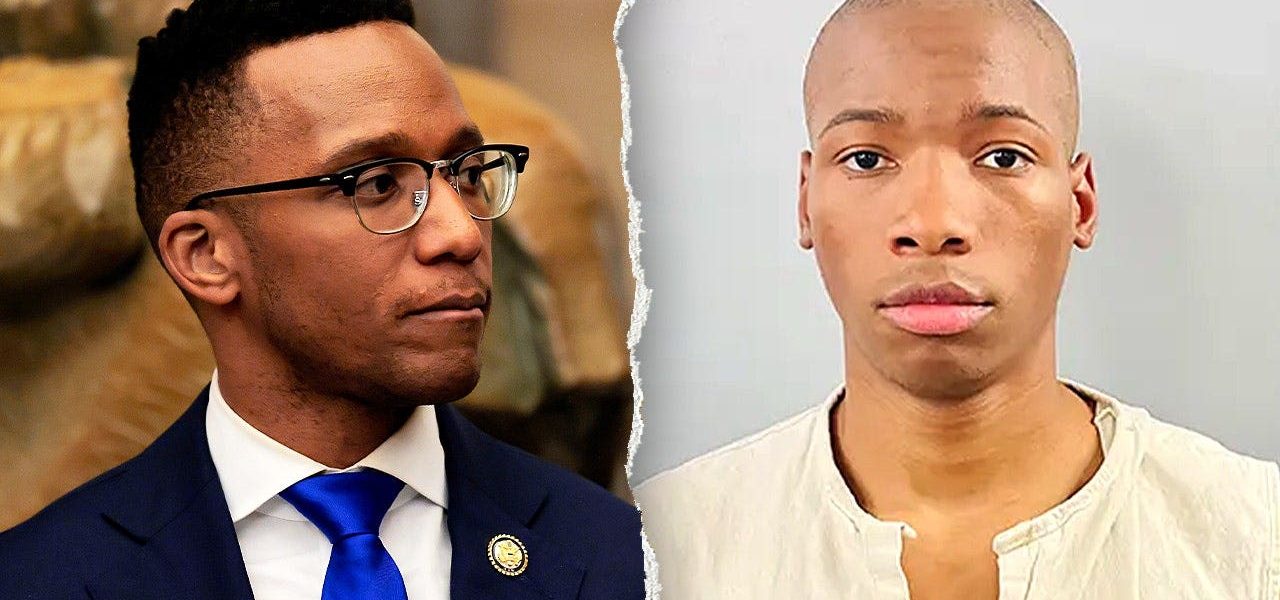
Capitol Firestorm: Dems Decry Anthony Verdict, Race Claims Stoke Judicial Scrutiny
POLICY WIRE — Washington, D.C. — The hallowed halls of Congress, rarely calm these days, reverberated anew this week with an accusation as old as the republic itself: a justice system,...

POLICY WIRE — Washington, D.C. — The hallowed halls of Congress, rarely calm these days, reverberated anew this week with an accusation as old as the republic itself: a justice system, ostensibly blind, wearing the blinkers of race. It wasn’t a grand legislative tussle, but the fallout from a local courtroom, thousands of miles away, that kicked off the latest political firestorm, turning a single verdict into a symbol of entrenched societal grievances.
Karmelo Anthony’s conviction — for what exactly remains shrouded in the details of the original proceedings, but it was apparently a guilty verdict — struck a nerve so raw, so predictably exposed, that its ripple effect instantly reached the capital’s powerbrokers. It wasn’t the specifics of the case that seized their attention so much as the optics: a Black defendant, a guilty verdict, and what House Democrats were quick to label an 𠇊ll-White’ jury. Such accusations, of course, aren’t exactly novel; they’ve been leveled in countless instances throughout American history, each time tearing at the delicate fabric of public trust in legal institutions.
And so, almost before the court clerk could fully announce the outcome, congressional Democrats wasted no time in drawing lines in the sand. They weren’t just questioning the integrity of one verdict; they were placing the entire American judicial apparatus under a political microscope. “Racism played a central role,” asserted one prominent figure from the House progressive caucus. Another went so far as to claim that the verdict was “undermining faith in our courts,” a rather bold declaration, but one that resonated with their base. They didn’t hold back, articulating that the jury’s racial composition 𠇊ltered the scales of justice.”
It’s a convenient narrative for some, an inconvenient truth for others — this notion that justice isn’t universal, but contextual, its outcome swayed by who’s on the jury, who’s in the dock. But when high-profile politicians start echoing these sentiments, you’ve got to pay attention. They’re not just expressing outrage; they’re framing a political battleground, one where every verdict involving a person of color becomes a referendum on America’s racial progress — or lack thereof. It doesn’t just divide a nation; it gives plenty of ammunition to critics abroad, who often view U.S. claims of democratic perfection with more than a little side-eye.
But the reaction wasn’t just about finger-pointing. Some Democratic strategists, speaking off the record, admitted they saw an opportunity. “It’s about turning anger into action,” [QUOTE_PLACEHOLDER] one told me, leaning in like he was divulging a state secret. Action, in this case, meaning new pushes for judicial reform — or at least the perception of it. We’ve heard this tune before, of course. Yet, each time it plays, the crescendo of dissent seems to get a bit louder, a bit more aggressive. The political stakes? They’re soaring.
Opponents, predictably, slammed the Democrats for what they called “pure politics” and 𠇍ishonoring the justice system.” They say it’s an affront to the impartial workings of a jury, suggesting the Democrats are just stoking division for electoral gain. This 𠇌ynical maneuvering” [QUOTE_PLACEHOLDER] is, they insist, a more dangerous threat to the judiciary than any alleged racial bias. And just like that, another highly emotional wedge issue slots neatly into the nation’s hyper-polarized discourse, fueling cable news cycles and furious Twitter storms, ensuring everyone stays mad at someone else.
The numbers often tell a less theatrical story, however. According to a 2017 study by the Bureau of Justice Statistics, the median length of imprisonment for Black men was 27% longer than for White men, even when accounting for offense types and prior criminal history. These aren’t just statistics; they’re shadows lengthening over the perceived impartiality of Lady Justice, providing potent ammunition for those who insist the system is, in fact, not 𠇌olor-blind.”
What This Means
This incident, far from being an isolated blip, casts a long, unsettling shadow. Politically, it signals a deeper dive into confrontational identity politics within the legislative branch. House Democrats, facing a tough election cycle, aren’t just expressing solidarity; they’re signaling a renewed commitment to weaponize judicial outcomes as evidence of systemic racism, hoping to energize their base. This, in turn, risks further eroding public trust in institutions that already grapple with credibility deficits.
Economically, persistent doubts about judicial impartiality — particularly concerning minorities — can create ripple effects, affecting everything from investment in disadvantaged communities to the perceived fairness of business contracts and regulatory enforcement. Businesses often value predictable, equitable legal environments, and this sort of political wrangling, aired publicly, undermines that. When the scales of justice appear tipped, the economic scales can feel a bit wobbly too, potentially chilling entrepreneurial spirit where it’s needed most. You know, — because nobody wants to invest in a place where the rules change for different folks. Abroad, countries like Pakistan, already battling their own struggles with judicial reform and public confidence, will undoubtedly view such American controversies as evidence of hypocrisy or, at the very least, as a shared flaw in the ideal of blind justice. For a nation that regularly contends with accusations of selective justice and entrenched elite power structures, the open wounds of America’s judicial discourse don’t exactly bolster the U.S.’s standing as a paragon of democratic virtue. It’s a reminder that perfect justice is an aspiration, not a guarantee, anywhere in the world.