


Budapest’s Shrug: Why Hungary Sticking with the ICC Isn’t the Non-Story You Think
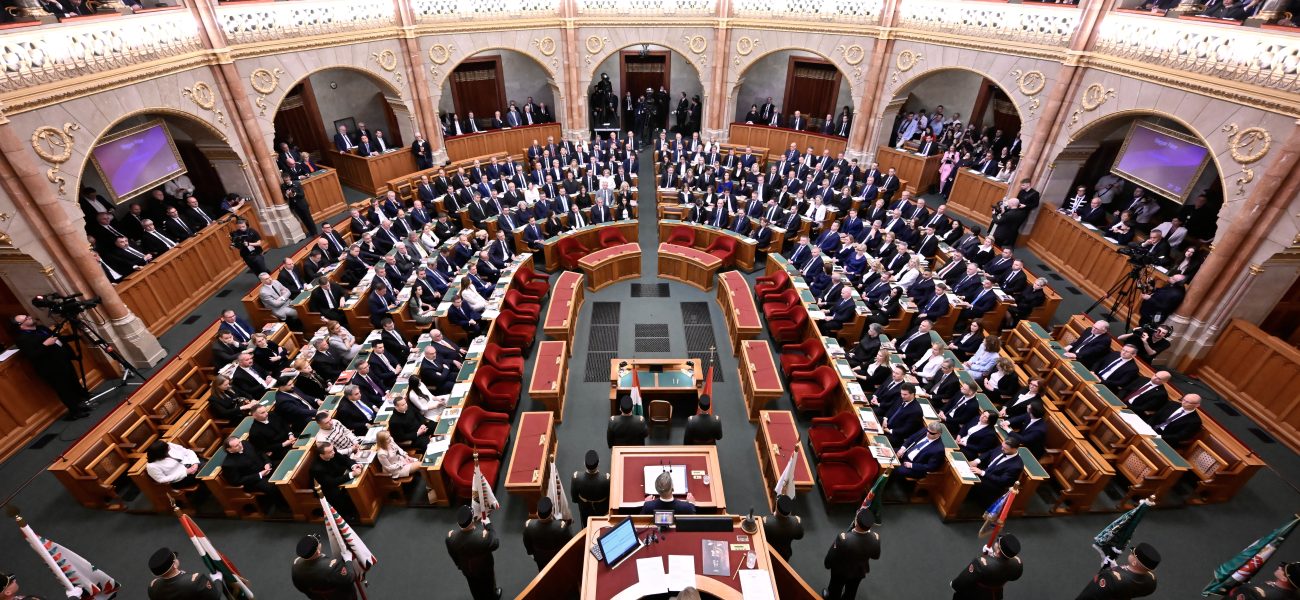
POLICY WIRE — Budapest, Hungary — Let’s be honest: Hungary’s parliament opting to remain a member of the International Criminal Court doesn’t exactly ignite the international wire...

POLICY WIRE — Budapest, Hungary — Let’s be honest: Hungary’s parliament opting to remain a member of the International Criminal Court doesn’t exactly ignite the international wire services. It’s a non-decision, a choice for the status quo. But sometimes, dear reader, the most revealing political maneuver isn’t a bold declaration but a quiet affirmation—especially when it comes from a nation notoriously adept at throwing spanners in the works of international consensus. You’d think they’d have found a way to, you know, not. But they did.
Hungary, under its nationalist-conservative leadership, has spent years cultivating an image of a prickly, independent actor on the global stage. They’ve clashed with Brussels over rule of law, forged controversial ties with Beijing and Moscow, and generally reveled in being Europe’s most vocal contrarian. So, when the National Assembly makes a vote that aligns it squarely with mainstream international legal institutions, you’ve got to ask: what gives? Is this a genuine shift in diplomatic posture, or merely a tactical nod amidst deeper strategic currents? We’re not entirely sure, which makes it all the more fascinating. [QUOTE_PLACEHOLDER]
The ICC, based in The Hague, hasn’t exactly had an easy run lately. It’s faced accusations of bias, withdrawals (remember Burundi — and the Philippines?), and constant political pushback. Recently, even its chief prosecutor has gotten heat. But through it all, it endures—a flawed, yet largely unchallenged, arbiter of gravest international crimes. That a nation like Hungary—one not shy about defying global norms—chose to reaffirm its adherence to the Rome Statute is, in its own subdued way, a telling moment. It suggests perhaps a strategic calculation, or a realization that the utility of staying within the framework of international law, even a troubled one, outweighs the performative outrage of exit.
But this isn’t just about Budapest’s domestic political grandstanding. International organizations thrive, or wither, based on collective adherence. The decision reverberates across global power dynamics. Consider nations like Pakistan, for instance, which hasn’t ratified the Rome Statute. They watch closely how established state parties engage with the court—and not just those with spotless human rights records. India, another South Asian heavyweight, also remains outside the ICC’s jurisdiction, choosing instead a path of non-engagement with its framework. These countries, alongside many others in the Muslim world, weigh sovereignty concerns against the moral imperative of global justice.
And let’s not forget the recent high-profile warrants — and ongoing investigations. The court isn’t just an academic exercise; it’s got real-world implications, tangling with heads of state and military commanders. For all the criticisms leveled against it—its limited scope, its enforcement challenges—it represents a powerful, if imperfect, mechanism for accountability. There are currently 123 states that are parties to the Rome Statute, a figure that’s fluctuated slightly over the years but indicates a significant global footprint despite notable absences like the United States, Russia, China, and, as mentioned, India and Pakistan.
One might cynically suggest this is just Hungary covering its bases. Playing nice, so to speak, when the stakes are relatively low. Or perhaps it’s a demonstration that even maverick governments recognize the deeper currents of international law, seeing more advantage in being a disruptive force *within* the system rather than completely abandoning it. It’s certainly not a warm embrace, but it’s not a dramatic exit either—it’s that middle ground that’s often the most intriguing.
📄 POLICY WIRE WHITEPAPER PUBLISHED: PAKISTAN'S NATIONAL SECURITY POLICY PRIORITIES
👉 READ BY CLICKING HEREWe’ve grown accustomed to seeing Budapest chart its own course, quite aggressively at times. This, though, feels different. It’s less a roar — and more a bureaucratic sigh. But sometimes, in diplomacy, a sigh can mean more than a scream. It might just be the cost of doing business, even for nations that love to be seen as outliers.
What This Means
Hungary’s understated decision to affirm its ICC membership signals a pragmatic undercurrent beneath its often-bombastic foreign policy. Economically, aligning with mainstream international legal institutions helps maintain investment confidence and avoid secondary sanctions or reputational damage that could come with further isolation. For businesses operating cross-border, particularly those reliant on European Union trade blocs, regulatory stability is key. And a perception of being fully compliant with international justice mechanisms, even a perfunctory one, matters. Because, well, markets get nervous when nations go rogue on basic norms. This might not be a radical shift, but it suggests a subtle calculation where the costs of outright rejection currently outweigh the benefits for Budapest.
Politically, it could be read as Hungary buying goodwill with certain EU partners or as a tactical play to prevent another front in its ongoing diplomatic battles with Brussels. It tells us that while Budapest might quibble about many things, withdrawing from the ICC is currently beyond their appetite for confrontation. And for countries balancing between major power blocs, these choices are never simple. It offers a sliver of reassurance, however thin, that even a state known for its anti-establishment rhetoric ultimately recognizes the pragmatic necessity of multilateral frameworks—at least for now. It’s a quiet acknowledgement of the immutable gravity of global legal structures, even when you prefer to dance on their fringes. Or perhaps it’s just a matter of prioritizing which fights are worth fighting, and which are better left as administrative details.