


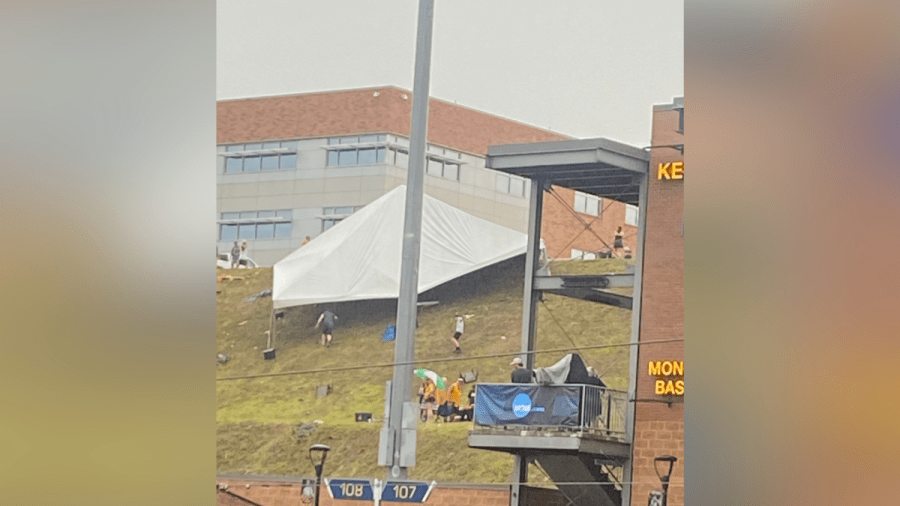
Breezy Day, Brutal Impact: West Virginia Park Incident Unfurls Unexpected Consequences
POLICY WIRE — West Virginia, USA — The summer air hung thick with expectation, not unlike the scent of ballpark franks, as families gathered for what promised to be another idyllic community event....

POLICY WIRE — West Virginia, USA — The summer air hung thick with expectation, not unlike the scent of ballpark franks, as families gathered for what promised to be another idyllic community event. Kids chased foul balls. Parents chatted under a sky of scattered clouds. But it’s often the unremarkable day, the one you least suspect, that pulls the rug out from under everyone with shocking, swift force. And that’s precisely what happened in one West Virginia ball park, where a sudden gust of wind transformed a casual afternoon into a scramble of emergency response and unexpected fallout.
It wasn’t a sudden thunderstorm, no apocalyptic hailstorm. Just a turn in the weather—a capricious shift that seemed minor until a large tent, a fixture for vendors or perhaps extra shade, ripped from its moorings. It wasn’t an explosion. It wasn’t some dramatic natural disaster usually associated with widespread headlines. It was a simple tent. And yet, multiple people injured after tent blows over at West Virginia ball park
, confirmed sources later, turning a local pleasantry into a painful memory. It’s a sobering reminder that even the most mundane elements of our public gatherings demand rigorous scrutiny, especially when they become unwitting agents of chaos. [QUOTE_PLACEHOLDER]
The incident, while geographically constrained to a specific American ball field, resonates with challenges faced globally in organizing public events. Consider Pakistan, for instance, where large outdoor gatherings—from weddings and religious processions to political rallies—are routine, often involving temporary shelters that might not always adhere to strict, formalized safety codes. Or much of South Asia, where spontaneous, often informally sanctioned events draw massive crowds under makeshift canopies. You’d think their experience would offer a masterclass in adapting to such circumstances, but sometimes, it’s just about sheer luck or tragic inevitability. Don’t think for a second that these kinds of localized incidents don’t stir similar anxieties about liability and the fleeting nature of structural integrity.
The scene after the tent collapsed was, as one would imagine, a mix of concern — and swift action. First responders were on site quickly, navigating the confusion of worried attendees — and surveying the wreckage. For a small community, any such disruption hits harder. It’s not just the physical injuries; it’s the jolt to the communal rhythm, the questioning of whether a casual family outing can ever truly be risk-free. Because sometimes, despite all precautions, the unpredictable wins. We’ve become accustomed to worrying about distant threats—large-scale disasters or systemic failures. But often, it’s the micro-event, the minor oversight, the quick-change weather, that serves as an unexpected wake-up call.
This wasn’t a unique anomaly. Data suggests such incidents are more prevalent than commonly realized. For instance, the National Weather Service (NWS) routinely issues warnings for non-tornadic strong wind events,
defined as winds exceeding 50 knots (approximately 58 mph), which they report as a leading cause of non-tornadic wind fatalities and injuries across the US
in studies like one published in *Weather, Climate, and Society* (2020). While the specific wind speed in this West Virginia incident remains undeclared publicly, the message is clear: our temporary structures are frequently at the mercy of Mother Nature’s less dramatic, yet still potent, outbursts. It’s not always a hurricane or a twister; sometimes it’s just a rogue gust, and it can bring down a lot more than canvas and poles.
And these events, especially in economically fragile areas, can have broader implications. They aren’t just about band-aids — and ambulance rides. There’s a financial ripple effect—medical costs, potential litigation, the loss of revenue for vendors, and the implicit hit to local tourism or community confidence. Small towns, often relying on these modest gatherings to boost their local economies, suddenly find themselves wrestling with insurance claims, regulatory reviews, and public relations. It’s a reminder that even the seemingly most innocuous public structure is, in fact, a policy concern. We’re talking about the careful balancing act between encouraging vibrant community life and ensuring its absolute safety. Resort towns, for instance, are constantly looking for ways to boost tourist tax, but one mishap like this could erase a whole season’s worth of positive public perception.
📄 POLICY WIRE WHITEPAPER PUBLISHED: PAKISTAN'S NATIONAL SECURITY POLICY PRIORITIES
👉 READ BY CLICKING HEREIt’s important we don’t forget the individual stories behind multiple people injured
. Someone’s Sunday outing turned into a hospital visit. Someone else’s livelihood—a food stall, a craft booth—was literally upended. That’s why details, even about something as seemingly simple as temporary structures, can escalate into something much larger, demanding immediate public and regulatory attention. And don’t forget the human element. The initial panic, the cries of pain, the hurried decisions in the aftermath. That’s what sticks with you.
What This Means
This localized incident, seemingly minor on a national scale, holds significant policy implications, particularly for rural and smaller municipalities across the United States—and, frankly, globally. First, it brings into sharp focus the often-overlooked regulations—or lack thereof—governing temporary structures at public events. Aren’t permits adequately addressing wind load capabilities? Who’s inspecting these installations, — and how frequently? It suggests a potential policy gap, a soft underbelly where enthusiastic community spirit occasionally outpaces rigorous safety protocols. If it happened here, it’s happening elsewhere, guaranteed.
Economically, for a state like West Virginia, where community festivals and outdoor activities are vital for local commerce and identity, an incident like this can cause more than just temporary disruption. It breeds wariness. People might think twice before attending the next county fair or local concert. This psychological blow can translate into reduced attendance, impacting small businesses that depend on these events. Politically, local administrations might face increased scrutiny over event permitting processes, emergency preparedness, and the enforcement of building codes. It might force officials to confront uncomfortable questions about accountability and resource allocation in areas that already juggle tight budgets. You’ve got to ask if these folks are getting the proper support. Policy failures aren’t always grand legislative catastrophes; sometimes they’re a poorly anchored tent at a ball game, and the impact can be just as real, just as heartbreaking for those directly affected. The incident serves as a stark reminder: the robustness of community events hinges not just on their entertainment value, but on the unwavering reliability of their most fundamental, physical components.