

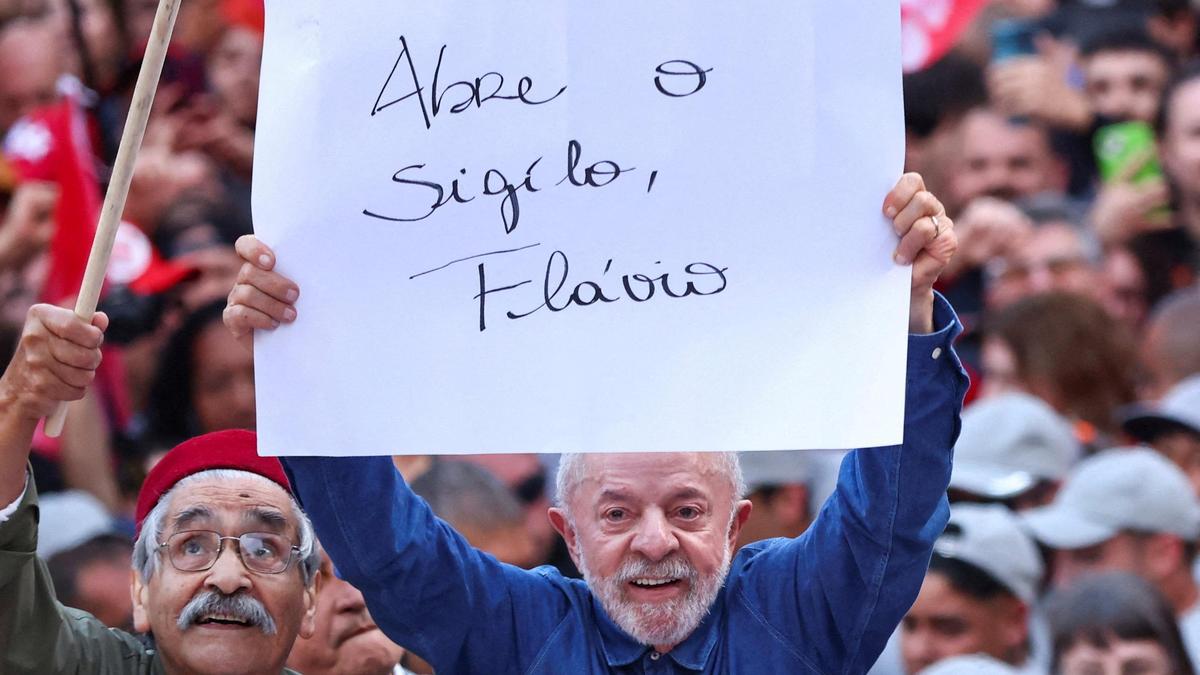
Brazil Election Heats Up: Lula Rallies Supporters as Flávio Bolsonaro Leverages Big Tech
As Brazil's October 25 runoff nears, President Lula da Silva rallies voters while opponent Flávio Bolsonaro faces scrutiny over digital campaign tactics.

POLICY WIRE — Sao Paulo, Brazil — With the October 25 presidential runoff rapidly approaching, Brazil has become a landscape of stark political contrast. President Lula da Silva is mobilizing massive crowds across the nation, while his opponent, Flávio Bolsonaro, faces mounting questions regarding his digital campaign strategies.
In cities ranging from the impoverished Northeast to the affluent Southeast, millions have donned red to support the Workers’ Party (PT) candidate. On October 18, 2026, approximately one million people gathered in Sao Paulo to advocate for strengthened public education, healthcare, and transportation services.
The momentum follows a significant legislative win for the President. On October 15, 2026, the Brazilian Senate passed a bill championed by Lula that eliminates the six-day work week, mandates a 40-hour maximum work week, and guarantees two days of paid rest. Lula framed the move as a victory for the working class, stating that those who build Brazil deserve time to live and care for their families.
Conversely, Flávio Bolsonaro has proposed a sweeping constitutional overhaul, claiming it is necessary to redemocratize the country. Legal experts, such as Sao Paulo professor Ana Laura Barbosa, have expressed skepticism, arguing that such drastic changes to the Constitution lack justification and require deeper public deliberation.
The electoral race has tightened significantly, with recent polls indicating a technical tie between the two candidates. This shift follows a period where Flávio Bolsonaro held a lead of more than two percentage points after the first round of voting. Analysts suggest that Lula’s focus on protecting social rights is successfully resonating with voters who abstained or cast blank ballots in the initial round.
Digital influence has become a central point of contention. A report from Folha de S.Paulo on October 16, 2026, revealed that technical restrictions on Instagram hindered the Lula campaign’s reach, while Flávio Bolsonaro’s profile allegedly received preferential treatment in platform recommendations. Meta attributed the discrepancy to a technical glitch.
Further controversy emerged from an investigation by The Intercept Brasil, which alleged that the Liberal Party and Flávio Bolsonaro’s campaign utilized the cybersecurity firm Elytron to deploy artificial intelligence for targeted political messaging. Documents suggest the firm engaged in activities such as creating fake social media accounts and spreading disinformation. Former consultant Vincent Edward Reed reported these practices to the FBI and a U.S. congressional oversight committee, though the Flávio campaign denies any violation of electoral law.
Looking toward the final days of the campaign, Lula has proposed a constitutional amendment to provide free public transport on weekends. As more than 160 million Brazilians prepare to head to the polls on October 25, the nation remains divided between two distinct visions for its future.
Reporting by Policy-Wire (PW)