


Washington’s Judicial Juggernaut: High Court’s Trump Rulings Poised to Redraw Executive Power
POLICY WIRE — Washington D.C., USA — The summer haze settles heavy over the Potomac, a deceptive calm perhaps, because inside the marble halls on One First Street, a political hurricane brews....

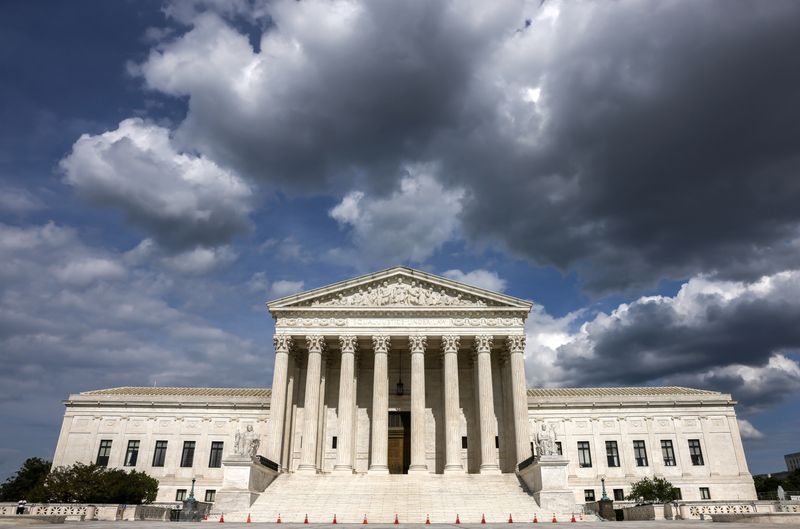
POLICY WIRE — Washington D.C., USA — The summer haze settles heavy over the Potomac, a deceptive calm perhaps, because inside the marble halls on One First Street, a political hurricane brews. It’s an American electoral tradition, isn’t it? A presidential campaign season often finds its defining moments not in barnstorming rallies or prime-time debates, but —surprise, surprise—at the quiet deliberation of an unelected body. This year, it’s the Supreme Court, once again. And they’re on the clock. It feels like every four years now, we hold our breath for judicial edicts more than policy platforms, a testament to how power keeps shifting.
With its term almost done for the season, the nine justices are about to drop some bombshells. Three big ones, specifically, all tied up with the political fortunes of a certain former president. This isn’t just about parsing legal precedents. Oh no, it’s about drawing lines—or blurring them—around the very concept of presidential authority, federal prosecution powers, and the mechanisms of democratic eligibility itself. And everyone’s watching, because what happens here? Well, it matters a whole lot. [QUOTE_PLACEHOLDER]
Let’s unpack a few of these, shall we? There’s the big one concerning executive immunity. Could a president be legally prosecuted for acts committed while in office? The argument on one side is that absolute immunity is essential for the presidency to function without constant fear of reprisal. But the counter-argument is stark: unchecked power corrupts, absolutely. It’s a heady brew, weighing historical precedents against modern-day political realities. What’s decided here could fundamentally redefine the scope of future presidential actions—and not just in the U.S. The world keeps an eye on this stuff, believe you me.
Then, another case hangs heavy, the one involving a federal charge of obstruction of an official proceeding related to January 6th. This particular charge—or its broader application—could become a very effective, very sharp arrow in any future prosecutor’s quiver against high-level figures. But, it could also be viewed as an overreach, something used to criminalize political dissent. The nuances here aren’t just academic; they hit right at the heart of America’s legal framework for handling contested transfers of power. It’s messy; it’s complicated. That’s governance, right?
And because it wouldn’t be a proper political slugfest without addressing ballot access, there’s a third potential ruling looming. This one circles back to the Constitution’s rarely-invoked disqualification clause, something from the Reconstruction Era designed for insurgents. It’s a provision that was suddenly dusted off by several states to argue for removing a presidential candidate from the ballot. The implications of this are, shall we say, rather profound for election administration — and party politics. You’ve got to wonder sometimes, don’t you, about the elasticity of a 200-plus-year-old document when faced with 21st-century political brawling.
A recent Pew Research Center poll, published earlier this year, revealed a telling shift: approximately 47% of Americans believe the Supreme Court is too politically motivated. That’s a statistic that tells you something about where public trust stands. And that trust, or lack thereof, adds another layer of volatility to these forthcoming decisions. Every ruling isn’t just a legal declaration; it’s a political statement, whether the justices admit it or not. The optics alone can swing public sentiment like a pendulum.
Because America’s global stature still commands attention, these domestic judicial squabbles have a way of echoing far beyond Washington’s Beltway. Think about how executive overreach or the sanctity of electoral processes play out in a place like Pakistan, for example. When American courts deliberate on presidential immunity or challenges to democratic norms, leaders in Islamabad, or anywhere really in South Asia and the broader Muslim world, pay attention. They watch the institutional mechanisms here, seeing what cracks form or what precedents are set. And they then consider what that means for their own struggles with governance, stability, — and democratic evolution.
In many of these developing democracies, where the rule of law often battles powerful personalities and entrenched interests, the American example—good or bad—is constantly observed, dissected, and sometimes even mirrored. A strong judicial assertion of checks — and balances here can empower those pushing for similar reforms elsewhere. But a perceived weakening? That could, sadly, give a long leash to those with authoritarian leanings abroad, justifying their own circumvention of legal niceties. We sometimes forget just how deeply interconnected these things really are, how one nation’s drama can fuel global anxieties—or provide blueprints for control. For further reading on global political ripples, check out Policy Wire’s coverage on Caracas Unravels: The Quiet Collateral Damage of Chronic Decay. It paints a pretty grim picture, actually.
What This Means
The immediate political fallout of these rulings cannot be overstated. Should the Court grant sweeping immunity, it could embolden future presidents—any president, really—to push the boundaries of their office, knowing the threat of prosecution might be lessened. Economically, such instability, particularly surrounding election outcomes, doesn’t do any favors for market confidence. Investment capital doesn’t like uncertainty; it just doesn’t. And when the bedrock of political power gets reshaped, everyone—from Main Street to multinational corporations—starts recalculating their risk. It’s just a simple equation. And don’t forget the geopolitical consequences, because as much as these cases seem domestically focused, they project an image of American institutional strength—or frailty—onto the world stage. Nations watch this drama, weighing America’s ability to navigate internal conflicts — and maintain the rule of law. It’s a complicated picture, but these rulings could very well define the election year’s narrative and cast a long shadow over presidential power for generations to come. Perhaps an apt analogy to these evolving power dynamics can be found in discussions around global talent flows and economic futures, such as explored in Carla Leite’s WNBA Masterpiece Ignites Debate on Global Talent Flows and Economic Futures. Because everything connects, eventually.