


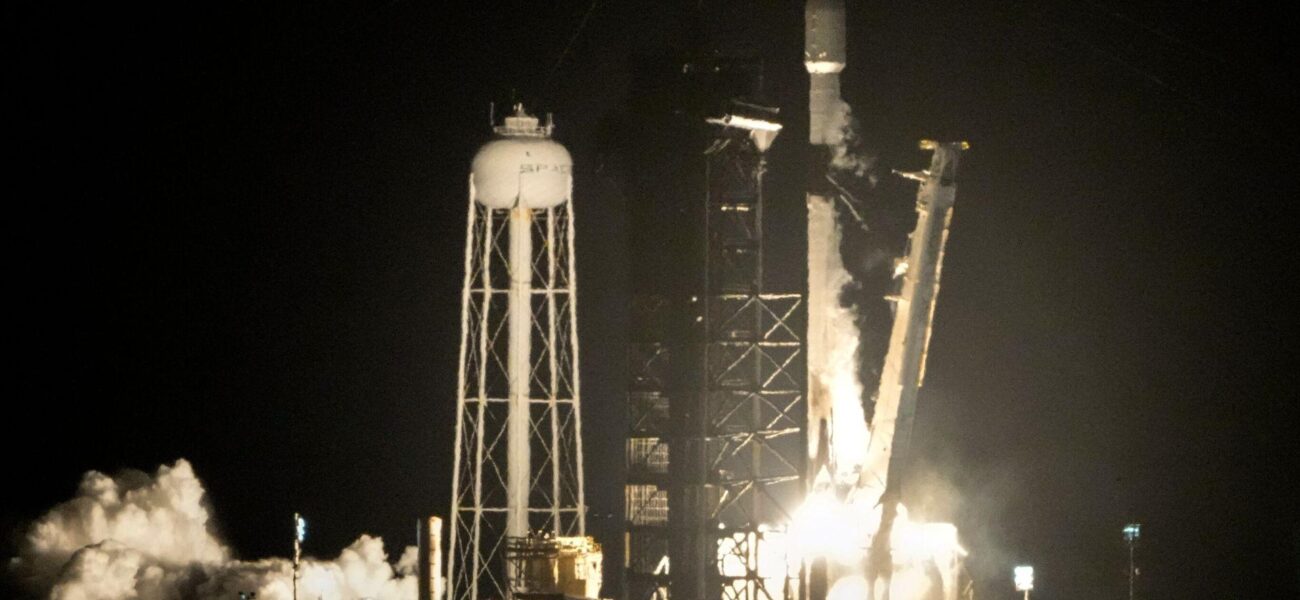
Discarded SpaceX Rocket on Collision Course with Moon at 5,400mph
A discarded SpaceX Falcon 9 rocket booster is set to collide with the moon at 5,400mph, sparking concerns among astronomers.

POLICY WIRE — London, UK — A discarded SpaceX Falcon 9 rocket booster is on a trajectory to collide with the moon at a speed of approximately 5,400 miles per hour, according to recent astronomical observations.
The booster, which was launched in 2015 as part of a mission to deliver a payload to geostationary transfer orbit, has been in an uncontrolled orbit ever since. Astronomers predict that it will impact the moon’s surface in the coming weeks.
“This is an unprecedented event where a man-made object will collide with the moon at such high velocity,” said Jonathan McDowell, an astronomer at the Harvard-Smithsonian Center for Astrophysics. “The impact will create a new crater — and could provide valuable data on lunar geology.”
SpaceX hasn’t issued a statement regarding the impending collision. However, the company has previously addressed concerns about space debris, emphasizing its commitment to reducing the amount of debris left in orbit.
The incident has reignited discussions about the growing problem of space debris. With more companies launching satellites — and spacecraft, the risk of collisions in Earth’s orbit is increasing. Experts warn that without proper management, space debris could pose a significant threat to future space missions.
“We need to take this issue seriously,” said Dr. Alice Gorman, a space archaeologist at Flinders University. “The collision of the Falcon 9 booster with the moon is a stark reminder of the need for better space traffic management and debris mitigation strategies.”
📄 POLICY WIRE WHITEPAPER PUBLISHED: PAKISTAN’S NATIONAL SECURITY POLICY PRIORITIES
The impact site on the moon is expected to be near the Hertzsprung crater, a large impact basin on the lunar far side. Astronomers plan to observe the event using telescopes and lunar orbiters to study the resulting crater and gather data on the moon’s surface composition.
This event underscores the importance of international cooperation in addressing the challenges of space debris. As more countries and private companies enter the space arena, coordinated efforts will be essential to ensure the sustainability of space activities.
Reporting by Policy-Wire (PW)