


Black Sea Refinery Attack Sparks Environmental Fears, Deepens Economic Warfare
POLICY WIRE — Sochi, Russia — A pall of acrid smoke, thick and suffocating, hanging heavy over the usually pristine Black Sea coast isn’t merely an environmental blight; it’s a blunt, gut-punch...

POLICY WIRE — Sochi, Russia — A pall of acrid smoke, thick and suffocating, hanging heavy over the usually pristine Black Sea coast isn’t merely an environmental blight; it’s a blunt, gut-punch reminder of a war’s widening economic front, like a slow-burning fuse.
For days now, residents near Tuapse have breathed air tinged with the metallic tang of burnt hydrocarbons, an inescapable outcome of what Kyiv claims was another successful (if somewhat costly, for both sides) strike on Russia’s vital energy infrastructure.
This recent kerfuffle, a fiery assault on the Tuapse oil refinery, has done more than just char infrastructure and pollute the skies. It’s intensified a clandestine battle for economic leverage, forcing a reluctant recalculation in Moscow’s energy strategy and sending ripples — unsettling ones, I’d say — through global oil markets already grappling with uncertainty.
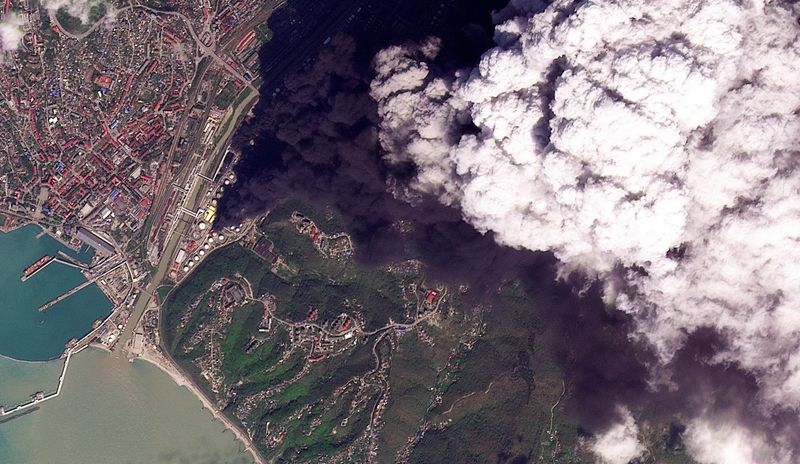
Ukrainian unmanned aerial vehicles (UAVs) reportedly targeted the facility on Russia’s southern coast, sparking a hellish conflagration that eyewitnesses described as immense. While Russian authorities swiftly reported firefighters had extinguished the inferno and downplayed the damage, satellite imagery and local accounts suggest a more substantial blow to a key processing hub. What a mess.
No mistake. Not random targets. A calculated campaign. “Our actions are a necessary response to ongoing aggression,” stated a top-tier Ukrainian security official, speaking on condition of anonymity given the sensitivity of such operations. “Disrupting the aggressor’s economic lifelines is a legitimate and effective way to cripple their war-making wherewithal.”
Refinery Under Siege
The Tuapse refinery, owned by state-controlled oil giant Rosneft, is a linchpin in Russia’s vast energy machine. Situated strategically on the Black Sea, it processes crude oil into various products, including gasoline, diesel, and fuel oil, primarily for export. For Kyiv, crippling such facilities serves a dual purpose: limiting Russia’s ability to fund its war and imposing direct costs on its economy (a painful squeeze, that).
But the Kremlin predictably brushes off such claims as desperate acts of terrorism. “These cowardly attacks against civilian infrastructure won’t go unpunished,” countered Kremlin spokesperson Dmitry Peskov, reiterating Moscow’s familiar narrative. “Our energy sector remains robust, and we’ll ensure stability for our markets.” Such assurances, however, often ring hollow — what a surprise — for those directly impacted by the disruption.
But still, the financial math for Russia? It’s becoming increasingly unfavorable. The Tuapse refinery alone processes approximately 240,000 barrels of crude oil per day, according to industry estimates, making it one of the larger coastal refineries. Lost revenue. Direct. Even temporary.
And that matters not just for Moscow, but for global energy consumers too. Nations far removed from the immediate conflict, like Pakistan, are acutely sensitive to any supply shock or price volatility. A major oil importer, Pakistan’s economy frequently dances on the precipice, with even marginal increases in global crude prices exacerbating inflation and putting immense pressure on its foreign exchange reserves. Global energy security — that sprawling, complex, often overlooked tapestry woven with geopolitical threads and sheer happenstance — is, it turns out, far more interconnected than many of us ever grasp.
Related: Global Economic Fallout: Iran Tensions Threaten Mozambique, Rwanda Stability
the environmental fallout from such blazes can be long-lasting. Air quality assessments in the immediate aftermath registered significant spikes in particulate matter and volatile organic compounds. How long will it take for the air to clear? And what are the long-term health implications for local populations?
What This Means
This strike signals an unmistakable amplification in Ukraine’s strategy, moving beyond frontline engagements to target Russia’s economic arteries. Politically, it’s a powerful symbol of Kyiv’s reach and resolve — a defiant middle finger, if you will, to Moscow’s carefully curated narrative of control and inviolable security — challenging the Kremlin even within its own, supposedly safe, territory. It also creates a thorny predicament for Western allies: while generally supporting Ukraine’s self-defense, some remain wary of attacks that could destabilize global energy markets too dramatically.
Economically, persistent strikes on energy infrastructure, even if individually minor, accumulate with a vengeance over time. They disrupt supply chains, necessitate costly repairs, — and force Moscow to divert resources from other sectors. For the global economy, every barrel of oil taken offline, no matter the reason, fuels an underlying inflationary pressure, a burden felt acutely in developing nations like Pakistan and Bangladesh, already wrestling with rising living costs. Their national budgets are highly susceptible to fluctuations in the price of crude.
Diplomatically, these attacks serve as a reminder that the conflict isn’t contained. They underscore the continued volatility of the Black Sea region, a critical maritime artery, and complicate efforts by any third parties hoping to broker a durable peace. The game, it seems, is still one of attrition.
But will such tactics ultimately achieve Ukraine’s strategic aims? “While these attacks certainly inflict pain and disrupt Russian operations, they’re unlikely to be a decisive factor on their own,” explains Dr. Evelyn Reed, a senior fellow at the Royal United Services Institute (RUSI). “Their real bite resides in their cumulative effect, forcing Russia to expend resources on defense and repair, while simultaneously demonstrating Ukraine’s asymmetric capabilities. It’s a war of nerves as much as a war of matériel, plain — and simple.”
Related: UK Households Brace for Food Inflation Spike as Economic Pressures Mount
The hazy skies over Tuapse, therefore, aren’t merely a local environmental concern. They’re a smoke signal, broadcasting the ongoing, complex, and increasingly economic nature of a grinding war, whose repercussions extend far beyond the immediate battlefield, like an ever-widening stain.