
Beyond the Beautiful Game: World Cup Unearths Geopolitical Fault Lines
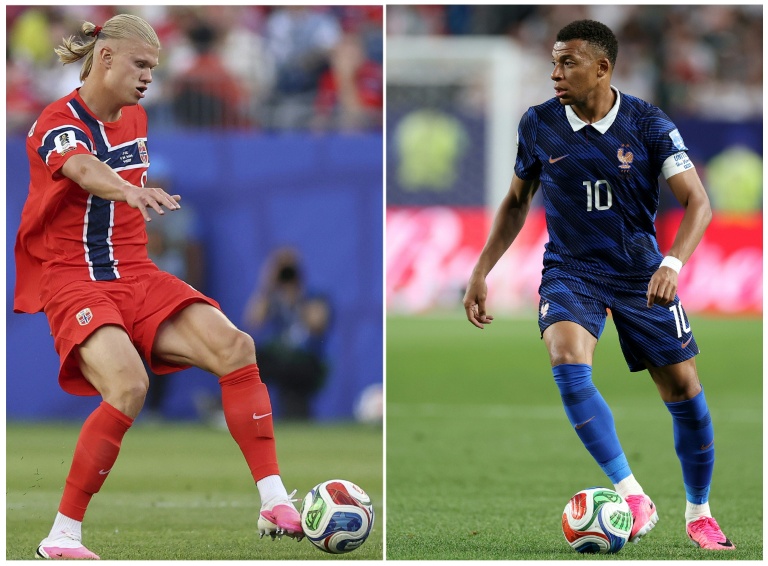
POLICY WIRE — Boston, United States — For those following the globe’s grandest spectacle of athletic prowess, Friday’s marquee clash between France and Norway promised only football: Kylian Mbappé...

POLICY WIRE — Boston, United States — For those following the globe’s grandest spectacle of athletic prowess, Friday’s marquee clash between France and Norway promised only football: Kylian Mbappé squaring off against Erling Haaland for group supremacy. But look a little closer, peel back the stadium lights and roaring crowds, and you’ll spot something far more intriguing, more complex, than mere ball skills. The 2026 World Cup—a global event in every sense—has become a vivid, sometimes awkward, stage for a cacophony of international policy issues, cultural clashes, and human rights debates.
Down in Seattle, far from the Mbappé-Haaland fireworks, an entirely different kind of tension simmered. Iran faced Egypt in a contest overshadowed by the local organizers’ decision to brand the fixture as a “Pride Match,” a move celebrating LGBTQ+ inclusion. For nations where homosexuality remains criminalized, even punishable by death, this was no trivial branding exercise. It was a diplomatic incident wrapped in a sporting event.
Iranian — and Egyptian officials, predictably, lodged objections. You see, the beautiful game often collides with stark political realities. In Iran, Islamic law prohibits homosexual acts with severe penalties; in Egypt, broadly interpreted laws targeting “debauchery” are frequently deployed against the LGBTQ+ community. And that friction, right there, offers a potent — if uncomfortable — snapshot of modern international relations, where universal human rights precepts bump up hard against deeply ingrained cultural and legal traditions. Policy Wire reported recently on the growing politicization of international sporting events, and this is just the latest, very public example.
Meanwhile, on the pitch in Foxborough, the gladiatorial contest everyone’s been talking about was set to unfold. Mbappé, the French speed demon, and Haaland, Norway’s goal-scoring cyborg, have each bagged four goals in the tournament, practically a dead heat behind Lionel Messi. France needs only a draw against Norway, a nation whose ascent in global football mirrors its quiet diplomatic influence, to seal Group I’s top spot. They’ve looked majestic in swatting away Senegal — and Iraq, honestly. Norway, though, isn’t some walkover. They thrashed Iraq 4-1 — and then pipped Senegal 3-2.
Haaland, reveling in his first World Cup, had little time for the hype. “To win the World Cup, absolutely not,” he told Fox television with characteristic bluntness, even as his squad chalked up 12 consecutive competitive victories. “I’m part of something special, making history, and I’m extremely proud to be Norwegian.” He just couldn’t care about France, he said, suggesting they’d probably win both their match and the whole thing. Such modesty – or perhaps strategic mind games – is something you rarely see from a superstar with that kind of global profile.
France, for its part, faced a different kind of distraction. Manager Didier Deschamps departed the camp following his mother’s death. His assistant, Guy Stephan, is holding the fort. “I am thinking a lot about Didier and his family,” Stephan offered, trying to sound as steady as a rock, because that’s what assistants do. “I am just trying to make a difficult situation as normal as possible.” The French Football Federation quickly issued a statement reiterating their full support, noting it was a deeply personal matter but the team remained united, a common enough line in times of crisis, but one that can feel hollow when actual grief hits. Such circumstances add an almost unbearable weight to a team’s psyche, even if their objective is just to avoid a slip-up that could land them a treacherous path to the July 19 final.
Elsewhere, in Group H, Spain sought to confirm their dominance against Uruguay, another matchup that, though less dramatic than the Pride controversy, held implications for national pride and regional rivalries. Cape Verde, the so-called minnows, aimed to prolong their fairytale against Saudi Arabia – a nation that’s invested billions in sporting events, attempting to reshape its global image, demonstrating the stark power of soft diplomacy at play. Saudi Arabia alone committed over $38 billion to sports initiatives in the past three years, largely aimed at boosting tourism and international perception, according to recent analysis from financial firm Deloitte. And this World Cup is just another feather in that cap, win or lose on the pitch.
What This Means
These sprawling narratives—from Boston to Seattle, from personal tragedy to public protest—reveal that the World Cup isn’t merely a contest of 22 men and a ball. It’s a barometer of global policy. The clashes on the field are often proxies for deeper geopolitical undercurrents, whether they’re about national identity, economic power, or fundamental human rights. Host nations grapple with accommodating diverse values while respecting local laws and customs, frequently finding themselves in impossible binds. Decisions made in FIFA boardrooms, or by local organizing committees, aren’t just about stadium seating; they ripple through diplomatic channels and international trade. The subtle irony, of course, is that even as organizers preach unity through sport, the world seems only too eager to highlight its divisions.
It’s a brutal reminder that you can’t truly separate politics from play. Not anymore, if you ever could. These are human stories, with human stakes, even when a billion eyeballs are on the pitch.