

Beyond the Baseline: Caitlin Clark’s Uniform Choice, American Soft Power, and the Global Style Arena
WASHINGTON D.C., USA — Policy Wire — In a world where every gesture, every outfit, carries a semiotic weight, the decision by basketball phenom Caitlin Clark to sport a cropped U.S. soccer jersey...

WASHINGTON D.C., USA — Policy Wire — In a world where every gesture, every outfit, carries a semiotic weight, the decision by basketball phenom Caitlin Clark to sport a cropped U.S. soccer jersey wasn’t just a nod to another American team. Oh no, it was a subtle, almost inadvertent, flex of national branding. This wasn’t some calculated diplomatic maneuver, of course. It’s far more insidious than that—and much more effective.
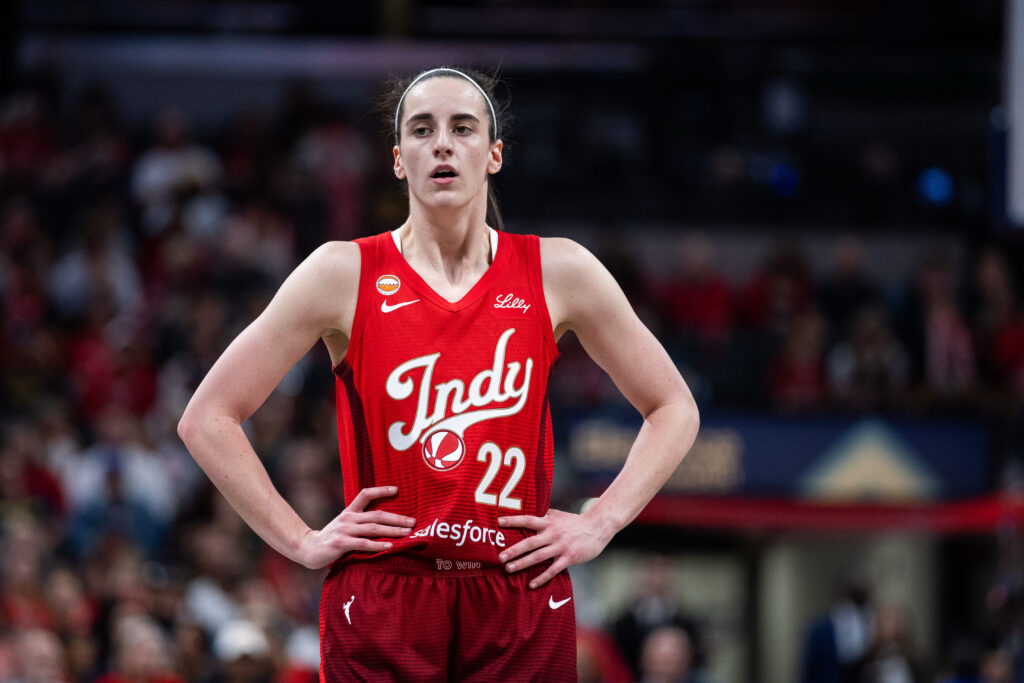
It was Wednesday at Gainbridge Fieldhouse, ahead of a run-of-the-mill WNBA tilt between the Indiana Fever and Phoenix Mercury. Clark, the player everyone’s talking about, strolled in looking… casual. But her ‘casual’ was precisely the point: a navy blue Nike Team USA top, cut high, revealing what appeared to be—surprise, surprise—abs. White swoosh, ‘USA’ crest, high-waisted white trousers. An athletic-chic vibe, as the kids say. But when a figure as massively popular as Clark steps out, it’s rarely just about the clothes. It’s about perception. It’s about resonance. And sometimes, it’s about what young girls in Karachi, Riyadh, or Kuala Lumpur see scrolling through their feeds.
“Athlete fashion, especially among figures with Caitlin’s reach, isn’t merely personal style; it’s a form of non-official cultural diplomacy,” observed Dr. Aris Thorne, a senior fellow at the Center for Global Sports Dynamics, speaking from a Washington think tank where such sartorial matters are sometimes debated with surprising gravity. “Her embrace of the soccer aesthetic, even if just for a single entry to a stadium, transmits a certain casual confidence. It suggests American athletes, in their downtime, champion other American teams. There’s an insularity, yes, but also a quiet swagger. It subtly reinforces American cultural products, even to audiences beyond typical sports circles.” He wasn’t wrong. It’s how trends spread, isn’t it?
The image, dutifully posted by the Fever on X, clocked over 12,000 views in short order. This isn’t merely WNBA fan engagement; it’s a broadcast to a larger, less segmented audience—a testament to Clark’s crossover appeal. But why does this even matter beyond the trivialities of celebrity attire? Because these aren’t just pictures; they’re cultural packets. In nations like Pakistan, where traditional sports loyalties are deeply rooted—cricket reigns, of course, a national obsession—the penetration of American sports culture, often via its most charismatic figures, represents a nuanced struggle for influence. It’s a contest of attention, particularly among the youth, against regional powerhouses and European football behemoths. And it’s not always direct, mind you.
Think about it. Girls who might never have touched a basketball—or kicked a soccer ball, for that matter—are watching Clark. They’re seeing the global brand she represents. They’re seeing her confidence, her independence. It doesn’t mean they’ll trade in their cricket bats for hoops tomorrow, but it certainly puts a crack in the door for new influences. We’ve seen similar cultural vectors at play across South Asia, from Bollywood’s dominance to K-Pop’s quiet invasion of urban centers, shifting aspirations and aesthetics, often without a single government decree. Because culture, it’s pretty clear, doesn’t wait for permission.
A recent study from Nielsen Sports indicated that the global women’s sports market grew by 15% year-on-year in 2023, with a significant portion of that growth driven by increasing digital engagement in emerging markets. Clark’s casual attire, then, isn’t just a fashion choice; it’s a contribution to a growing global media spectacle that the U.S. benefits from disproportionately.
“We’re witnessing a fascinating evolution of athletic celebrity into a potent global brand, almost a surrogate for national identity in certain contexts,” remarked Assistant Secretary of State for Educational and Cultural Affairs, Renae Singh, in a virtual briefing last month discussing initiatives aimed at youth engagement abroad. “Figures like Caitlin Clark project an image of American vitality and diversity that formal diplomatic channels often struggle to convey. It’s organic; it’s relatable. It simply resonates, particularly with a younger demographic that consumes media in a borderless way.” And she has a point, doesn’t she?
But the picture’s not entirely rosy. For some in Islamabad, or even within certain nationalist circles in Delhi, this creeping cultural influence can sometimes feel like just another form of Western intrusion. It’s a concern that globalized pop culture can erode local traditions or values. But it’s also a reality. And frankly, Washington knows it’s a battle it doesn’t even need to fight overtly when stars like Clark are doing the heavy lifting—all while wearing a seemingly simple outfit.
What This Means
Clark’s simple, unstudied fashion statement—a cropped soccer jersey—carries surprising political and economic ripples. Politically, it strengthens America’s soft power. Young women globally, particularly in culturally conservative societies that may restrict certain activities, see an uninhibited, successful female athlete. That image, whether intentionally or not, exports American ideals of individual freedom — and empowerment. It subtly positions American cultural products, from sportswear to entire leagues, as aspirational benchmarks, challenging established norms without firing a shot.
Economically, this is pure gold. It expands brand reach for Nike, certainly, but also for the WNBA — and American sports as a whole. As global digital connectivity shrinks the world, figures like Clark become de facto commercial ambassadors, expanding markets for everything from jerseys to streaming subscriptions. The less structured — and more organic this influence appears, the more effective it typically becomes. Nations that seek to exert cultural influence—like China with its Belt and Road Initiative, or India with Bollywood—often learn that soft power via celebrity is potent precisely because it doesn’t feel like a top-down directive. For the U.S., Clark’s ‘fashion statement’ was a marketing coup dressed up as casual cool—an entirely unintentional but strategically effective move.