


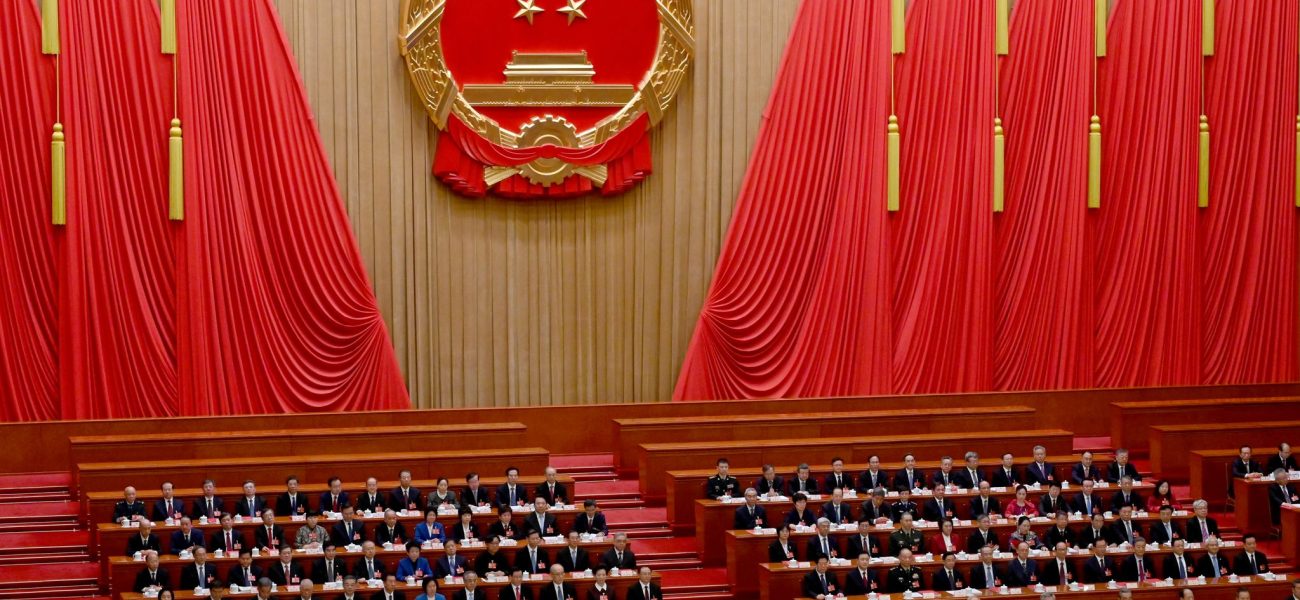
Beijing’s Iron Grip: Xi Jinping Culls Legislative Ranks, Remaking the Inner Sanctum
POLICY WIRE — Beijing, China — Another round of prominent political careers has just vaporized into the ether, proving once more that in today’s China, even the highest echelons of power offer...

POLICY WIRE — Beijing, China — Another round of prominent political careers has just vaporized into the ether, proving once more that in today’s China, even the highest echelons of power offer no true immunity. It’s less an overhaul, more a regular, stark reminder: the only safe seat is the one occupied by the General Secretary himself. The National People’s Congress, often dismissed by outsiders as a mere rubber stamp, quietly shed several senior Party members this week, purged from its ranks in a chilling display of unwavering control. They’re gone. Just like that.
It’s not just a statistic, this ongoing political housekeeping; it’s an emotional reality for anyone climbing China’s notoriously slick bureaucratic pole. This isn’t your garden-variety parliamentary squabble or coalition reshuffle. Oh no. This is an expulsion, a public excision that strips away titles, careers, — and often, reputations. Officially, it’s about ‘disciplinary violations’ or ‘serious corruption.’ But let’s be honest, in the opaque world of Beijing, those phrases are often proxies for perceived disloyalty or simply losing the intricate game of political survival.
The anti-corruption drive, initially lauded, has morphed into President Xi Jinping’s most formidable tool for consolidating power. It’s relentless. Over a million officials, by some Party figures, have been disciplined since Xi took the helm a decade ago. Think about that number. That’s a serious number of people, right?
“These actions send an unambiguous message throughout the Party machine,” explained Professor Ming Hua, an expert on Chinese governance at the University of Sydney, via email. “It’s about loyalty. It’s about ensuring the directive from the very top translates seamlessly down to the village level. Any perceived impediment, any independent thought that veers from the established line, is ruthlessly stamped out.” It isn’t subtle, that message. It screams it.
The repercussions echo far beyond the stately halls of the Great Hall of the People. But because this campaign projects stability—even if that stability is maintained through an iron fist—it paradoxically lends credence to Beijing’s global initiatives. Countries like Pakistan, a key node in the Belt and Road Initiative (BRI), often interpret this internal consolidation as a sign of China’s resolve and reliability. A unified front in Beijing, even one forged through purges, is viewed by some partners as a steady hand for ambitious, long-term projects, less prone to internal vacillations. They’re betting on this kind of predictability.
📄 POLICY WIRE WHITEPAPER PUBLISHED: PAKISTAN'S NATIONAL SECURITY POLICY PRIORITIES
👉 READ BY CLICKING HEREOf course, this centralized approach has its critics, even within the system. But we don’t hear much from them, do we? And that’s exactly the point of these purges. You don’t get to hear dissenting voices. “We cannot allow internal discord or selfish ambitions to impede our national rejuvenation,” remarked an anonymous, high-ranking Communist Party official—who asked not to be named given the sensitive nature of internal Party discourse—in a rare, carefully orchestrated interview weeks prior. “The strength of the Party is paramount, and any element threatening that unity must be swiftly removed.” He was rather direct about it, wasn’t he?
What This Means
This latest round of legislative expulsions isn’t just about ‘cleaning house.’ It’s a strategic move to reinforce Xi Jinping’s authority as he navigates complex geopolitical currents and prepares for future leadership challenges—however muted those challenges might appear to the outside world. It speaks volumes about the premium Beijing places on absolute, unwavering loyalty above all else, including, perhaps, traditional competence. When high-level officials vanish from public sight, the chilling effect percolates down to every cadre, encouraging caution and strict adherence to central directives rather than innovative or autonomous decision-making. That’s just the natural human reaction. For international businesses, it implies an increasingly centralized, and therefore less predictable, policy environment where the whims of the top dictate everything from regulatory frameworks to market access. But it also presents a facade of impregnable stability that many developing nations, often wrestling with their own internal strife, find deeply appealing. Consider nations across the Muslim world; for them, China’s disciplined governance might stand in stark contrast to the more chaotic or politically divided Western models. It becomes a subtle form of soft power, oddly enough—a display of control that, to some, appears enviable. You could even draw parallels to Russia’s increasingly authoritarian trajectory, where stability is often prioritized over individual freedoms, presenting a unified front against perceived external pressures. It’s a very particular kind of strongman politics on full display.
The constant weeding-out process ensures that only those completely aligned with the central command remain. It’s not just purging the disloyal; it’s selecting for the utterly compliant. The net result is a leaner, more obedient legislature—a body less inclined to question and more adept at affirmation. For Beijing, that’s not a bug; it’s a feature. This makes governance more streamlined, but potentially less adaptable. And, let’s be frank, prone to some serious groupthink.