

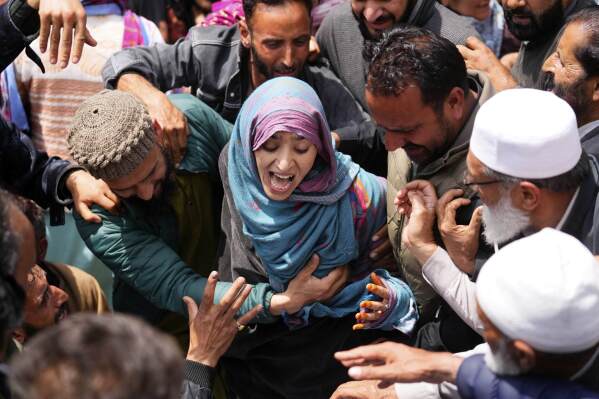
The recent attack on tourists in Pahalgam, Kashmir, has once again stirred the contentious debate surrounding the nature of insurgent violence in the region and the ever-complicated dynamics between India and Pakistan. Official Indian media quickly ascribed the attack to Pakistan-based militant groups, yet there is a conspicuous absence of concrete evidence supporting these claims. Given the historical context of false flag operations, media manipulation, and the geopolitical intricacies of the region, the Pahalgam attack warrants deeper scrutiny. The lack of verifiable proof linking Pakistan to the attack, alongside the media’s rapid adoption of India’s narrative, raises serious questions about the true nature of the incident. Could this be yet another orchestrated event to serve a political agenda?
The Missing Evidence
The first glaring issue is the complete lack of tangible evidence that substantiates India’s accusations against Pakistan. In the aftermath of the attack, Indian officials, including Defence Minister Khawaja Asif, swiftly denied Pakistan’s involvement, labeling the incident as “home-grown” and indicative of a broader rebellion within Kashmir. This denial was not just a diplomatic stance, but a strong rebuttal to the claims being made by the Indian state.
As the official narrative unfolded, the group “Kashmir Resistance,” an offshoot of Lashkar-e-Taiba, purportedly claimed responsibility. However, the absence of direct evidence such as weapons, communications, or any physical traces linking the attackers to Pakistan casts significant doubt on the credibility of these claims. This situation is not unique to the Pahalgam attack. Historically, similar accusations have been leveled against Pakistan with little to no substantiating proof. We have seen this pattern before: the 2001 Indian Parliament attack, the 2008 Mumbai attacks, and even more recent incidents like the 2019 Pulwama attack. In each case, India quickly pointed fingers at Pakistan, but later revelations or investigations raised questions about the veracity of the initial accusations.
In the context of Pahalgam, the quick attribution to Pakistan could be viewed as a political maneuver rather than a genuine pursuit of truth. The constant refrain of “blame Pakistan” has become almost reflexive in India’s geopolitical strategy, especially when it comes to attacks in Kashmir. This tactic serves not only to divert attention from potential internal security failures but also to maintain a steady stream of anti-Pakistan sentiment in the public domain.
Media’s Role: The Narrative Machine
The role of the media in shaping this narrative cannot be overstated. Within hours of the attack, Indian media outlets were rife with reports claiming Pakistan’s involvement, often relying on anonymous sources and unverified intelligence. Such a rapid dissemination of a predetermined narrative is indicative of a media system deeply intertwined with the state’s political interests. The media’s complicity in amplifying government statements, without independent verification or investigative rigor, highlights a dangerous trend where public perception is manipulated to serve nationalistic and political goals.
India’s media landscape has long been accused of playing a significant role in advancing the government’s strategic objectives. This is not a new phenomenon. In fact, media manipulation has been a key component of India’s hybrid warfare strategy, especially in Kashmir, where information warfare is as critical as the physical battle. The pattern of media outlets hastily adopting the official narrative and amplifying it across the nation has been seen time and again. During the 2001 Parliament attack and the 2016 Uri attacks, media outlets played a pivotal role in spreading state-sanctioned narratives that ultimately shaped public opinion and justified military action.
The case of Pahalgam follows this well-worn playbook. The absence of verifiable evidence linking the attack to Pakistan did not deter Indian media from framing the incident as another act of cross-border terrorism. The urgency with which the government and media blamed Pakistan suggests a coordinated effort to ensure that the narrative took hold, both domestically and internationally. This phenomenon raises important questions about the ethical responsibility of media outlets in conflict zones. Instead of serving as neutral agents of truth, the media appears to be serving as a mouthpiece for the state, facilitating the spread of propaganda.
A Pattern of Political Timing
Another layer of complexity in the Pahalgam attack is the timing of the event. The attack occurred at a politically sensitive moment, with high-profile international visits, including that of the US Vice President, scheduled for India. Historically, India has been accused of orchestrating or exaggerating incidents at politically critical junctures to sway international opinion or further its political objectives. Could the Pahalgam attack be another such instance? The coincidence of the timing raises questions about the true motives behind the attack and the potential for it to serve as a catalyst for further anti-Pakistan rhetoric, especially when India was aiming to bolster its diplomatic relations with key international powers.
In this context, one must also consider the history of false flag operations. The 2001 Indian Parliament attack, the 2008 Mumbai attacks, and the 2019 Pulwama bombing- each of these events occurred at moments when India sought to gain a strategic advantage on the international stage. By attributing these attacks to Pakistan-based elements, India could rally global support, justify military actions, and divert attention from internal issues, such as rising domestic discontent or policy failures.
📄 POLICY WIRE WHITEPAPER PUBLISHED: PAKISTAN'S NATIONAL SECURITY POLICY PRIORITIES
👉 READ BY CLICKING HEREThe timing of the Pahalgam attack also coincides with India’s need to consolidate its internal political agenda. With ongoing concerns about the rise of nationalism, religious polarization, and internal unrest, a high-profile attack attributed to external forces provides the Indian government with a narrative that shifts focus away from domestic issues and towards a unifying external enemy. This strategic manipulation of national security events for political gain further complicates the interpretation of the attack’s true origins.
The Kashmir Issue: A Deep-Rooted Geopolitical Struggle
It is essential to remember that Kashmir has been a longstanding flashpoint in the conflict between India and Pakistan, with both sides claiming the region as their own. The historical context of Kashmir’s occupation by Indian forces, the brutal crackdown on dissent, and the systematic suppression of Kashmiri identity have all contributed to an environment of unrest. The Pahalgam attack, if indeed linked to local resistance movements, is a reflection of the deep-seated grievances within the Kashmiri population, which has long been subjected to harsh Indian military rule.
The conflict in Kashmir is not just about terrorism or militancy; it is a struggle for self-determination and the right of the Kashmiri people to choose their own future. By framing these attacks as acts of external terrorism, the Indian government diverts attention away from the root causes of violence in the region- the ongoing suppression of Kashmiri autonomy and the brutal treatment of its people. This suppression has created a fertile ground for extremism and resistance, elements of which could be easily manipulated by external actors or even the local political landscape.
The Pahalgam attack should not be viewed merely as an isolated incident; it must be examined within the broader context of India’s geopolitical strategy, its historical use of false flag operations, and the role of media in shaping public perception. The complete lack of evidence supporting Pakistan’s involvement, the rapid media adoption of the state narrative, and the suspicious timing of the attack all point to the need for a more thorough and transparent investigation.
Rather than jumping to conclusions, it is crucial that both India and Pakistan, along with the international community, push for independent investigations into the attack. The truth, if it is to be known, must come from a transparent and accountable process, not from politically motivated propaganda or media manipulation. In the end, it is the innocent civilians caught in the crossfire who bear the brunt of this ongoing conflict, and they deserve nothing less than the truth.
Author