

Beehive Blaze Lingers, Igniting Broader Worries Across Arid West
POLICY WIRE — TRES PIEDRAS, N.M. — Another season, another plume of smoke etching itself against the Land of Enchantment’s pale sky. The Beehive Fire, no longer a fresh ember but a stubborn,...

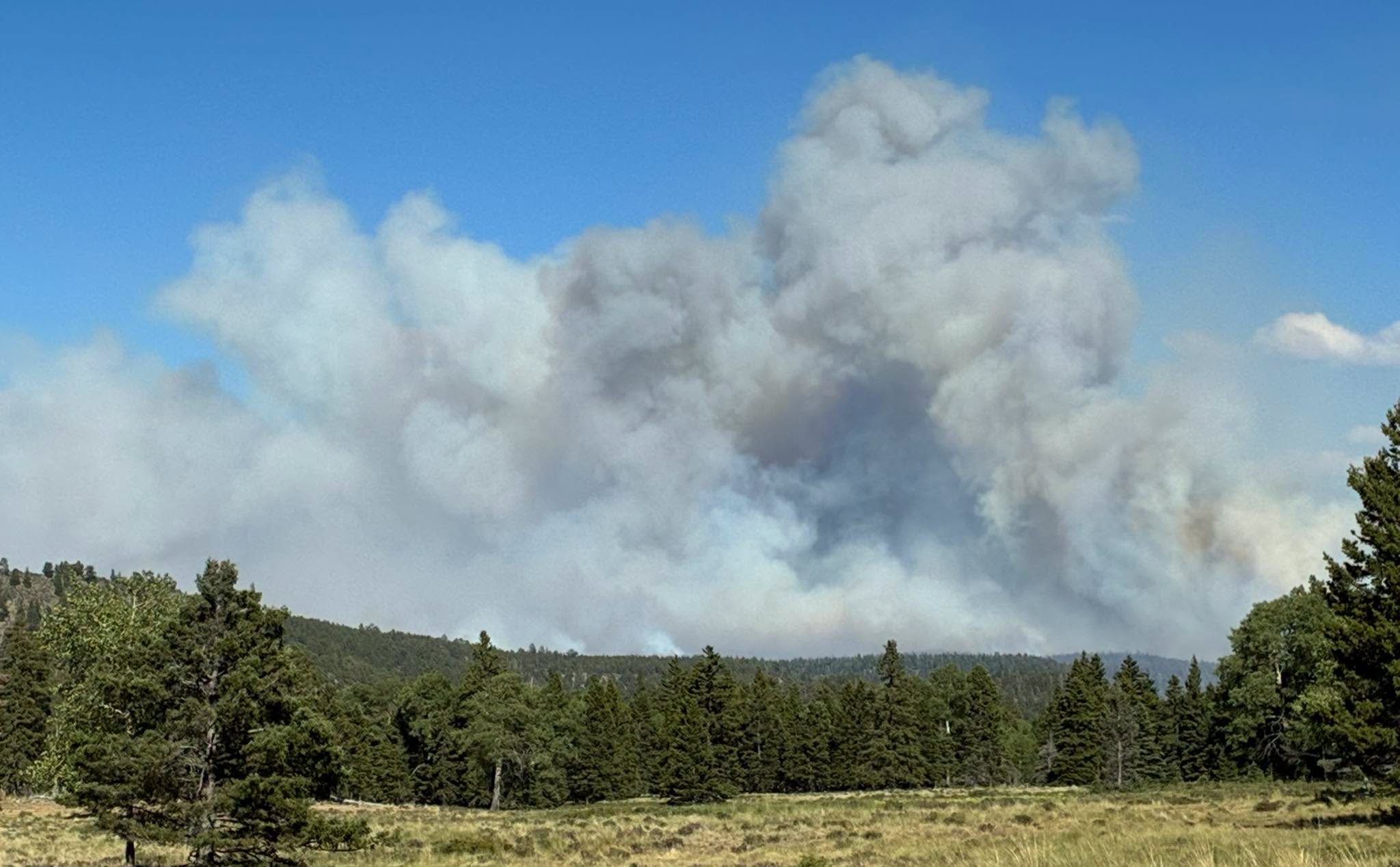
POLICY WIRE — TRES PIEDRAS, N.M. — Another season, another plume of smoke etching itself against the Land of Enchantment’s pale sky. The Beehive Fire, no longer a fresh ember but a stubborn, sprawling beast, has clawed its way to over 4,170 acres in the Carson National Forest. It’s uncontained. Just keeps growing. And for folks who’ve lived here through more fire seasons than they care to count, it feels less like an isolated incident and more like a grim, annual ritual—a harbinger of hotter, drier times ahead.
Roughly 200 boots on the ground—217, to be precise, as of the latest count—are fighting the good fight, trying to wrestle control back from what began as a lightning strike last Friday. Initially assessed at just over 3,000 acres, a better eye from above helped managers get a clearer picture Monday. They’re up against the usual suspects: winds, dry fuels, — and terrain that doesn’t much care for human intervention. These crews? They’ve been dropping water, reinforcing lines, trying to cajole this inferno into submission.
“We’re past the point of ‘if’ fires happen; it’s ‘when’ and ‘how big,’ now,” remarked Incident Commander Mark Ellison, head of the Northern New Mexico Type 3 Incident Management Team, in a terse media briefing Tuesday. “Our folks are pushing hard, securing perimeters. But every shift, it’s a new challenge. We’re watching the wind. We’re always watching the wind.” Ellison, a seasoned veteran of western wildfires, didn’t need to elaborate; the message was plain: resources stretch thinner every year.
It’s a familiar refrain across the American West, where wildfires aren’t just burning acreage; they’re consuming budgets and draining resolve. This Beehive affair—burning some 15 miles west of Tres Piedras, north of Highway 64—has already ratcheted fire restrictions from Stage 1 to Stage 2. That means no campfires, no charcoal grills, often no smoking in federal lands. It’s an economy on pause. And this sort of impact ripples, affecting everything from local tourism to the mental health of communities perpetually under threat.
“Our state is beautiful, yes, but it’s also on the front lines of a climate emergency that isn’t theoretical; it’s here, it’s burning,” lamented State Senator Roberto Archuleta (D-Española), whose district often grapples with these blazes. “Every dollar we spend fighting these fires is a dollar we can’t spend elsewhere. We’re talking millions, often billions, nationally, that could go to education, healthcare, infrastructure. Instead, it goes up in smoke, literally.”
His point hits home. The costs aren’t trivial. Wildfire suppression expenses for federal agencies alone in the U.S. have averaged around $3.1 billion annually since 2017, according to the National Interagency Fire Center (NIFC). That’s a significant slice of the pie, year in — and year out. And it’s not just the U.S. paying. Drought-fueled wildfires are becoming an increasingly shared burden globally. In places like Pakistan, similar dry, arid landscapes, exacerbated by shifting rainfall patterns, also face intensifying fire seasons. Their communities, often with fewer resources, bear a disproportionately heavy cost from climate-driven disasters, forcing painful choices between immediate relief and long-term climate adaptation.
They’re advising anyone eyeing the Continental Divide National Scenic Trail near Hopewell Lake to skip that section for now. Smoke, thick — and acrid, might just hang over Highways 64 and 285. But conditions, managers suggest, might ease slightly today—a slight chance of afternoon showers, a lighter breeze. It’s a reprieve, sure. Not a solution. Because this dance with wildfire? It’s really only just begun for the season.
What This Means
The Beehive Fire, while geographically contained to northern New Mexico, offers a microcosm of larger, far more unsettling trends. Economically, prolonged wildfires devastate local economies that rely heavily on tourism — and outdoor recreation. Stage 2 restrictions, for example, cripple local businesses during peak seasons. Insurance rates, already climbing in high-risk zones across the West, will inevitably reflect this continued volatility, making living in some historically desirable areas financially unsustainable for many. Politically, the escalating frequency and intensity of these fires amplify the urgency for more aggressive climate policies—a call that often clashes with economic interests in fossil fuel-dependent states and national agendas that prioritize short-term growth over long-term environmental stability. Federal aid, once a sporadic relief measure, is morphing into a perennial necessity, stretching the national budget. New Mexico’s struggle with climate chaos, swinging between fire and flood, epitomizes this erratic new normal. This situation also tests the mettle of fire management agencies. They’re having to adapt—rapidly—to a longer fire season and more extreme fire behavior. It’s an escalating challenge that demands not just better suppression tactics, but also vastly improved land management, forest health initiatives, and community preparedness. Failure to address these interwoven issues comprehensively ensures that headlines like these won’t be exceptions, but the new, uncomfortable rule.