


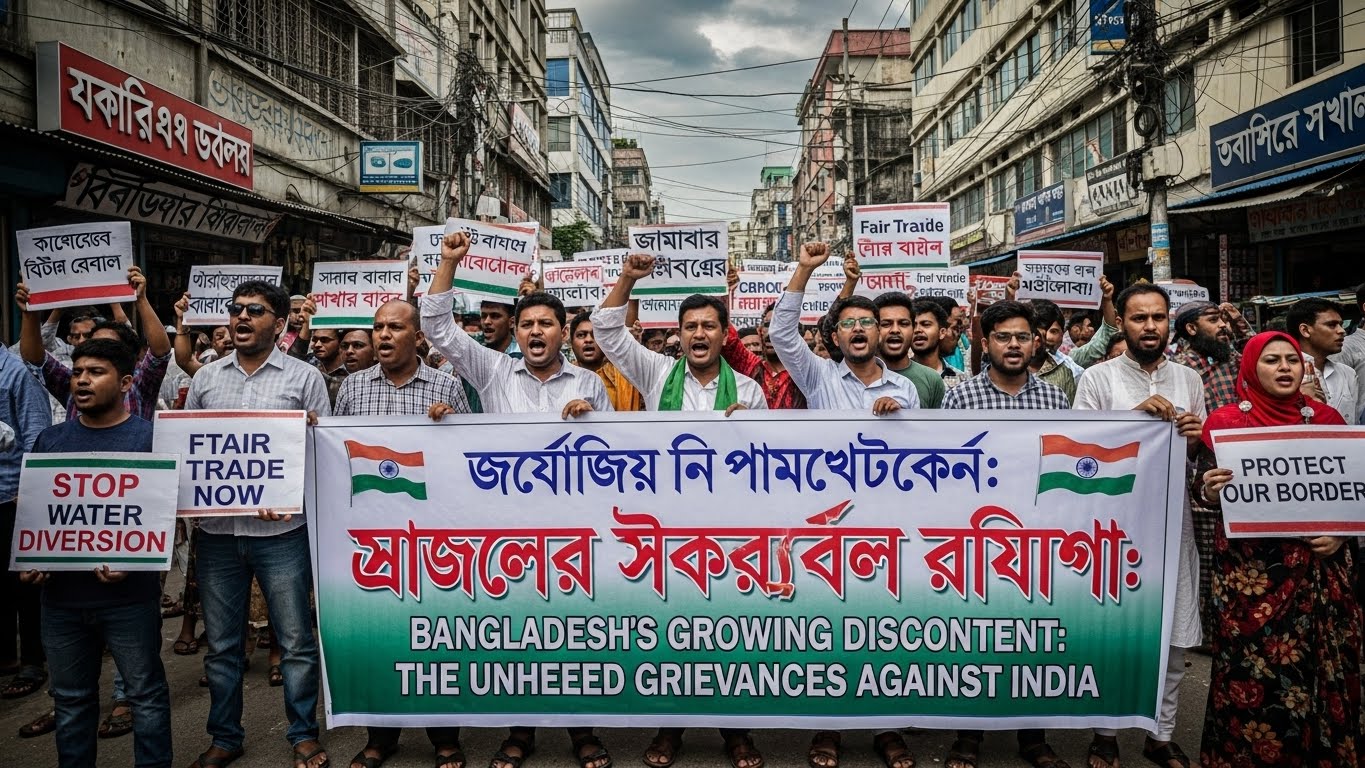
Bangladesh’s Growing Discontent: The Unheeded Grievances Against India
In December 2025, the death of Sharif Osman Hadi, a prominent youth leader in Bangladesh, sparked a wave of protests across the country. What was initially a response to his untimely killing has...
The Tensions Behind the Protests
Sharif Osman Hadi’s death might have been the spark, but it is the growing frustration with India’s influence in Bangladesh that has fueled the fire. Hadi was known for his vocal criticism of the Indian government, especially in the context of its policies on immigration, water-sharing agreements, and its strategic influence in Bangladesh’s politics. His murder has laid bare a collective frustration among Bangladeshis that has long been simmering under the surface.
India’s Cultural Hegemony is a critical part of this unrest. Many in Bangladesh feel that their sovereignty is being undermined by a neighbor that continues to treat them as an extension of its own sphere of influence, despite the historical fact that Bangladesh fought for its independence from Pakistan with India’s support. Since then, however, India’s interference has been a constant sore point in Bangladesh’s relationship with its neighbor.
Water Disputes and Border Issues
One of the most contentious issues remains water-sharing. Despite several agreements, the Teesta River remains a point of major disagreement. India has long been accused of monopolizing water resources that flow into Bangladesh, particularly with regard to the Teesta River, which is critical for Bangladesh’s agriculture. Yet, India has been slow to come to a long-term agreement that addresses Bangladesh’s legitimate concerns, putting its agricultural sector at risk. This issue has been ignored by India, leading many to question whether India is prioritizing its own needs over Bangladesh’s survival.
Additionally, the treatment of Bangladeshis living in India has become an increasingly sensitive issue. The implementation of India’s National Register of Citizens (NRC) in Assam, which has led to the exclusion of thousands of people, including many Bangladeshis, has raised alarm bells in Dhaka. Despite repeated appeals, India has failed to address the concerns of its neighbors and, instead, has brushed them aside, intensifying the perception that Bangladeshis are treated as second-class citizens in India.
Indian Support for the Exiled Sheikh Hasina and Political Interference
The fact that Sheikh Hasina, the former Prime Minister of Bangladesh, is now living in exile in India is another major point of contention. While Hasina has long been a critic of Bangladesh’s domestic politics, many in Bangladesh see her exile as a sign of India’s backing of a controversial figure. It’s not just the exile that grates; it’s the sense that India is propping up a former leader, undermining the sovereignty of Bangladesh. India’s support for Hasina is seen by many as an undue influence on Bangladesh’s democratic process, with some accusing India of interfering in the internal politics of their country.
India’s Role in the Perception of Injustice
The Indian government’s silence in the face of rising accusations of religious persecution, ethnic violence, and border killings involving Bangladeshis is another flashpoint. Despite the diplomatic protests, India’s handling of these incidents has been dismissive at best. The brutal treatment of Bangladeshi migrants at the hands of Indian authorities, including frequent reports of border killings, only adds to the growing animosity. For many Bangladeshis, India’s apathy to their plight is seen as a deliberate attempt to stifle the growing influence of Bangladesh on the regional stage.
The Catalyst: Sharif Osman Hadi’s Death and the Fallout
Hadi’s death is, at its core, a tragedy, but it is also a symbol of a much larger problem. It has brought to the forefront the long-standing grievances many Bangladeshis have about India’s role in their country’s affairs. For far too long, India has been allowed to dictate terms without accountability, with Bangladesh often being forced into uncomfortable compromises in areas like border management, river water-sharing, and economic trade agreements.
The wave of anti-India sentiment that is now visible in Bangladesh is not just about one man’s death; it is about years of frustration, ignored concerns, and the feeling that Bangladesh’s sovereignty is under siege from a neighbor that claims to be its ally. The government in Dhaka must address these grievances head-on and stand firm against further encroachment.
The Future of Bangladesh-India Relations
Bangladesh cannot continue to be subjugated by India’s regional dominance. The events of December 2025 show that there is a real and growing demand for change in the way India interacts with its neighbors. Bangladesh needs to take a more assertive stance in its diplomatic relations with India. The message from the streets of Dhaka is clear: Bangladesh will no longer tolerate India’s interference in its domestic affairs. The government must listen to the people, not just in matters of governance, but also in how it approaches India’s role in the region.
If India is truly committed to a relationship of mutual respect with Bangladesh, it must acknowledge the legitimate concerns of its neighbor, engage in meaningful dialogue, and stop using its position as a regional power to bully Bangladesh into submission.
A Call for Change
The death of Sharif Osman Hadi has illuminated the deep-seated anger Bangladesh feels toward India’s influence and interference. As Bangladesh enters an era of re-evaluation of its foreign policy, it must assert its sovereignty and demand respect from its larger neighbor. Only then will true peace and cooperation be possible.
Author