
The Unscripted Exit: Trump’s Television Walk-Off as Political Artifice
POLICY WIRE — Washington D.C., USA — It wasn’t the searing policy revelation, the verbal joust, or even a slip of the tongue that marked the endpoint of the recent Donald Trump interview on...

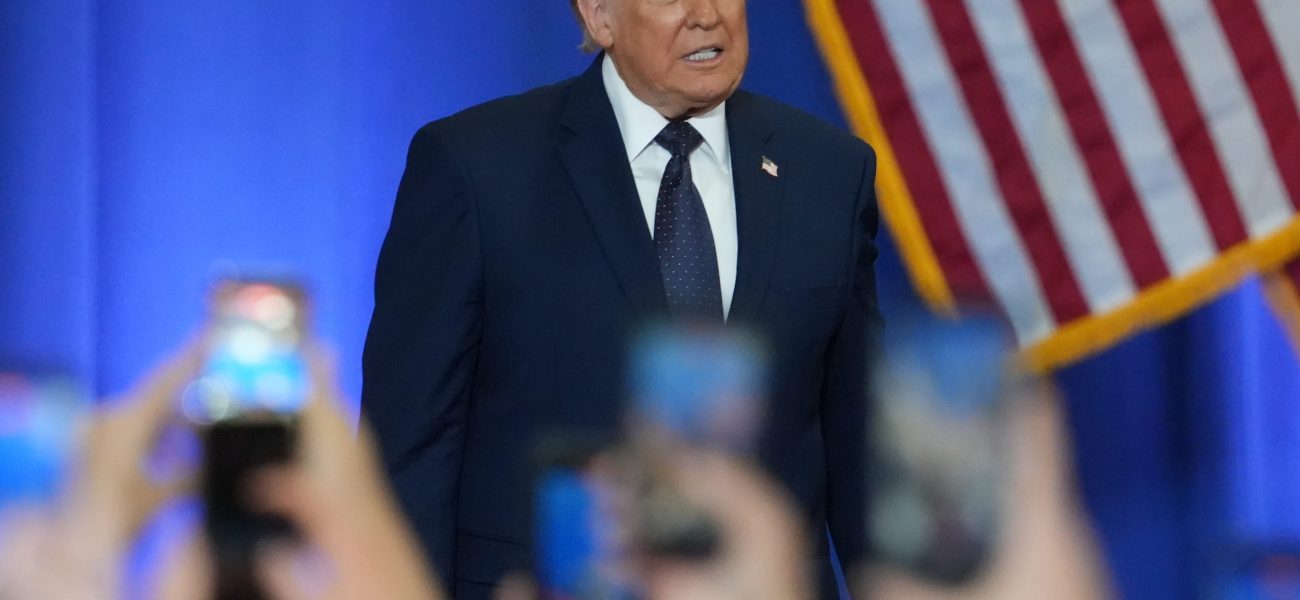
POLICY WIRE — Washington D.C., USA — It wasn’t the searing policy revelation, the verbal joust, or even a slip of the tongue that marked the endpoint of the recent Donald Trump interview on Meet the Press. No, the headline wasn’t a pronouncement, but a motion: the literal, physical departure of the former President from his seat, leaving the host mid-sentence, perhaps mid-thought. It’s less an interview cut short and more a mic drop—minus the mic, plus an entire person.
This wasn’t a sudden, unexpected outburst, mind you. Think of it as a carefully honed political performance. For years, the default setting for interactions with this particular political titan has been disruption, and this exit perfectly embodies it. The stage, the audience, the questions—they’re all secondary to the star’s control over the narrative flow, a masterclass in not playing by anyone else’s rules. But what does it truly say when the response to discomfort isn’t a retort, but a disappearance?
Such acts, some folks argue, can redefine political engagement. They force the media—and frankly, us, the viewing public—to re-evaluate our expectations for political dialogue. But let’s be honest, it’s not always about elevating the discourse. Sometimes, it’s about making sure there *is* no further discourse. And that’s a tactic as old as power itself, though seldom executed with such televised bravado in modern Western politics.
Because, well, it sends a very particular message. It says, essentially, [QUOTE_PLACEHOLDER]. It asserts a dominant position, that the terms of engagement are negotiable only at his discretion. For an audience accustomed to politeness, even theatrical disagreement, this unceremonious abandonment of the stage signals something different: a refusal to validate the very premise of the interviewer’s role beyond a self-determined endpoint.
But does this strategy always land with the intended impact? Consider, for instance, the often-nuanced diplomatic interactions required on the global stage. Nations in South Asia, like Pakistan, with their own complex political landscapes and historical relationships, typically prioritize protracted negotiations and often carefully choreographed public appearances. An abrupt departure from a media engagement might, in some cultural contexts, be perceived not as strength, but as a lack of resolve or, worse yet, immaturity—a sign that one can’t endure the pressure of sustained questioning. Imagine the ripple effect if such an approach were applied to a multilateral summit; it simply wouldn’t fly. Different cultures, different expectations for decorum, different interpretations of what ‘winning’ looks like.
And these optics are becoming increasingly important globally. The rise of social media means every gesture, every perceived slight, is amplified and translated across borders at warp speed. According to a 2023 survey by the Pew Research Center, roughly 75% of Americans say they see at least some made-up news or information that makes them distrust the news media—a fertile ground for narratives spun from actions, not just words. This dramatic walk-off, whether deliberate or impulsive, plays directly into that distrust, offering easy fodder for partisans on all sides to confirm their existing biases. It’s theatre designed to be interpreted, not just observed.
Let’s not forget the sheer chutzpah involved here. It isn’t just about refusing to answer a question; it’s about denying the interviewer their earned opportunity to press a point. It’s a deliberate fracturing of the unspoken contract between guest and host, designed to control the closing narrative—or rather, to ensure there’s no structured closing at all. One minute, he’s there. The next, he isn’t. The ultimate disappearing act in political journalism, and it leaves behind only questions, and, for some, a satisfied grin.
📄 POLICY WIRE WHITEPAPER PUBLISHED: PAKISTAN'S NATIONAL SECURITY POLICY PRIORITIES
👉 READ BY CLICKING HEREWhat This Means
This sort of performative journalism evasion sets a dangerous precedent, really. For political rivals, it’s a textbook example of avoiding accountability under fire, effectively using one’s celebrity to bypass standard media scrutiny. It’s tough to interrogate someone who literally isn’t there to be interrogated.
Economically, this plays into the attention economy perfectly. A walk-off generates more buzz than a bland answer ever could, dominating news cycles and driving clicks far more effectively than an ordinary interview segment. It’s monetized spectacle, plain and simple, drawing eyeballs away from substantive policy debates and towards the personality of the principal player. For a cable news channel looking for ratings, it’s a mixed blessing—they get the viral moment, but at the expense of journalistic depth. We’re getting less information, sure, but boy, are we talking about it!
But for those of us watching from abroad—perhaps from Karachi or Islamabad—such public displays, divorced from the usual courtesies, might suggest a domestic political sphere less grounded in stable institutions and more prone to personality clashes. It complicates diplomacy. Nations seek partners with predictability — and a clear adherence to established norms. A leader who literally walks away from public engagement creates uncertainty—and in international relations, uncertainty often breeds caution, or worse, strategic recalibration. What does it signal about a nation’s temperament if its former, and potentially future, leader treats critical media as an inconvenience to be shrugged off? These are the kinds of nuanced concerns that echo far beyond the news desk — and into foreign ministries. And that, frankly, is a big deal.