

As Western Wildfire Ebbs, Bureaucracy Retakes Control From the Blaze
POLICY WIRE — GLENWOOD, N.M. — It’s a subtle shift, one not often heralded on the nightly news. But for those embedded in the grim choreography of wildfire season, the moment an incident management...

POLICY WIRE — GLENWOOD, N.M. — It’s a subtle shift, one not often heralded on the nightly news. But for those embedded in the grim choreography of wildfire season, the moment an incident management team packs up its advanced gear and hands the reins back to a national forest — well, that’s when things feel… different. It means the big beast, the fiery dragon that devoured nearly ten thousand acres of rugged New Mexico terrain, has been, if not slain, then certainly hogtied. Or so we’re told.
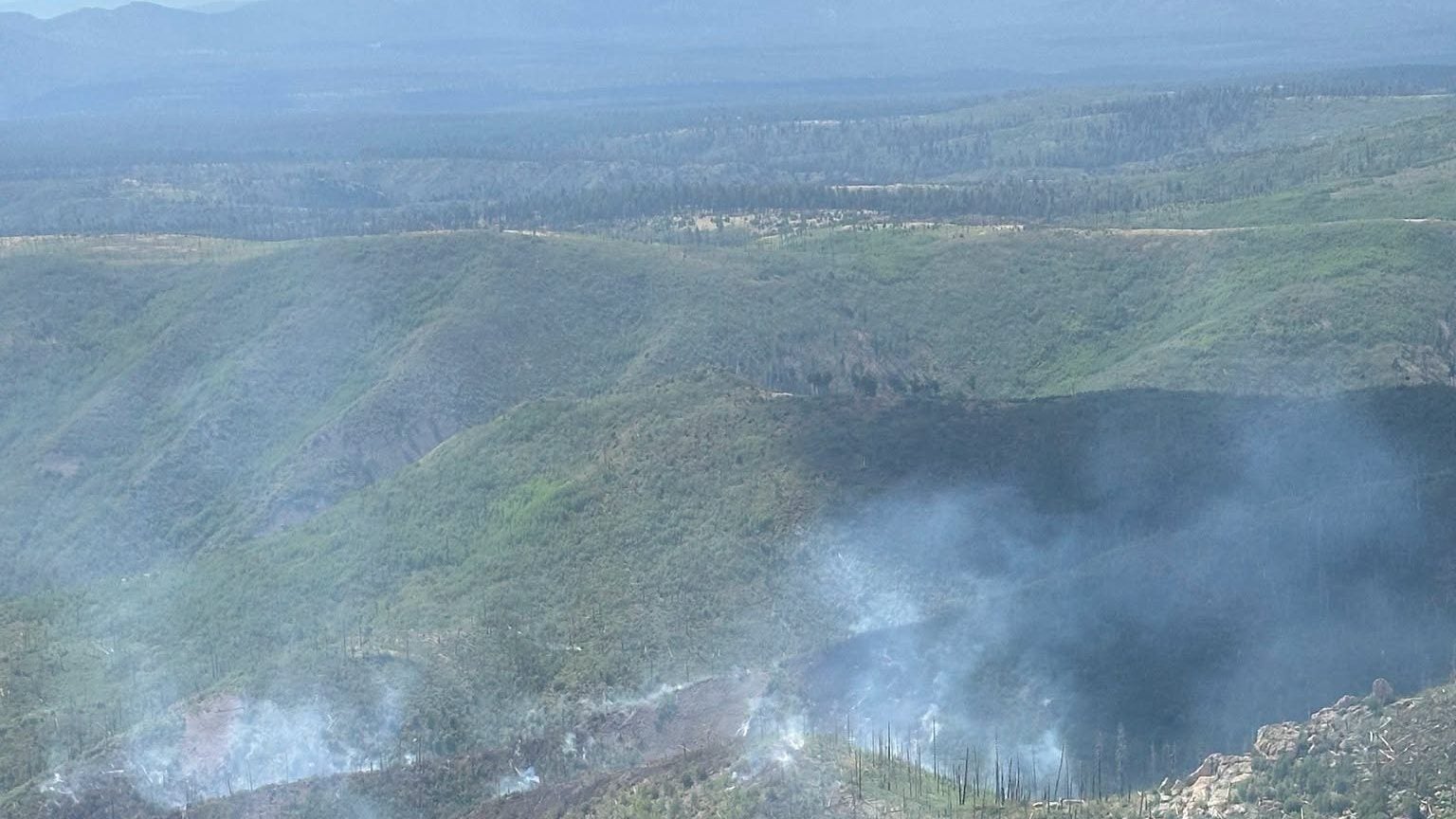
The Sacaton Fire, a temperamental conflagration born of a lightning strike back on June 21, has officially returned to the more prosaic purview of the Gila National Forest. No more Type 3 Incident Management Team, no more concentrated bursts of personnel swarming its flanks. The specialists, the ones who jet in with their tactical maps and high-tech satellite hookups, they’re largely headed out. Because containment’s at 80%—and that’s a percentage the bean-counters can get behind, no doubt.
It’s almost like a corporate takeover, isn’t it? The Gila Las Cruces Type 3 Incident Management Team, having spent its time as the ad-hoc CEO of the inferno, passed the keys over to the forest rangers on Wednesday afternoon. One imagines the briefing was succinct. Perhaps even a tad anticlimactic. Like handing over a well-behaved, albeit scarred, beast. The team, one of many highly trained units dispatched across the American West each season, had done its bit.
Firefighters, all 123 of ‘em — that’s a hard statistic, 123 people, give or take a few folks on break — have been grinding for weeks. They spent the better part of this past one tackling the grubby, unglamorous repair work along the Bearwallow and Bursum Roads. Chipping. Hauling. Basically cleaning up the detritus left by their own suppression efforts, a tidy bureaucratic loop that’s as predictable as the sun setting over the Ponderosa pines. They’ve even gotten the Bursum Road all graded, smoothed out toward Willow Creek, so traffic can zip along again. Not that there was ever much traffic, mind you. And they pulled that special protective wrapping off some structures in the Willow Creek subdivision. Because hey, no need for giant aluminum foil blankets now, is there?
And let’s be frank, these operations aren’t just about hoses — and sweat. They’re a masterclass in local government coordination. You don’t get 9,861 acres nearly buttoned up without a small army of partners. As Incident Commander Marcus Cornwell put it, [QUOTE_PLACEHOLDER]It’s heartening to know in southwest New Mexico we have such good partnerships and neighbors, which enable us to be successful during a wildfire,[QUOTE_PLACEHOLDER]. He’s talking about everyone from the New Mexico State Forestry Division to the Catron County Sheriff, folks who normally handle speeding tickets and timber management, now moonlighting as emergency logistics gurus.
The efficiency on display here, it makes you think. In countries like Pakistan, for instance, where large-scale natural disasters are often met with fragmented responses and limited resources, a transition of command after 80% containment feels like an almost unimaginable luxury. Their monsoon floods regularly displace millions, and their wildfires, while often smaller in scale, can still wreak havoc without the robust, pre-staged incident management systems we see deployed across the American landscape. They’re struggling to fund basic public services, let alone maintain specialist wildfire brigades that can coordinate seamlessly across agencies.
But the Gila National Forest, bless its methodical heart, will be taking the last few steps. Future updates, they tell us, will come straight from their press office. Less drama, more press releases with the subject line [QUOTE_PLACEER]. Already, the temporary flight restriction over the fire area has been lifted. The skies are open for, well, whatever private planes do out there. And those nervous residents? They’ve had their evacuations lifted for days now. Maybe they’re back to worrying about interest rates. You can almost hear the collective sigh of relief.
However, there’s a little twist. Because just as these guys were getting ready to sign off, three new lightning-caused fires flared up Monday. But don’t you worry, they were contained. Like minor footnotes to the main saga. A reminder that Mother Nature, she’s not quite done playing games yet. And just to cap it all off, the forecast suggests more monsoonal storms—with a 70-75% chance of rain, no less—are slated for Wednesday through Friday. Just when everything’s starting to calm down, eh? You’ve gotta love the ironies of wildfire season. It’s a testament to planning, even if it’s constantly battling the unpredictable. Sometimes you just gotta keep fighting those small battles, the daily grind, when the big headline blaze cools down. And this, my friends, is that daily grind.
What This Means
The bureaucratic waltz that concludes a large-scale wildfire operation in the U.S. offers a peculiar insight into federal-state cooperation — and disaster preparedness. This handover from an ad-hoc, specialized incident management team back to a permanent land management agency isn’t just about putting out fires; it’s a policy decision reflecting a sophisticated, if sometimes cumbersome, allocation of resources. It speaks volumes about an institutionalized response system built to handle everything from initial lightning strikes to long-term land rehabilitation.
But this isn’t just a domestic concern. Look at the economic implications for communities constantly facing such threats. Money spent on fire suppression, emergency services, and post-fire recovery—that’s money not going into schools, infrastructure, or local business development. The sheer volume of resources poured into managing the Sacaton Fire, like the nearly 10,000 acres it consumed, illustrates a substantial ongoing cost. It’s a bill that keeps coming due, often exacerbated by a changing climate. For nations with fewer economic shock absorbers, like those across South Asia or the broader Muslim world, a similar-sized blaze could trigger humanitarian crises, exacerbate poverty, and dismantle years of fragile development gains. Their lack of sophisticated incident management means fires quickly become uncontrollable. For instance, countries wrestling with sanctions, such as Iran, have immense difficulty securing modern firefighting equipment, a gap that could lead to broader regional instability should an environmental catastrophe spill over borders. It reminds us how environmental management, especially disaster response, is a stark differentiator in global stability and economic resilience. And sometimes, those wider geopolitical currents dictate even how quickly one can fight a blaze. We’ve built an apparatus here, messy as it can be, that many others can only dream of.