


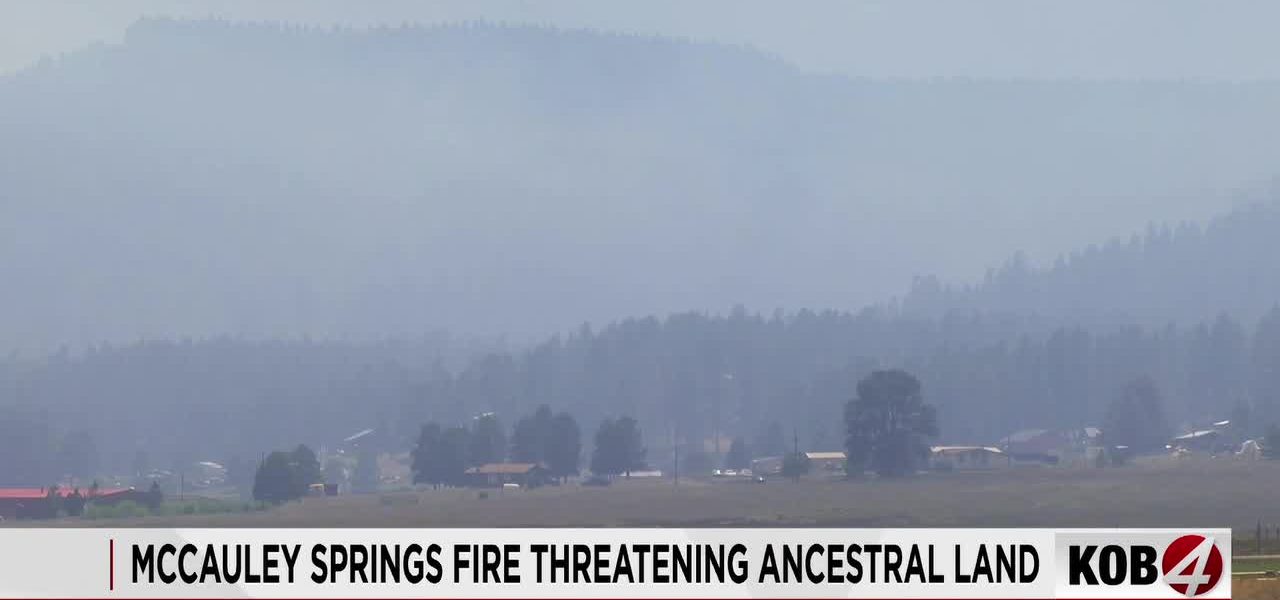
As McCauley Springs Burns, Ancient Pueblo Heartbeat Faces An Inferno’s Reckoning
POLICY WIRE — SANTA FE, N.M. — In the high, rugged country of the Jemez Mountains, a raw, primeval struggle plays out. It’s not just trees igniting or acreage scorching; it’s an ancestral memory,...

POLICY WIRE — SANTA FE, N.M. — In the high, rugged country of the Jemez Mountains, a raw, primeval struggle plays out. It’s not just trees igniting or acreage scorching; it’s an ancestral memory, millennia-old, wrestling with the indiscriminate fury of a fire modern humans can’t seem to tame. Three days on, and the McCauley Springs Fire has stubbornly, terrifyingly, refused to yield a single percentage point of containment, gnawing at the soul of the Jemez Pueblo people, whose very identity is etched into these charred canyons.
Because, as firefighters battle what’s currently a 708-acre inferno (a figure reported by local news outlets, seemingly static, maddeningly so, as conditions shift), this isn’t just federal land in jeopardy. It’s a repository of forty ancient villages, sacred ceremonial sites, and the very ground beneath the feet of those who’ve stewarded it since time immemorial. That fire, sparking on June 24, feels less like a natural event — and more like a dire prophecy come to roost.
And what a perverse game the weather plays. Crews, numbering 171 — tough folks, you’d think — are finding the rain a cruel joke. Any moisture gets instantly wiped away by what follows: blistering dry, unforgiving winds. Tiffany Davila, with Southwest Complex Incident Management Team 3, didn’t mince words when she spoke to our wire service. “Outflow winds can be very dangerous,” she explained, “They could shift the fire direction, expand or increase the fire activity and behavior. So they’re really monitoring the weather closely.” It’s a dance with destruction, constantly on the brink of an unpredictable turn. Add to that the torturous, tangled terrain, making direct engagement feel less like firefighting and more like a Sisyphean punishment.
But the spiritual toll? That’s where the real devastation lies. Matthew Gachupin, First Lt. Gov. of Jemez Pueblo, put it plainly: the whole Jemez Corridor is their ancestral homeland. “We have over 40 villages up on these mesa tops, — and it’s very dear and sacred to us,” he asserted. He isn’t talking about quaint archaeological sites; he’s talking about a living, breathing connection, so profound it informs their every ritual, their every prayer. They even believe the mountains bear their name because of his people, not the other way around. He notes that the Pueblo still conducts ceremonies tied to Redondo Peak. It’s a stark contrast, this deep reverence versus the careless flicker of an untamed blaze.
They’ve lived this before, you see. Past fires. The memory lingers like ash. “We still are feeling the effects from past fires,” Gachupin reflected. “All our plant gathering, herb gathering, and the erosion it’s caused have definitely impacted us.” It’s not a quick fix; it’s decades of slow, painstaking reconstruction, ecological and spiritual. And now, the specter of the Fourth of July weekend looms, bringing with it the perennial threat of human recklessness, even as Stage 2 fire restrictions try to throw a flimsy barrier against catastrophe.
📄 POLICY WIRE WHITEPAPER PUBLISHED: PAKISTAN'S NATIONAL SECURITY POLICY PRIORITIES
👉 READ BY CLICKING HEREBecause despite the heroism of hotshot crews — those six teams working tirelessly, throwing their bodies against the fire lines — this saga is really about humanity’s inability to grasp the profound vulnerability of both nature and ancient heritage. Highway 4, that fragile thread connecting communities, is already cut off. Campgrounds, once havens, are evacuated zones. Sierra de los Pinos, a human settlement, is on ‘Go’ status. It’s a bitter truth that, even with the obvious and urgent closures, officials still need to emphasize that the *rest* of the forest is open—as if to remind us that life (and recreation) must somehow go on, even when history is turning to smoke.
What This Means
This McCauley Springs calamity isn’t just a localized emergency; it’s a searing indictment of how we value, or often devalue, Indigenous stewardship and the policies (or lack thereof) governing vulnerable lands. It highlights a recurring disconnect between federal land management and tribal sovereignty, where communities intimately tied to the earth are often at the mercy of decisions made far afield, and natural resource allocation (or its fiery consequence) leaves them paying the steepest price. Policy makers, whether they sit in Santa Fe or in the distant halls of power, seem to consistently overlook these intrinsic links, focusing on ‘assets’ rather than ‘ancestry.’ You’d think, after so many similar disasters, we’d learn. We don’t, it seems.
Economically, the firefighting costs alone are staggering, diverting funds from other critical public services. But that’s just the tip. The longer-term impact on local tourism, water quality, — and the entire ecosystem means financial bleed for years. This particular incident, however, carries a heavier, non-monetary burden: the immeasurable cultural loss for the Jemez Pueblo. The obliteration of sacred spaces is irreversible, a generational wound that money simply can’t heal. It mirrors, in its own tragic way, the environmental injustices faced by marginalized communities worldwide, from the rapidly melting glaciers of the Himalayas to the annually submerged villages in Pakistan. Just as we see in ancient lands ablaze elsewhere, these fires don’t just consume flora; they incinerate history and cultural survival. We’re consistently failing to integrate traditional ecological knowledge into our wildfire strategies. We need to do better; we simply have to. And it’s going to take more than platitudes about public safety to fix this deep-seated institutional inertia.