

Ancient Land Ablaze: Jemez Pueblo Heritage Engulfed as Fires Defy Rain
POLICY WIRE — SANTA FE, N.M. — Three days of relentless battle against the McCauley Springs Fire, yet zero percent of its destructive reach has been contained. It’s a stark, almost infuriating,...

POLICY WIRE — SANTA FE, N.M. — Three days of relentless battle against the McCauley Springs Fire, yet zero percent of its destructive reach has been contained. It’s a stark, almost infuriating, arithmetic lesson in man versus nature, unfolding across 708 acres of rugged terrain near Jemez Pueblo. The fires, even with sporadic rain, won’t be reasoned with. And the ancient landscapes that define the identity of the Jemez people are currently staring down a formidable threat.
It’s not just a wildfire; it’s a living cultural emergency. Because for the Indigenous communities of the Jemez Mountains, every acre burning represents an indelible loss of heritage—a silence descending upon land that has whispered ancestral stories for centuries. These aren’t merely tracts of forest; they’re spiritual anchor points, places where ceremonies still breathe, where generations have forged a deep connection with the earth. It’s, to put it mildly, more complicated than merely suppressing flames.
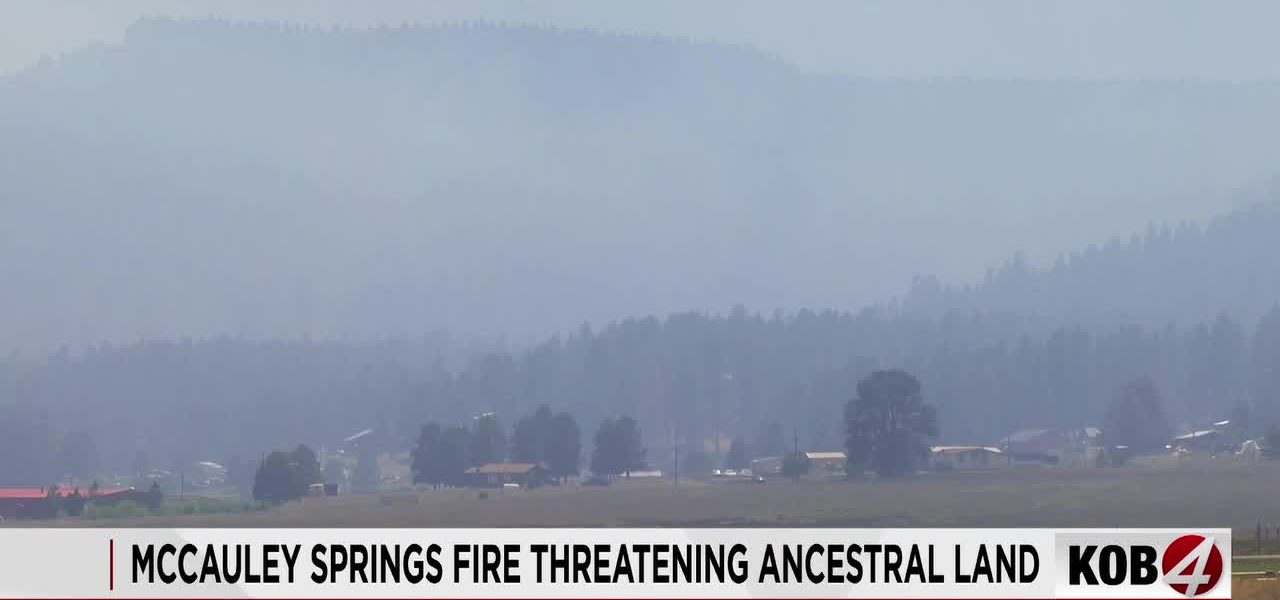
The McCauley Springs Fire, which ignited on June 24, holds a peculiar, almost taunting, grip. Officials from Southwest Complex Incident Management Team 3, taking command after a smooth transition, reported Friday morning that the blaze stood at 708 acres with 0% containment, a figure confirmed by a KOB 4 report. But don’t let a bit of precipitation fool you. Tiffany Davila, also from Southwest Complex Incident Management Team 3, laid out the bleak meteorological reality. [QUOTE_PLACEHOLDER] It’s a grim calculus for the 171 personnel currently on the ground, struggling against not just the fire, but nature’s volatile countermoves—thunderstorms and fierce winds often canceling out the fleeting mercy of rain.
They’ve been battling—and make no mistake, it’s a fight—on fire lines, performing suppression operations, and even carrying out strategic firing along Highway 4 to reduce fuel loads. But navigating this kind of wildland inferno, as Davila points out, is profoundly tough. [QUOTE_PLACEHOLDER] The public, understandably, is urged to stay clear, with various campgrounds and Trail #137 remaining closed. Sierra de los Pinos and Jemez Falls Campground are under a “Go” evacuation status, meaning residents have already fled to an evacuation center established at Jemez Mountain Baptist Church. And smoke, a somber gray plume, stretches far enough to be visible from Albuquerque.
This isn’t merely an inconvenience or a seasonal annoyance. Jemez Pueblo First Lt. Gov. Matthew Gachupin minced no words when describing the gravity of the situation. “All of our residents here feel the effects of negligence,” he stated, his frustration barely concealed. He then went on to clarify, [QUOTE_PLACEHOLDER] The Pueblo’s tie to the land isn’t symbolic; it’s existential. Gachupin insists Redondo Peak is their [QUOTE_PLACEHOLDER] Trees, land, animals—they’re all, he says, “sacred—the trees, the land, the animals—they should be protected.” It’s a comprehensive worldview that sees ecological destruction as spiritual desecration.
But beyond the immediate conflagration, the legacy of fire runs deep — and painful. Gachupin reflects on past blazes, noting, [QUOTE_PLACEHOLDER] It takes a very long time, often decades, for these ecosystems to heal, a sentiment captured in his blunt assessment: “It takes years to rebuild, replant, and reforest the area.” This persistent memory of destruction resonates with similar challenges faced by indigenous and ancient communities across the globe, from the forests of South America to the historical landscapes of Pakistan’s Hindu Kush, where remote mountain villages, too, see their age-old ways of life and access to medicinal herbs—and even fresh water sources—threatened by increasing drought and erratic monsoon seasons.
📄 POLICY WIRE WHITEPAPER PUBLISHED: PAKISTAN'S NATIONAL SECURITY POLICY PRIORITIES
👉 READ BY CLICKING HEREIt’s why adherence to Stage 2 Fire Restrictions in the Santa Fe National Forest isn’t just good policy, it’s critical. Even before the current McCauley Springs crisis, these restrictions were planned. But now, they’re essential. Davila, speaking for the officials, urged the community: “We’re asking the public to please do their part, understand that there are fire restrictions in this area, and just make sure that before they’re recreating, they’re checking the fire restrictions to know where they’re going, to make sure they know what stage that area is in.” Negligence here, the message implies, is not just careless—it’s costly in ways we can barely measure.
What This Means
This isn’t just about a wildfire in New Mexico; it’s a flashpoint for broader policy challenges. The immediate impact, of course, is local: lives disrupted, sacred sites under siege, and millions poured into firefighting efforts. But the long game reveals how climate change—manifesting in increasingly dry, windy conditions—directly impinges upon cultural preservation and indigenous rights. What happens in Jemez echoes across a global landscape where rising temperatures and human encroachment continuously endanger historical landmarks and ancestral territories, whether it’s eroding coastal fishing villages in Bangladesh or threatening Buddhist stupas in remote corners of Tibet due to altered weather patterns.
Economically, these fires are a drain on public funds, rerouting resources from other state initiatives. For local communities, it’s lost tourism revenue and the devastating long-term costs of ecological restoration that often stretch for generations. The call for public diligence, to adhere to fire restrictions, is a direct acknowledgement that government action alone is insufficient. It highlights a critical intersection of individual responsibility, cultural stewardship, and climate policy that’s far from resolved, underscoring the brittle equilibrium that exists between human activity and the environment. this saga reminds us how deeply intertwined spiritual identity and environmental health are for many communities—a truth often ignored in development plans and policy debates. What we lose to a wildfire isn’t merely trees; it’s millennia of human connection, wiped out in a season. You don’t get that back easily, if ever. And for policymakers, this ought to be a siren call, demanding proactive strategies for conservation, community engagement, and genuine respect for ancestral domains, much like the cultural nuances China often navigates in its outreach to Southeast Asia.