


New Mexico Wildfire: Historic Cabin Lost, Climate Crisis
New Mexico's Sacaton Fire destroys a historic cabin, intensifying global climate fears. Understand the urgent policy challenges of relentless wildfires.

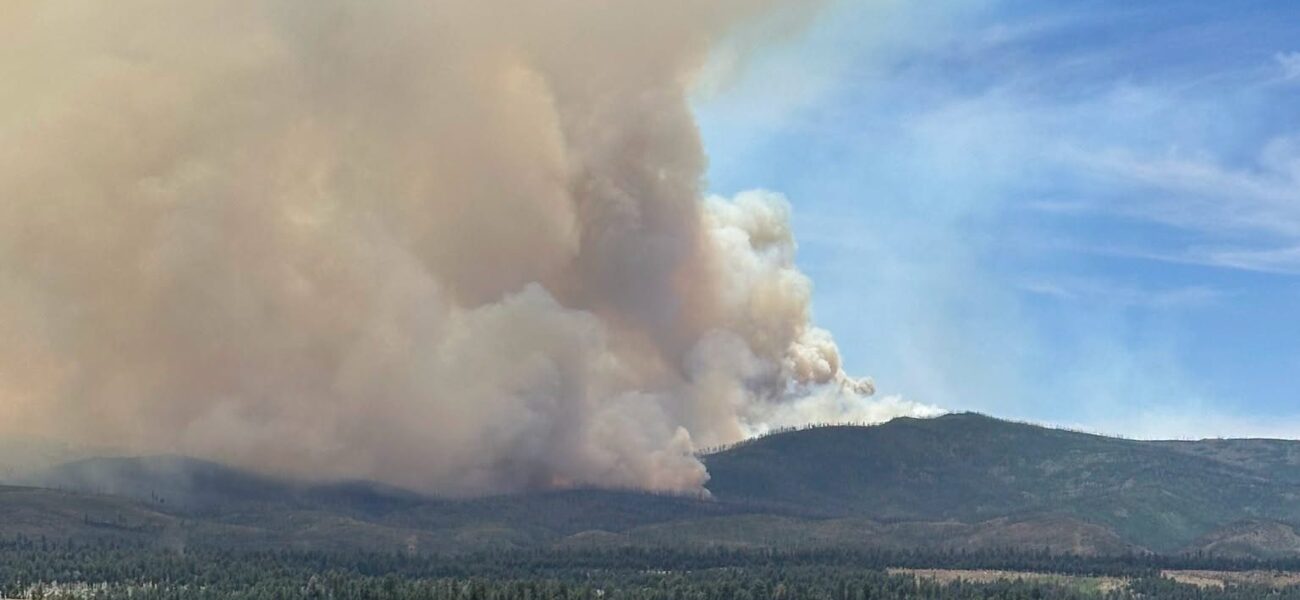
POLICY WIRE — SILVER CITY, N.M. — The scent of burning timber isn’t just in the New Mexico air; it’s a chilling preview of a summer many had hoped wouldn’t arrive with such immediate, devastating clarity. Forget the raw acreage, for a moment, and consider what the Sacaton Fire truly consumed last week: not just Ponderosa pines, but a century of echoes, a tangible link to a bygone era. The historic Apache Cabin, nestled deep in the Gila Wilderness—a Forest Service outpost that saw decades, maybe more, of quiet service—is gone. Scorched, erased. It’s a sobering reminder that sometimes, the past just can’t outrun the present’s inferno.
Lightning struck on June 21, they say. A typical trigger in these parts. But what’s become atypical is the sheer, brutal efficiency with which these blazes devour the land. The Sacaton, sparked roughly 15 miles east of Glenwood, isn’t contained—not an inch of it, officials grimly report. And because of the dense fuels—the deadfall, the thick underbrush, much of it remnants from the 2012 Whitewater Baldy Fire—this particular beast of a fire isn’t playing by the old rules. It’s aggressively expanded to 6,782 acres, a rapid crawl that spells disaster for anything in its path, like the Apache Cabin, whose mid-slope location and intense fire behavior rendered it undefendable, according to forestry officials. What’s more frustrating, there wasn’t even safe access for crews to try to save it. You don’t try to save a building if it means risking a life. It’s simple, really, but still a hard call.
The Catron County Sheriff’s Office wasn’t taking chances with human lives. They issued the ‘GO!’ status for Willow Creek. You don’t get much warning; you just get out. “We’ve got homes, families, generations of history in these mountains,” said Sheriff Elena Rodriguez of Catron County, her voice taut with the weight of her community. “Evacuation isn’t a request; it’s an imperative. It’s a wrenching decision, believe me, but the fire isn’t waiting for goodbyes.” She isn’t wrong. Because fires, especially this sort, don’t much care for sentiment or property deeds. One hundred and forty-eight personnel are on site, a number that grew significantly on Friday with 114 additional resources trying to hold the line, working structure protection around the Willow Creek Subdivision—hose lays, pumps, desperate efforts to create a perimeter that actually works. And they’re looking at defensive firing operations west of Willow Creek. It’s a fight on all fronts.
But how much fight can communities like these mount, year after year, against a phenomenon that feels increasingly relentless? We’re talking about federally managed land, millions of acres. The U.S. Forest Service, just one agency, burned through approximately $4.34 billion on wildfire suppression in 2021, according to Congressional Research Service data. That’s a mind-boggling sum, a reactive strategy often forced by decades of what some argue has been inadequate forest management, paired with climate pressures. Ranger David Hernandez, incident commander for the Gila National Forest, summed it up, dryly, for Policy Wire: “The forests are hotter, drier, and what used to be a ‘fire season’ is now an interminable period of anxiety. We adapt, we improvide, we do our best, but we’re fighting a long-term war with short-term resources.” He’s not wrong; it’s a grind.
This struggle, though playing out in the high desert of New Mexico, isn’t geographically isolated. It’s a global pattern. Droughts and extreme heat, exacerbated by changing climate, are extending fire seasons and intensifying blazes from California to the Mediterranean, and even across parts of South Asia. Imagine vast agricultural lands in Pakistan, for example, where summer monsoons are less reliable, and the landscape, increasingly parched, becomes tinder-dry. What might be an environmental catastrophe in New Mexico, necessitating careful, orderly evacuation, translates into widespread displacement and intensified resource competition in regions with fewer robust emergency services or social safety nets. This isn’t an apples-to-apples comparison, sure, but it’s illustrative. These aren’t isolated incidents, not really. They’re symptoms of a larger environmental malady that’s impacting human habitats and livelihoods across the globe, compelling populations toward an unseen exodus in many cases, often far from the media glare.
📄 POLICY WIRE WHITEPAPER PUBLISHED: PAKISTAN'S NATIONAL SECURITY POLICY PRIORITIES
👉 READ BY CLICKING HEREWhat This Means
The relentless growth of the Sacaton Fire, like so many others, isn’t merely an ecological event; it’s a bellwether for profound policy challenges. Economically, the constant threat of these blazes drains state and federal coffers through emergency response, infrastructure damage, and lost tourism, impacting already fragile rural economies. Politically, it puts immense pressure on public land management agencies, often caught between underfunding and increasing demands, to make hard decisions that can displease diverse stakeholder groups, from ranchers to conservationists. The evacuation orders aren’t just temporary inconveniences; they’re traumatic disruptions that chip away at community stability and local identity. The destruction of structures like the Apache Cabin also serves as a stark metaphor for how we’re losing not just present resources but also historical connections—physical links to our past. And this problem won’t magically vanish, not with current warming trends. It means rethinking everything from urban planning in fire-prone zones to long-term federal land policy, and maybe, just maybe, understanding that some losses are irreversible. It’s an inconvenient truth, to be sure.
Road closures, like Bursum Road and New Mexico 159, further isolate these communities, disrupting supply chains and local commerce. And the air quality warnings—telling residents to limit outdoor activity and check the Air Quality Index—aren’t just advisories; they represent a public health crisis in the making, disproportionately affecting vulnerable populations. The Gila National Forest is under Stage 1 Fire Restrictions, with open burning prohibited in unincorporated Catron County and Fire District 30. But, as anyone living through this will tell you, a lightning strike doesn’t care about restrictions. It only cares about the next patch of dry fuel. And out here, there’s always a next patch.