


Madagascar’s Crisis: Biodiversity Loss & Global Impact
Uncover the silent exodus in Madagascar. The Golden Mantella frog's plight highlights how local poverty and global demand are driving a biodiversity crisis with worldwide implications.

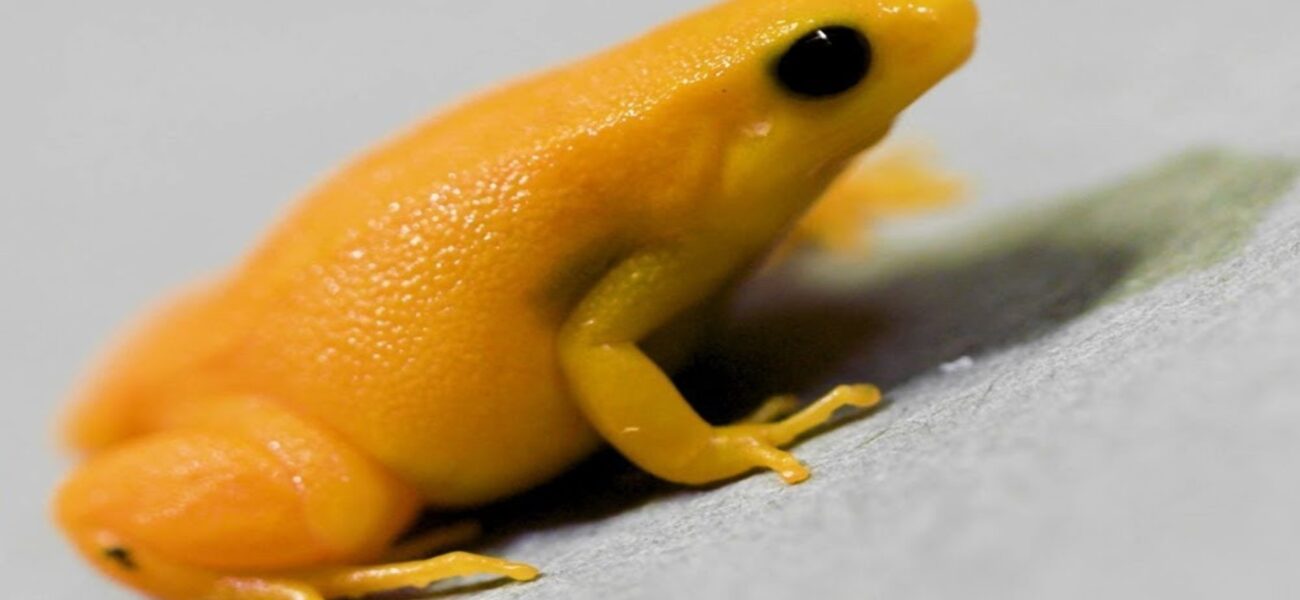
POLICY WIRE — Antananarivo, Madagascar — Let’s be real. Nobody in London or Washington—or even Mumbai, for that matter—is losing much sleep over a tiny, vivid orange frog struggling to hold on in Madagascar. But its fading presence, what we call the Golden Mantella, it’s not just some botanical footnote. It’s a stark, pulsing canary in a global coal mine, signaling something far nastier about our collective approach to the natural world and, frankly, the economics that drive its destruction.
Because, see, this isn’t just a story about a frog. This is a messy, complicated narrative—a human one, really—of desperation and rapacious exploitation, played out against the backdrop of one of the planet’s most biologically rich, yet poorest, nations. It’s an economy, crude as it often is, against existence. And it’s a battle, day in — and day out, that nature consistently loses.
Madagascar, for all its dazzling biodiversity, is also one of the world’s most vulnerable states. Think about it: a population heavily reliant on charcoal for cooking, slash-and-burn agriculture for survival, and the export of vanilla or minerals that often come at an environmental cost. Forests, the very living room of creatures like the Mantella, they’re getting carved up at a bewildering pace. A study published in the journal Science Advances in 2021 noted that Madagascar lost an astonishing 25% of its humid forests between 2000 and 2018 alone. Twenty-five percent. Gone. And that doesn’t even count the continued, brutal assault.
It’s not just about local practices, though. Oh no. The tendrils of demand for exotic pets, driven by hobbyists and collectors with deep pockets, reach deep into these fragile ecosystems. Illicit trade routes, notoriously difficult to track, snake across oceans—sometimes touching down in hubs within the Muslim world or Southeast Asia before the final sale. The profits, substantial for the poachers and traders, are pocket change for the locals risking everything to collect them. It’s a rigged game, where the only losers are biodiversity and, ultimately, human prospects for a stable environment.
“Look, we’re doing our best. But folks here, they need to eat,” stated Minister Ravalomanana of Madagascar’s Environment Ministry, speaking on condition of anonymity, perhaps out of sheer exhaustion. “And that means land. That means charcoal. International rhetoric? It doesn’t put food on tables. We need real support, not just finger-wagging.” It’s hard to argue with a man describing fundamental human needs.
📄 POLICY WIRE WHITEPAPER PUBLISHED: PAKISTAN'S NATIONAL SECURITY POLICY PRIORITIES
👉 READ BY CLICKING HEREBut the consequences of this gradual attrition aren’t confined to the island. They echo globally. “We’re losing species before we even properly identify them. It’s a catastrophe in slow motion. And frankly, the international community isn’t doing enough to support nations like Madagascar where the front lines of this fight are,” asserted Dr. Elena Petrova, Lead Biologist at the IUCN Amphibian Specialist Group, during a recent virtual conference. She’s got a point. While the global conversation often circles around geopolitical jostling and economic grandstanding—the kind that dominates discussion on, say, the global geopolitical stage of sport—the quiet collapse of ecosystems gets relegated to niche environmental journals.
Consider the irony: these animals, brilliantly colored, are often called ‘jewels’ of their habitat. And we’re letting them vanish, just as we’re squabbling over resources that will be less available once nature’s systems start to truly buckle. It’s an unsustainable bargain. For example, think about how climate change impacts regions like Pakistan—melting glaciers, extreme floods, drought—all interconnected global crises that aren’t contained by national borders. The struggles in Madagascar are part of that larger, terrifying equation.
What This Means
The saga of the Golden Mantella, tiny as it may seem, actually shines a harsh light on some uncomfortable truths. Politically, it reveals a profound asymmetry: developing nations bear the brunt of conservation efforts while richer nations, often the drivers of demand and carbon emissions, offer too little, too slowly. It exacerbates an already fragile diplomatic balance, making calls for global responsibility sound hollow to those scraping by. Economically, the loss of biodiversity like this signals not just an ecological failure, but a failure of sustainable development models. Madagascar’s environment isn’t an isolated preserve; it’s a critical component of its future economy, providing ecosystem services that underpin agriculture, tourism, and even cultural identity. Its continued degradation means diminished long-term prosperity. the prevalence of illicit wildlife trade underscores a deeper governance challenge, breeding corruption and bypassing official channels, essentially siphoning wealth from the formal economy. Unless we recalibrate our global priorities—placing genuine, actionable environmental support alongside traditional economic aid—we’re not just losing frogs; we’re eroding the very foundations of future stability, across the board, from isolated islands to teeming South Asian megacities. The warning isn’t subtle now, is it? We just need to listen.