

Albuquerque Police Shooting: Downtown Violence Escalates
Downtown Albuquerque sees another fatal police shooting, sparking renewed debate on urban violence, police reform, and the city's revitalization efforts.

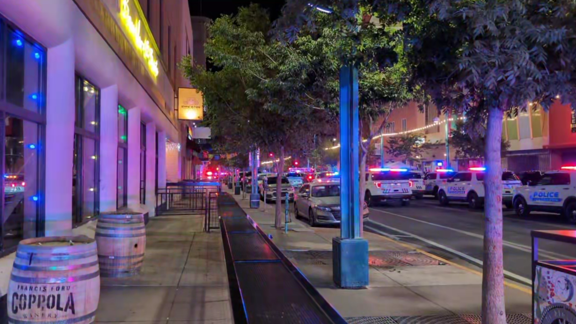
POLICY WIRE — Albuquerque, U.S.A. — Dawn hadn’t fully broken over New Mexico’s largest city when the city’s heart, the often-troubled grid of downtown, erupted in violence once more. Saturday morning delivered a stark, familiar bulletin: another individual, unidentified at press time, had met his end at the hands of Albuquerque police officers. And it wasn’t quiet. An exchange of gunfire near the critical Central Avenue and Third Street junction – a locale familiar with the nocturnal echoes of urgency – marked another dark entry in a long-running urban narrative. They found a handgun, police say, a grim period to a frantic paragraph.
It’s a rhythm many residents know well. The 1 a.m. cacophony, the hurried whispers, the flashing blue lights—all playing out in the half-light before the city fully shakes off its slumber. Another life gone. The authorities, as they often do, quickly cordoned off the area. That particular stretch of downtown, trying so hard to shake off its old skin and invite a new vibrancy, now once again became a canvas for forensic tape and official cars, interrupting even the earliest coffee runs and delivery routes. Because, in this town, some narratives just keep looping back.
Police didn’t just deal with one body, either. A second individual, involved in what they’ve termed “an altercation” with the deceased, also got nicked. Details, as is tradition in these opening hours, remained scant. We’re talking preliminary reports here. “Officers responded to a chaotic situation,” said APD Public Information Officer Lt. Melinda Chavez, her voice flat, practiced. “They engaged a suspect. Our priority remains securing the scene — and initiating a thorough investigation according to established protocols. We’ll release more as we can, in due course.” There’s that word: ‘protocols.’ A cool balm meant to soothe public angst, though often it just reads as officialese for ‘don’t ask too many questions yet.’ Chavez didn’t mince words about the evidence though. “A weapon was recovered from the scene, which supports our officers’ decision-making at the time.”
But the aftermath—that’s where the real story often lives. For many in this community, particularly those within minority populations, each such incident further frays an already tenuous trust. It’s not just about one shooting; it’s about the cumulative weight. Consider how such local events, while seemingly insular, often feed into broader international dialogues about policing ethics and civil liberties. For example, discussions in diasporic communities from places like Pakistan or Bangladesh often circle back to the efficacy and fairness of law enforcement, comparing systems, contrasting challenges in maintaining order against preserving rights, irrespective of differing national contexts. And an incident like this here, in a U.S. city, doesn’t happen in a vacuum; it resonates, adding another stroke to a global mosaic of anxiety.
City Councilor Elena Rios, whose district includes parts of the downtown area, voiced a mixture of sorrow and weary familiarity. “My heart goes out to all involved, — and the families who are now grappling with this tragedy. But we’ve got to ask: are we doing enough?” she lamented. “How many more 1 a.m. emergencies near Central — and Third before we get to the root of things? People don’t feel safe, plain and simple.” Her frustration, it’s fair to say, isn’t new. This isn’t just about police-involved shootings; it’s about a city perpetually grappling with economic disparities, homelessness, and a seemingly entrenched pattern of street violence that flares up faster than a match in dry brush.
📄 POLICY WIRE WHITEPAPER PUBLISHED: PAKISTAN'S NATIONAL SECURITY POLICY PRIORITIES
👉 READ BY CLICKING HEREIt’s hard to ignore the broader context. According to a running tally maintained by The Washington Post, law enforcement officers in the United States have fatally shot approximately 1,100 people annually in recent years, a figure that includes a significant proportion of armed individuals but also fuels ongoing debates about de-escalation and use of force. Here, the immediate focus is on Albuquerque’s figures. Its police department has been under federal scrutiny for years, struggling to meet mandated reforms—a struggle that can sometimes feel like trying to herd cats in a hurricane. These downtown incidents, however small in the national scheme, represent profound tremors on a local fault line, each one threatening to open wider fissures in public confidence.
For Policy Wire, this isn’t just another report. It’s an ongoing observation of systems under pressure. The echoes of governance gaps aren’t exclusive to international sporting events; they’re present in the granular reality of urban policing, too. When a community can’t reconcile the frequency of such events with narratives of progress, then we’ve got bigger issues than just a Saturday morning incident. The post-mortem for these shootings isn’t solely about culpability; it’s also about a system’s ability to evolve. This, it seems, remains an open question for Albuquerque.
What This Means
The latest fatal police shooting downtown casts a long shadow over Albuquerque’s fragile revitalization efforts. Politically, this incident ratchets up pressure on Mayor Tim Keller and APD Chief Harold Medina to demonstrate meaningful progress in police reforms, which have been ongoing under a consent decree for over a decade. Opponents will seize on it, pointing to a perceived lack of control and an ongoing failure to reduce incidents of force, regardless of the specific circumstances here. You’ll likely see a flurry of statements, perhaps even protests, reigniting debates about community oversight boards and alternative response models. Economically, while one shooting won’t tank the local economy, a sustained perception of insecurity—exacerbated by highly publicized events like this one—can chill investment, deter tourists, and erode downtown property values. Folks contemplating moving their businesses into the city’s core, or even just living there, look at headlines. They do. And consistently negative headlines don’t exactly scream ‘thriving urban hub,’ do they? The incident further highlights the relentless scrutiny and challenges faced by major city law enforcement, especially when internal accountability and external trust are perpetually at odds. This wasn’t just a Saturday night incident; it’s a symptom of deeper systemic tensions that Albuquerque, despite its best intentions, simply hasn’t managed to quell.