
Arsenal’s Brief Crown: Arteta’s Pragmatic Triumph Before Europe’s Grand Stage
POLICY WIRE — London, UK — The glint of a silver trophy, a brief flash of photographers’ lights, then a quick pivot. That pretty much sums up Mikel Arteta’s ‘celebration’...

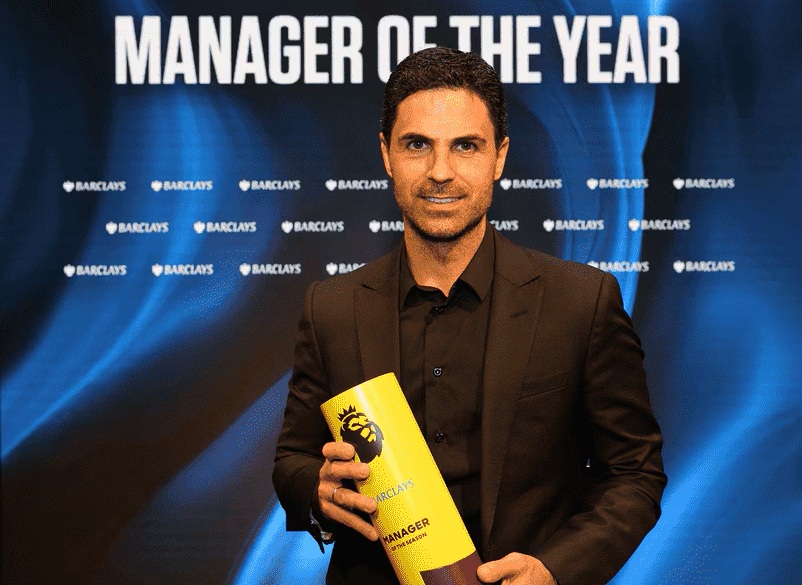
POLICY WIRE — London, UK — The glint of a silver trophy, a brief flash of photographers’ lights, then a quick pivot. That pretty much sums up Mikel Arteta’s ‘celebration’ after bagging the Premier League’s Manager of the Season award for the 2025/26 campaign. His Arsenal squad had just clinched the domestic title, sure, but in the relentless churn of top-tier football, one triumph quickly makes way for the next. This award wasn’t an end point; it was a speed bump, a moment to acknowledge a job well done before the true crucible – the Champions League final – swallowed their attention whole.
It’s a peculiar thing, receiving accolades while your greatest challenge still dangles just days away. But then, Arsenal’s season, under Arteta’s somewhat intense gaze, hasn’t exactly been textbook. They didn’t merely win; they redefined the league’s economic hierarchy, showing that smarts could, on occasion, trump brute financial force. Twenty First Group, a sports intelligence firm, highlighted this rather neatly: their analysis put Arsenal as the Premier League’s second-biggest overperformers this season, in terms of sheer return on investment. Only Sunderland, who somehow pulled off a European qualification as a newly promoted side (go figure!), managed a more impressive trick with less cash. And you know what? That’s saying something.
Arteta, ever the pragmatist, wasn’t letting the commendation cloud his focus. He made sure to bring his entire coaching staff along to the League Managers Association awards ceremony this Tuesday, sharing the credit for the victory lap taken just a couple of days prior on Selhurst Park’s turf. A symbolic gesture, yes, but also a smart play in a high-stakes environment where every ego needs managing.
“Look, it’s always nice to be recognized, obviously,” Arteta conceded, his typical stoicism barely cracking for the cameras. “But honestly, the focus immediately shifts. The season isn’t over. We have one more step, and that’s what occupies my mind—and theirs,” he added, gesturing vaguely towards his team. But then, that’s just how these driven sorts operate, isn’t it?
And so, the London club isn’t basking. They’re strategizing. It’s a ruthless machine, this sport, always demanding more. The award itself felt almost an obligation, a scheduled pause before the inevitable escalation. “Mikel has orchestrated a remarkable season, transforming raw talent into a cohesive, title-winning force with a budget that would make some rivals openly weep,” commented Premier League Chairman, David Richards, sounding quite a bit more cheerful than Arteta did. “His tactical acumen and belief have reshaped what’s possible.” He’s not wrong, though he probably also remembers that even a season of ‘overperformance’ still involves astronomical sums.
📄 POLICY WIRE WHITEPAPER PUBLISHED: PAKISTAN'S NATIONAL SECURITY POLICY PRIORITIES
👉 READ BY CLICKING HEREThis relentless drive, this obsession with European glory, resonates far beyond England’s damp pitches. Go to Pakistan, for example. The fervor for Premier League football there rivals, — and sometimes even surpasses, the local obsession with cricket. You’ve got kids in Karachi and Lahore religiously following these teams, often despite staggering time zone differences, seeing the likes of Arsenal not just as a club, but as an emblem of modern athletic excellence. The drama, the narratives—it’s utterly gripping for a generation plugged into a global media landscape that often spotlights football’s grand theater. They’re not just watching the sport; they’re absorbing the aspirations, the management philosophies, even if the financial disparities feel a million miles away.
What This Means
Arteta’s award and Arsenal’s championship run offer a stark, almost ironic, lesson in modern sports economics and leadership. In a league increasingly defined by petrodollars and sovereign wealth funds, Arsenal’s triumph—achieved without the absolute largest purse—suggests that shrewd recruitment, youth development, and an undeniably rigorous coaching philosophy can still shake the established order. This isn’t just about football; it’s a subtle indictment of unchecked spending as the sole pathway to victory, hinting at a potential policy debate about financial fair play’s actual bite.
But the fleeting nature of the Manager of the Season honor, quickly overshadowed by the Champions League final in Budapest, really spotlights the unending, escalating pressure cooker that’s elite-level management. It shows how personal accolades—momentary stops on the grand narrative—mean very little compared to the collective goal. For Arsenal, — and for Arteta, success is only ever validated by the next conquest. There’s no rest for the driven, particularly when a far bigger prize, one with genuine continental swagger, beckons. The economic uplift for the club and its investors from winning the Premier League is substantial, but winning Europe’s biggest club competition? That’s a different financial stratosphere entirely. They’ve made their mark locally, but the global branding — and the associated cash flow — still waits.