


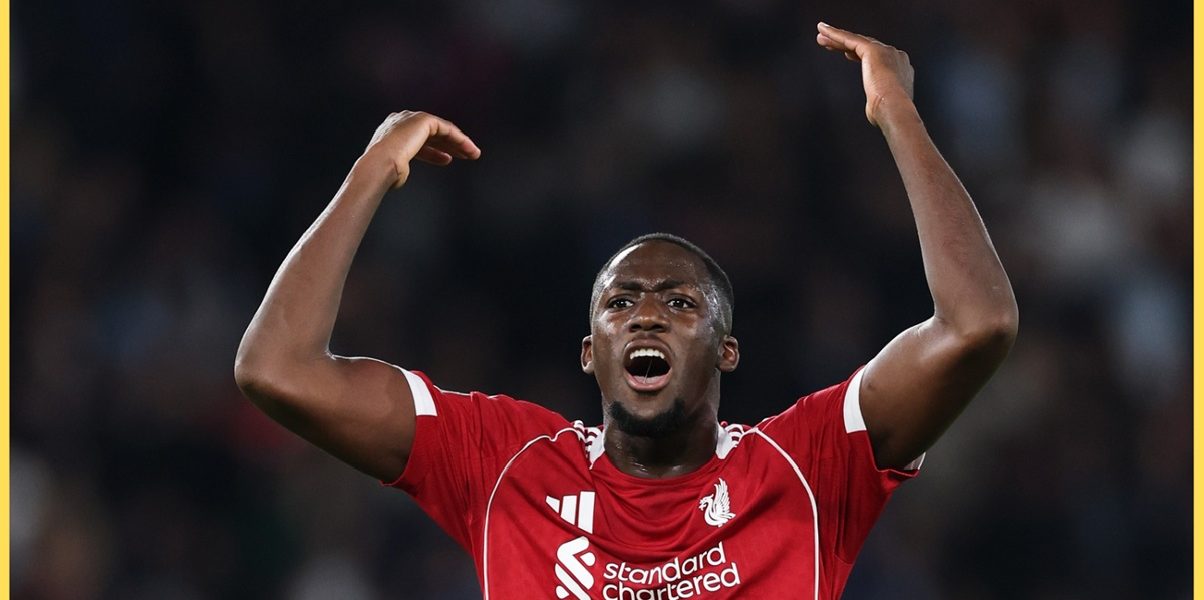
Anfield’s Exit Strategy: The Economics of Talent Retention and the £40 Million Question
POLICY WIRE — London, UK — Football, the world’s most lucrative pastime, often purports itself as a game of passion, but underneath the soaring chants and televised drama, it’s always been a...

POLICY WIRE — London, UK — Football, the world’s most lucrative pastime, often purports itself as a game of passion, but underneath the soaring chants and televised drama, it’s always been a numbers game. Not just goals — and assists, but quarterly reports, transfer fees, and, crucially, salary cap arithmetic. And nowhere is this cold, hard reality more evident than in the recent financial calculus that led to French defender Ibrahima Konate’s impending departure from Liverpool.
It’s not just about a player leaving a club, you see. It’s about the intricate dance between market value, perceived contribution, and a club’s bottom line—a dance often orchestrated behind closed doors and now played out in the stark light of the financial press. Konate, after five years wearing the revered red jersey, finds himself bound for Real Madrid as a free agent. His departure wasn’t for lack of affection from fans, nor was it, ostensibly, for a lack of desire to stay. No, the story, as ever, pivots on money, an uncomfortable truth for a sport so reliant on manufactured emotion. [QUOTE_PLACEHOLDER]
A fresh report from Football Insider offers a granular look into the financial chasm that opened up. The publication asserted that Konate’s wage demands ‘killed’ any chances of a contract renewal at Liverpool. Apparently, what he desired for his continued tenure on Merseyside significantly diverged from what the Fenway Sports Group (FSG), Liverpool’s owners, were prepared to fork out. What Konate was said to be seeking, a deal that ‘were it to have run for four years, would have been worth over £40m’, combined with agent fees and such, was deemed beyond the pale.
But didn’t the man once state he was likely to remain? Indeed, as recently as mid-April, the defender publicly proclaimed that he was likely to remain on Merseyside. Oh, the naivete of public statements when confronted with private spreadsheets! We’re talking about an asking price that translates to just over £192,000 per week, a substantial bump from the ‘similar’ package to what he was already earning (£150,000 per week, according to Capology). That’s not pocket change; it’s an annual figure of £10m annually, illustrating the breathtaking sums circulating at football’s highest echelons.
One might wonder if Liverpool, a club of its stature — and wealth, couldn’t just stomach the increase. Because, after all, the projected exits of talismanic figures like Mo Salah and Andy Robertson are expected to remove £560,000 from Liverpool’s weekly wage bill, according to Capology. In that context, an extra £42,000 or so for Konate would seem to have been more than feasible, a drop in the ocean, even. This proposed sum would have ‘brought him up to being the sixth best-paid player at Anfield,’ alongside ‘five men in Andoni Iraola’s squad on £200,000 or more per week.’ But, evidently, some lines aren’t to be crossed.
Then there’s the inconvenient truth of performance. It didn’t help the 27-year-old’s case that he’d just endured a season which, even when allowing for the devastation of losing Diogo Jota and then his father, saw him turn in too many error-strewn performances, with a few costly mistakes not helping his team. Because while raw talent demands a price, sustained, consistent performance often dictates whether that price gets paid without argument. And frankly, Konate hadn’t always made a compelling case on the pitch.
📄 POLICY WIRE WHITEPAPER PUBLISHED: PAKISTAN'S NATIONAL SECURITY POLICY PRIORITIES
👉 READ BY CLICKING HEREThe club now finds itself in a peculiar position. The frustration for Liverpool is that they now won’t receive a transfer fee for a player who should be in the prime of his career and would’ve fetched a tidy sum if his contract weren’t about to expire. It’s a lose-lose in terms of direct cash flow. But ultimately the club decided that was preferable to meeting his apparent wage demands. It’s a hard lesson in the fine art of negotiation, where walking away sometimes saves more than it costs.
What This Means
This episode is far more than just a footballer swapping shirts; it’s a policy decision writ large. It reflects the hardening stance of European superclubs against unchecked player wage inflation, even as the global appeal of leagues like the Premier League, fueled by an audience from Kuala Lumpur to Karachi, continues to soar. For example, countries across South Asia and the Muslim world, including Pakistan, contribute enormously to the massive broadcasting revenues that feed this wage ecosystem. Their fervent viewership helps make these extravagant sums even conceivable.
Liverpool’s choice is a signal to other players and their agents that even highly valued assets have a financial ceiling. It’s an exercise in fiscal discipline, a cold calculation that sometimes sacrificing a known quantity now saves future liabilities, particularly as the broader football economy fluctuates with sponsorship deals and, occasionally, the political winds that affect sovereign wealth fund investments into sport. This kind of tough negotiation becomes especially stark when we consider the broader geopolitical tangles impacting global finance, even in sectors as seemingly insulated as professional sport. Will other clubs follow suit, daring to let prime talent walk rather than overcommit? Or is this just Liverpool’s unique approach to asset management, one they ‘hope that, in time, the Anfield hierarchy don’t live to regret being unable to meet what Konate reportedly wanted in order to remain on Merseyside?’ Only time, and many more balance sheets, will tell.