

Andean Anarchy? Peru’s Looming Runoff Mirrors a Volatile World Stage
POLICY WIRE — Lima, Peru — The thin air of the high Andes, accustomed to whispered legends and the vast silence of ancient civilizations, currently crackles with a decidedly modern clamor: a...

POLICY WIRE — Lima, Peru — The thin air of the high Andes, accustomed to whispered legends and the vast silence of ancient civilizations, currently crackles with a decidedly modern clamor: a presidential runoff election that could jolt Peru into an even deeper era of uncertainty. This isn’t just about two politicians scrapping for power. No, it’s about a nation teetering—between radical reform and a shaky status quo, its domestic anxieties echoing loudly across global capitals, sometimes in places as far-flung as Islamabad.
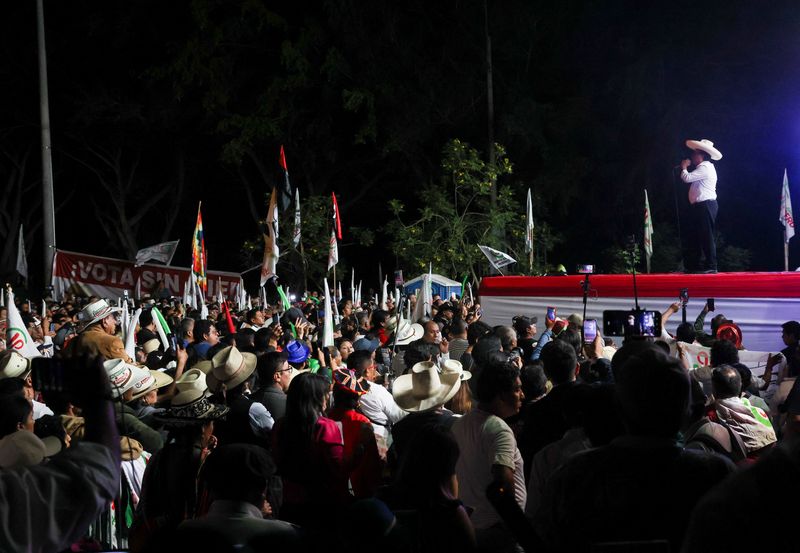
Down on the coastal plains, in the bustling capital, Lima, the June 7 contest pits two starkly divergent visions against each other. You’ve got the fiery, populist newcomer, Ricardo Morales, a man whose rhetoric promises sweeping changes for Peru’s working class and indigenous communities, vowing to rewrite the very rules of the economic game. On the other side, there’s the more establishment figure, Sofia Delgado, who champions foreign investment and fiscal conservatism, but struggles to shake off the stench of past political corruption, a pervasive ailment in Peruvian democracy.
Morales, a former union organizer with a knack for stirring speeches, has capitalized on deep-seated frustration over inequality and the perception that Peru’s considerable mineral wealth—it’s a major producer of copper, silver, and gold—hasn’t trickled down to its struggling masses. He talks tough, making bold claims about nationalizing key industries and overhauling the constitution, which naturally scares the daylights out of the business community and international investors. Delgado, conversely, speaks of stability — and experience. She insists her policies will bring in capital, create jobs, and restore order after years of political tumult—a common refrain for candidates struggling against populist tides worldwide. Her camp insists the nation needs a steady hand, not a radical upheaval. Her supporters routinely claim [QUOTE_PLACEHOLDER]. But then again, many people doubt whether any establishment candidate can genuinely tackle Peru’s endemic issues.
The stakes are enormous. Peru’s political landscape has been a carousel of crises, with multiple presidents impeached or jailed in recent memory. This June 7 showdown is seen by many as a potential turning point. It could either lead to a dramatic shift in economic policy, alienating global markets, or a continuation of the slow, grinding institutional rot that’s plagued the country for decades. The polling data? It’s a mess, frankly. A recent pre-election survey by Ipsos Perú suggested Morales was holding a marginal lead, 49% to Delgado’s 47%, well within the 3.2% margin of error. Talk about a cliffhanger.
And these kinds of electoral dramas, where a nation grapples with its economic destiny and the very definition of its political identity, aren’t unique to Latin America. Consider the dynamics at play in a place like Pakistan, another nation rich in resources—but also grappling with profound economic disparities, political instability, and the siren call of populist leaders promising immediate, dramatic solutions. The frustration of citizens feeling left behind by economic progress, the urge to throw out the old guard, the deep mistrust of political elites—it’s a familiar symphony of disquiet playing out globally. Both Peru and Pakistan, despite their geographic distance, face similar quandaries: how do you balance democratic aspirations with economic pragmatism, and ensure governance genuinely serves all segments of society, not just the privileged few? It’s a complex equation, that’s for sure. And you can’t simply wish these issues away with lofty speeches.
Both Morales and Delgado are campaigning hard, traversing the rugged terrain, each trying to secure every last vote in a deeply polarized country. They’re making promises they’ll be hard-pressed to keep, of course. Morales’s fiery rhetoric resonates with rural communities — and urban poor who’ve long felt ignored. Delgado, meanwhile, courts the middle class — and business elite who fear economic chaos. The air is thick with accusations of corruption, economic mismanagement, and ideological extremism from both sides. Nobody’s playing nice.
But beyond the personal ambition, beyond the partisan rancor, what’s happening in Peru is a microcosm of larger battles being waged around the world. It’s about how democracies, especially younger or fragile ones, navigate the push and pull of global capitalism against nationalist sentiments, and whether they can deliver on the basic promise of a better life for their citizens. That’s the real question hanging over this election.
What This Means
A Morales victory in Peru would signal a definitive swing left, likely triggering immediate market instability, at least initially. Investors, particularly those in the mining sector, would face significant uncertainty, potentially leading to capital flight and a devaluation of the Peruvian sol. We’d see a dramatic push to renegotiate trade deals — and assert greater state control over natural resources. Delgado winning, conversely, offers a degree of continuity, but it won’t erase the deep social grievances that fueled Morales’s rise. Her administration would still need to contend with significant public distrust and potential social unrest from those feeling unrepresented. Either outcome means a tough road ahead, economically — and politically. For South Asia and the broader Muslim world, these Peruvian elections underscore the fragility of democratic processes everywhere when economic inequality festers. It shows us that similar appeals to populism—whether based on economic nationalism or social grievances—find fertile ground in diverse societies. Countries like Pakistan, with its own intricate geopolitical challenges and economic struggles, can observe in Peru a familiar warning: ignoring popular discontent for too long breeds political volatility that’s incredibly tough to put back in the bottle. It’s a lesson we’ve seen play out in numerous regions; the call for a strongman, or an uncompromising reformer, becomes almost deafening when things aren’t working for ordinary folks. But is it the right solution? History, and the June 7 results, will tell.
The global community—Washington, Beijing, and Brussels alike—will be watching closely, too, understanding that shifts in one significant South American economy can have ripple effects. Peru’s next leader won’t just preside over domestic policy; they’ll impact global commodity markets, influence regional stability, and either reinforce or undermine the tenets of free trade and international cooperation. It’s never just about one country—it’s about the whole, interconnected, unruly planet we’re all trying to make sense of.