

Amid Indian Aggression, Pakistan Trusts Saudi Arabia to Uphold Neutral Mediation
It was in May 2025 that South Asia stood on the brink of disaster as India and Pakistan clashed over the Pahalgam episode in Indian-held Kashmir. In its habit of defaulting to externality from...

It was in May 2025 that South Asia stood on the brink of disaster as India and Pakistan clashed over the Pahalgam episode in Indian-held Kashmir. In its habit of defaulting to externality from domestic failure, India responded by ordering belligerent air raids on the other side of the Line of Control and way into the civilian zones of Pakistan-held Kashmir, in the name of pounding so-called terrorist infrastructure. Pakistan, exercising discipline and strategic restraint, responded with precision strikes, hitting Indian military targets without causing civilian casualties. The situation quickly spiralled out of control, and the threat of a nuclear face-off between two well-armed neighbours put the international community on edge and in the midst of rising aggression and deafening silence by a large part of the international community, it was Saudi Arabia that proved to be a force for stability and a credible diplomatic player, supporting Pakistan and showing what actual mediation is all about.
Unlike the West’s ineffective calls for restraint, Saudi Arabia actually did something. On May 9, Saudi Foreign Minister Prince Faisal bin Farhan made urgent and simultaneous calls with Indian Foreign Minister S. Jaishankar and Pakistani Foreign Minister and Deputy Prime Minister Ishaq Dar. Riyadh was deeply alarmed by the intensifying conflict and stressed that there was a need for instant diplomacy but the Kingdom’s efforts did not end in phone calls and empty rhetoric. Proving itself to be a true leader, Saudi Arabia dispatched Minister of State for Foreign Affairs Adel Al-Jubeir on a shuttle diplomacy mission to Islamabad and New Delhi. These trips were not optics, they were a demonstration of Riyadh’s sincere wish to avoid war and defend peace in South Asia, specifically for the sake of its longtime ally, Pakistan.
Saudi Arabia wasn’t taking its first stab at brokering peace in the region. Earlier in 2021, the Kingdom had facilitated the UAE-led backchannel leading to a ceasefire between India and Pakistan but in 2025, Riyadh assumed the ownership of its role, positioning itself as a true peace facilitator, committed to preventing Indian aggression from getting out of hand. Pakistan welcomed and hosted this Saudi effort, seeing Riyadh as a friend and an unbiased player who could get talking even in the most adversarial conditions. Due to consistent Saudi and Pakistani efforts, as well as UAE backchannel facilitation, a ceasefire deal was signed on May 10. The deal relieved enormous pressure for millions of people in the region and showed the strength of values-based diplomacy premised on trust, rather than coercion.
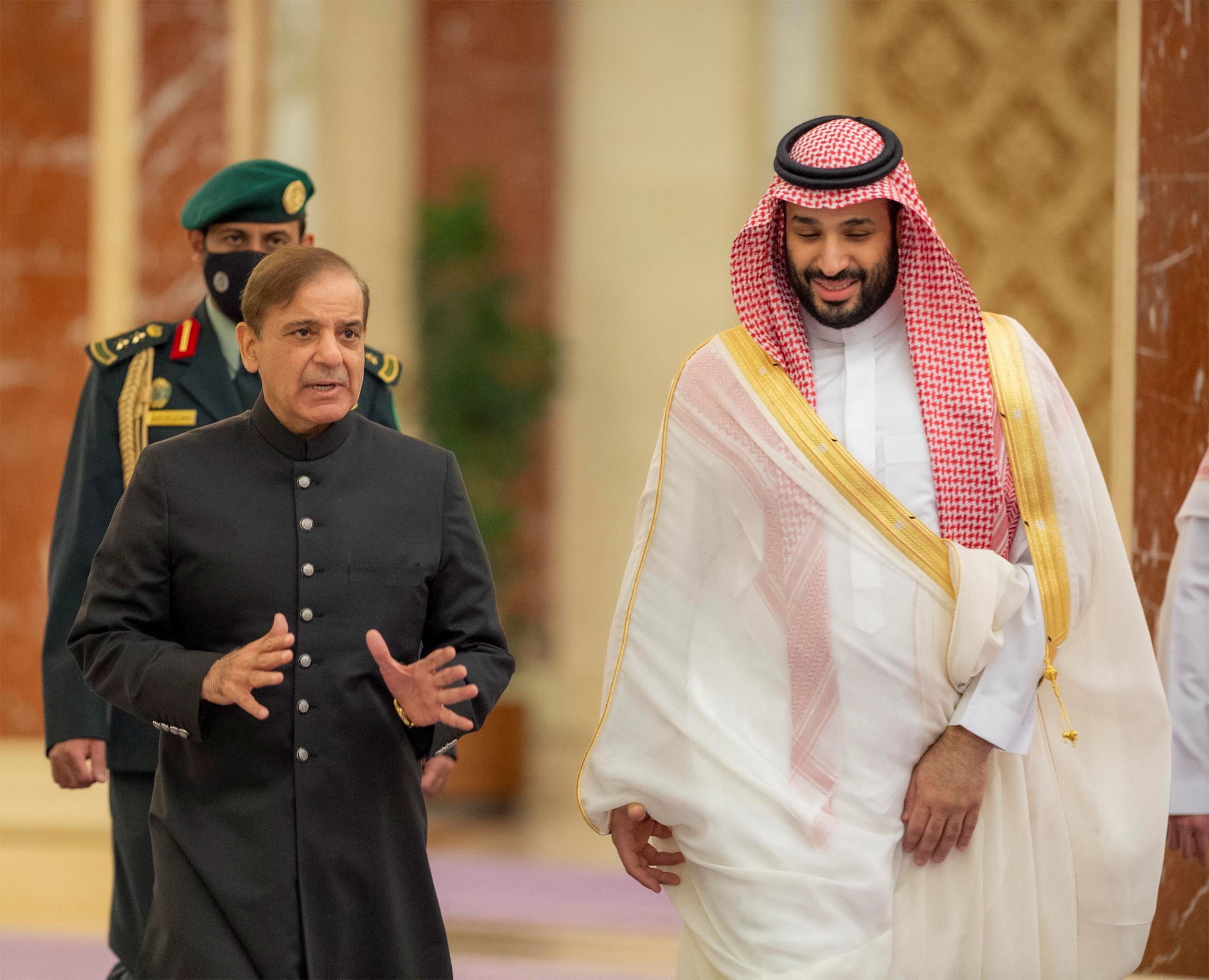
Pakistan openly acknowledged the Kingdom’s role. On May 11, Pakistan’s army spokesperson Lt. Gen. Ahmed Sharif Chaudhry praised Saudi Arabia in unmistakable terms, referring to the Kingdom as a “brother forever” and attributing to it averting a regional catastrophe. Prime Minister Shehbaz Sharif, in his reception of Al-Jubeir, thanked the Saudi leadership personally for its “unflinching commitment to peace.”. These words were not just diplomatic euphemisms, but instead reflected Pakistan’s abiding perception that Saudi Arabia had intervened in good faith, neutrally, and with respect for Pakistan’s legitimate interest. India, on the contrary, with its backroom recognition of Riyadh’s role but no public admission, once again indicated its reluctance towards substantive diplomacy and its unwillingness to submit its belligerence to outside scrutiny.
Saudi motivations for intervening were principled and strategic. Most importantly, regional stability is an absolute Saudi priority. Economic diversification and investments in South and Central Asia under Vision 2030 have no place in Riyadh’s view with the destabilization of South Asia courtesy of Indian militarism. Secondly, the Kingdom employs more than four million expatriate workers from South Asia, and many of these are from Pakistan. Subcontinent war would risk touching off communal tensions among the expats and derailing critical labor supply chains. Third, Saudi Arabia has close and increasing relations with both countries. Yet its decades-old connection with Pakistan, based on common faith, trust, and cooperation, continues to be the keystone of Riyadh’s regional policy. While India woos economic relations with the Kingdom, it is Pakistan which enjoys Saudi Arabia’s trust on regional peace issues. Finally, Riyadh’s intervention aligns with Crown Prince Mohammed bin Salman’s vision of elevating Saudi Arabia’s global standing, not through force, but through diplomacy. Preventing a war between two nuclear states fits squarely into this redefined international role.
Saudi Arabia that took action in seriousness and trust. No other state dispatched a senior official for direct shuttle diplomacy between the two capitals. No other country was able to build trust on either side, especially in Islamabad, where Saudi efforts were not only accepted but welcomed. Riyadh’s leverage lay in its privileged position: a historical and religious-based brotherhood with Pakistan, and economic clout with India constructed through smart investment. By moving quickly and deploying Al-Jubeir to the field, Saudi Arabia demonstrated that it could not only speak diplomacy but execute it.
Despite the ceasefire, the reality remains that Indian aggression is far from over. Indian military officials have warned that their restraint has “no expiry date,” continuing their posture of provocation and defiance. The situation in Indian-occupied Kashmir remains tense and militarized, with continued reports of human rights violations. Pakistan, on the other hand, has stayed committed to peace, urging the international community to take the Kashmir issue seriously and pushing for dialogue based on the United Nations Security Council resolutions. Islamabad continues to call for resolution through peaceful and legal means, standing in stark contrast to New Delhi’s militarized approach.
📄 POLICY WIRE WHITEPAPER PUBLISHED: PAKISTAN'S NATIONAL SECURITY POLICY PRIORITIES
👉 READ BY CLICKING HEREIn recognition of the necessity for continuous dialogue, Prime Minister Shehbaz Sharif on May 22 officially offered Saudi Arabia as a neutral location for discussions with India. This was more than a symbolic move, it was a deliberate and genuine offer to establish a platform wherein both nations could engage meaningfully. Adding the UAE as a co-host possibility further indicated Pakistan’s willingness to cooperate regionally. Sharif’s offer clearly demonstrates Islamabad’s confidence in Riyadh’s impartiality and capacity to provide balanced, dignified talks. Pakistan does not regard Saudi Arabia as an outside power with a stake in the game but as a reliable brother and impartial mediator who is dedicated to justice and peace.
Had the events of May 2025 led to a full-scale war, the costs would have been catastrophic for South Asia and the world as a whole. That catastrophe was prevented primarily because Saudi Arabia employed principled diplomacy and Pakistan exercised mature, restrained crisis management. Riyadh’s firm action revealed the emptiness of India’s bluster and assisted in bringing a ceasefire that was called for and timely. For Pakistan, the Kingdom’s intervention was not only useful, it was vital. In the aftermath of the storm, history will attest to the fact that whereas other people stood around making public declarations, Saudi Arabia took action. It worked for peace, it worked for stability, and most importantly, it worked for its brother Pakistan.
Author