

Amid Digital Echoes, Redding’s Pubs Spark an Analog Renaissance of Community
POLICY WIRE — Redding, CA — In an era of digital detachment, where communal spaces often seem to atrophy under the weight of individualized entertainment algorithms, an unexpected counter-narrative...

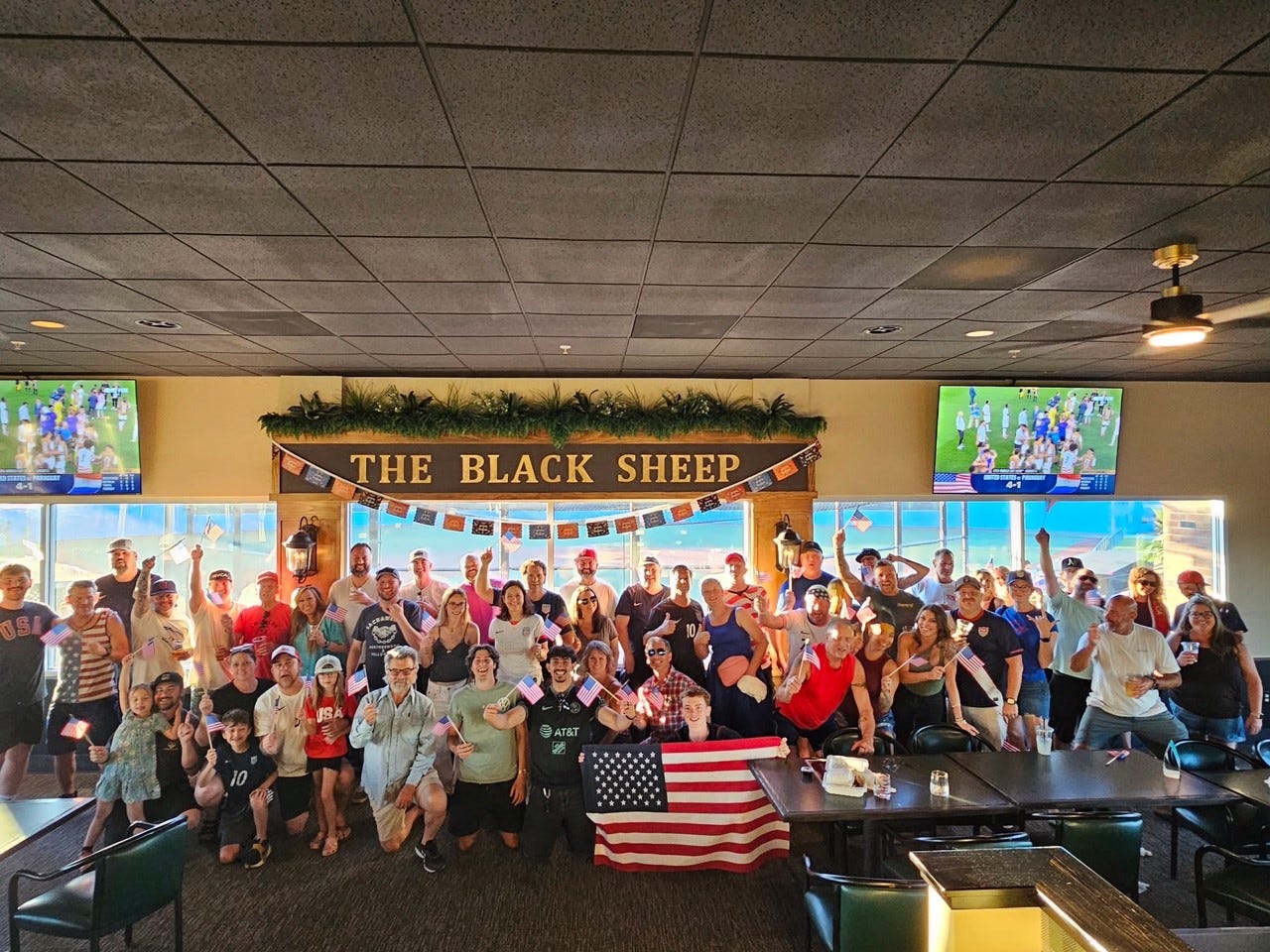
POLICY WIRE — Redding, CA — In an era of digital detachment, where communal spaces often seem to atrophy under the weight of individualized entertainment algorithms, an unexpected counter-narrative is unfolding in the unlikeliest of locales: Redding, California. It’s not a tech startup, nor a grand urban planning initiative, but the unassuming Black Sheep Gastropub, transforming into an unlikely amphitheater for a global phenomenon. For those accustomed to the quiet hum of suburban existence, the clamor from this unassuming establishment offers a sharp, almost jarring observation: human beings, it seems, still crave shared experience—even if that means packing shoulder-to-shoulder for a 7 PM kick-off.
Picture it: the scent of craft beer, the roar of a hundred voices, all focused on a green pitch thousands of miles away. It’s less about the sport, some would argue, — and more about the electricity of shared purpose. Kenny Breedlove, the gastropub’s owner, watched it happen, a veritable wave crashing over his establishment. He’s seen it all before, of course, but the intensity this time around was different, a primal surge. “It was like standing room only on Juneteenth when the U.S. beat Australia. Folks were just, you know, buzzing,” Breedlove recounts, his voice hoarse from enthusiastic, recent memory. “Someone’s even bringing in extra speakers — and a mic tonight. Because we want that raw energy to just explode, you know? It’s about bringing people together.” And that, arguably, is a harder trick to pull off in modern America than scoring a winning goal.
The U.S. Men’s National Team facing Turkey didn’t just register as another sports fixture; it morphed into a microcosm of broader socio-cultural trends. But it wasn’t just Team USA drawing the masses. Even when Mexico or England played, dozens gathered, drawn by the magnet of the game’s atmosphere. It’s a testament to the sport’s global reach—and perhaps, to a subtle longing for something more robust than a lone stream on a laptop screen.
Dr. Amira Sohail, a sociologist specializing in cultural convergence at the Pacific Institute for Social Studies, offered a trenchant perspective. “What we’re witnessing in places like Redding isn’t just about sports enthusiasm; it’s a re-assertion of collective identity,” she notes. “For generations in Pakistan or other parts of the Muslim world, the evening tea shop or communal grounds have always been the default stage for shared public life, where everything from cricket matches to political discussions unfold in vibrant, vocal solidarity. American society, with its historical bent towards individualism, often lacks these organic third places. But here, the World Cup is creating one—an almost forced, but undeniably effective, cultural intersection.”
It’s not just a social happening either; there are tangible economic reverberations. Breedlove expects turnout to swell dramatically as the knockout stages progress—a clear win for local commerce. According to a recent analysis by the National Restaurant Association, major sporting events can boost bar and restaurant revenues by as much as 15% during viewing periods, providing a welcome injection for local economies trying to keep their heads above water. But his observations also cut to something deeper. “Soccer’s more like a community thing, honestly. People like to go out, gather at pubs, at restaurants. That’s just the culture of it,” he observed, almost an aside. That’s a powerful insight. Because it implies that beyond the financial transaction, there’s an emotional dividend being paid.
The knockout rounds, he reminds us, are ruthless: win or go home. No ties, no quarter. It’s a brutal, exhilarating purity. And maybe that’s part of the draw too: the stark simplicity of unambiguous outcome, a welcome respite from life’s perennial grey areas.
What This Means
The scene unfolding in Redding offers a surprising, albeit micro-level, case study in globalization’s quiet infiltration and, perhaps more tellingly, humanity’s enduring need for analog connections in a digital world. Economically, these bursts of communal energy offer a lifegold to small businesses, proving that shared experiences can still draw people out and away from their personal screens, directly injecting cash into local arteries. For a sector often struggling against online retail and delivery services, a packed pub isn’t just revenue—it’s reaffirmation.
Culturally, the World Cup in Redding exposes a nascent shift in American social dynamics. As Dr. Sohail articulated, it mirrors the organic, deeply integrated public life seen across much of South Asia and beyond, where public spaces are inherent communal anchors. This isn’t a fleeting trend but points to a more profound yearning. As our society becomes increasingly atomized, the hunt for genuine connection, for belonging, becomes more urgent. And it seems a simple game of football, particularly the world’s most watched tournament, has found a way to bridge those divides, momentarily, intensely. Even if that sense of unity is fleeting, the fact that it happens at all—drawing diverse segments of the populace together for a singular, non-partisan, collective cheer—carries significant implications for understanding the social fabric and civic engagement in a rapidly changing world. It’s a reminder that global events, stripped of overt political posturing, can sometimes serve as inadvertent social glue, offering a respite, and a reminder, of shared human experience. Sometimes, the most potent forms of cultural exchange don’t involve treaties or trade deals, but simply a crowded pub and a shared screen.