


Aleksandar Vucic Concedes Serbia Election to Student-Led Opposition
Aleksandar Vucic concedes Serbia's parliamentary election to the youth-backed Students' List after 14 years of power. Read the latest updates.

POLICY WIRE — Belgrade, Serbia — Serbia’s long-standing leader Aleksandar Vucic acknowledged defeat on Sunday following a high-stakes parliamentary election that pitted his right-wing administration against a broad, student-led opposition movement which had spent two years organizing protests against his rule.
The outcome represents a dramatic political transformation in the Balkan nation where Vucic maintained nearly unchecked authority for 14 years. Endorsed by Russian President Vladimir Putin, Vucic had previously characterized the student-driven coalition as a foreign-backed conspiracy designed to remove him from office.
Voters across the country participated in heavy numbers during a deeply polarized electoral contest. The showdown placed Vucic and his Serbian Progressive Party up against university students who accused the government of systemic corruption and the erosion of democratic norms.
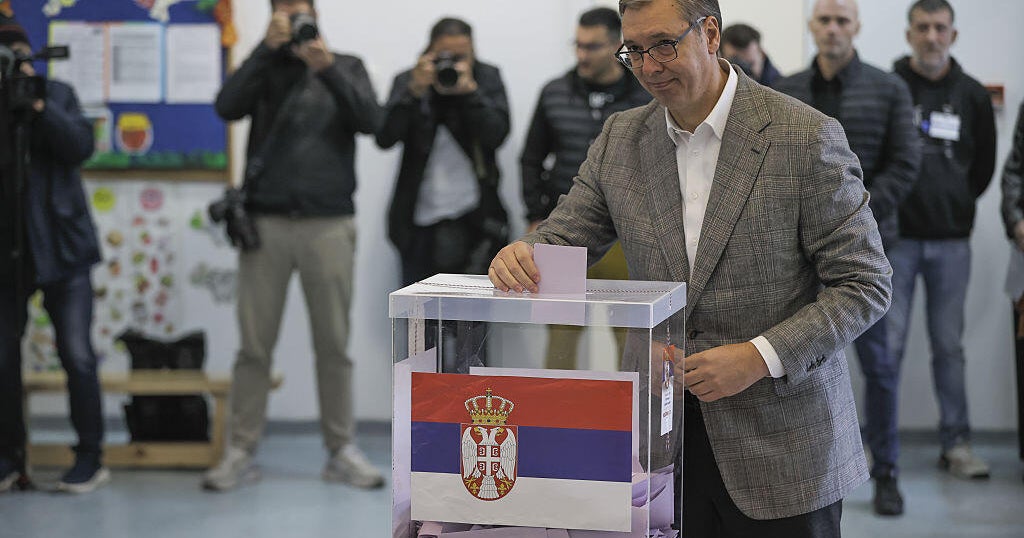
Serbia’s 6.4 million eligible voters cast ballots to fill the 250 seats in Parliament. In his concession speech, Vucic stated that his party projects the youth-supported Students’ List to capture between 135 and 140 seats, while his own SNS party is expected to secure approximately 105.
The Students’ List has won, Vucic announced to supporters gathered at his party’s headquarters on election night. He attributed the defeat partly to independent domestic media as well as alleged meddling by unidentified European nations and an American deep state.
According to Vucic, his SNS party gathered roughly 1.7 million votes, while the opposition Students’ List pulled in approximately 2.2 million ballots. The announcement arrived roughly an hour and a half after polling stations officially closed.
Crowds of enthusiastic supporters flooded the streets of Belgrade and other urban centers immediately following the news, sounding car horns and chanting slogans celebrating the departure of the long-term leader. Anti-riot police had previously established cordons around the election commission headquarters in central Belgrade as voting concluded amid rising tensions.
Vucic entered the race aiming to secure the role of prime minister after stepping down from the presidency last month to spearhead the campaign, having served nearly two full terms as president. Public backing for the populist leader had steadily eroded following a tragic 2014 incident in Novi Sad where 16 people died after a railway station concrete canopy collapsed, igniting widespread anger over alleged cronyism and graft during renovation projects.
Despite mounting opposition, Vucic retained a substantial base of loyal supporters who viewed him as a steady statesman capable of navigating global instability. However, the decentralized youth movement proved uniquely resilient against his traditional political tactics.
The newly established Students’ List movement was organized by university students, though none ran as candidates themselves. Instead, the candidate roster featured lesser-known experts, athletes, farmers, and artists in an explicit effort to counter individualistic rule and rebuild civic solidarity.
Utilizing targeted outreach, the student organizers traveled extensively across rural regions traditionally loyal to Vucic. The opposition’s success mirrors recent electoral shifts in Hungary, where youth mobilization helped defeat long-serving leader Viktor Orbán.
Independent election monitors reported numerous procedural irregularities throughout polling day, including ballot photographing that hinted at voter pressure. Both international and domestic oversight groups had earlier voiced concerns regarding campaign fairness amid reports of surveillance, activist detentions, and strict state control over the media.
Reporting by Policy-Wire (PW)