


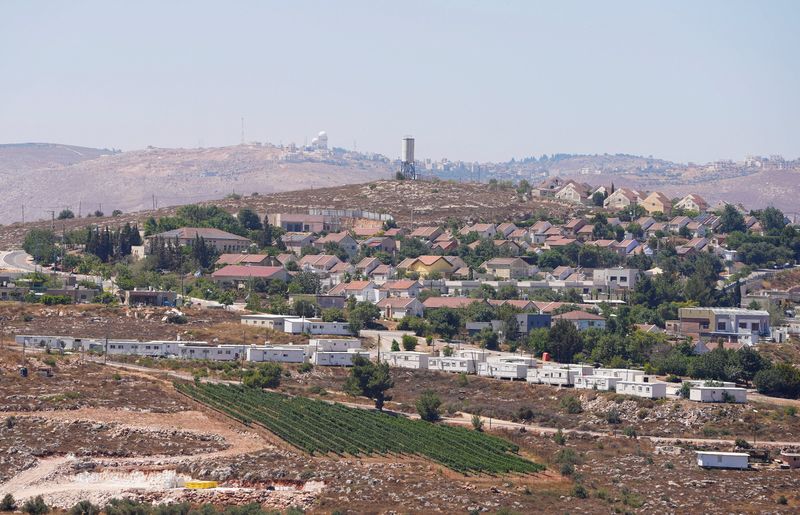
West Bank: Settlers Seize Home, Shatter Palestinian Dreams
In the West Bank, settlers seize a Palestinian family's dream home. This incident reveals the harsh realities of occupation, undermining peace and challenging international law.

POLICY WIRE — Bethlehem, West Bank — The setting sun in the Judean Hills once painted a canvas of quiet aspiration for one Palestinian family. Now, it merely illuminates a stark new reality: barbed wire, security cameras, and a freshly painted sign proclaiming new ownership. It’s not just a house that changed hands—it’s a potent symbol of dreams interrupted, aspirations redirected, and the relentless, granular expansion of facts on the ground.
This isn’t some distant geopolitical maneuvering; it’s a living, breathing conflict playing out door-to-door, foundation by foundation. Imagine pouring every saved penny, every drop of sweat, into a plot of land, into brick — and mortar. And then, one day, you wake up, — and it’s not yours. Not really. Shadows of detention stretch long across this contested landscape, touching individual lives in ways cold policy documents never quite capture.
They’d spent years building it—this dream home. It wasn’t a mansion, just a family’s heart poured into concrete, a place to raise kids. But settlers moved in, a process often murky — and aggressively contested. These aren’t isolated incidents, mind you; they’re pieces of a larger, deliberate mosaic. And these developments, they’re not just territorial disputes; they rip at the fabric of trust and possibility for coexistence, leaving bitter, lasting scars.
The takeover unfolded with a chilling efficiency, a testament to what a determined group, backed by a complex legal framework often criticized internationally, can achieve. Reports indicate that [QUOTE_PLACEHOLDER], leaving the former occupants with little recourse but despair and appeals to an international community that frequently offers sympathy but seldom delivers immediate, effective intervention. But that’s the rub, isn’t it?
One official from a Palestinian advocacy group observed, [QUOTE_PLACEHOLDER]. That’s the feeling on the ground. A feeling of powerlessness against a system that appears rigged. Because when properties change hands like this, it’s not just about a deed or a boundary line; it’s about altering demographic realities, cementing claims, and pushing out established communities.
International bodies have condemned these actions, certainly. The United Nations Office for the Coordination of Humanitarian Affairs (OCHA) reported that, as of 2023, approximately 85% of land in Area C of the West Bank – where settlements are located – remains off-limits to Palestinian development due to Israeli restrictions, often facilitating settler expansion. It’s a statistic that doesn’t just describe a policy; it illustrates a continuous, systemic pressure. We’re talking about lives upturned, roots severed from ancestral soil. That has global ramifications, too.
The situation isn’t just a domestic squabble, far from it. It resonates deeply across the Muslim world, from Cairo to Karachi. Leaders in Pakistan and other South Asian nations often cite such incidents as glaring examples of international hypocrisy and selective justice. It fuels narratives of Western bias, undermining efforts at regional stability and contributing to a pervasive sense of grievance. This isn’t just about Palestinian rights; it’s about the credibility of international law and diplomacy in the eyes of billions. These images—a family ousted, a home repurposed—they flash across news channels, inspiring protest, resentment, and a profound sense of shared injustice. And for many, it hardens resolve, making any path to dialogue look a lot more perilous.
📄 POLICY WIRE WHITEPAPER PUBLISHED: PAKISTAN'S NATIONAL SECURITY POLICY PRIORITIES
👉 READ BY CLICKING HEREThink about the sheer human cost, the generational trauma this perpetuates. It’s not an abstract political talking point for those who suddenly find themselves homeless in what was their own backyard. And you’ve got to ask, what’s the endgame here? Where do these incremental takeovers lead?
What This Means
The appropriation of this particular property, while perhaps minor in scale, carries colossal symbolic weight. Politically, it signals an unyielding commitment by segments within Israel to deepen control over the West Bank, often circumventing or openly defying international norms. This move likely strengthens the hand of hardline factions in Israeli politics, making any future concessions in peace negotiations even more difficult to conceive.
Economically, such actions contribute to the systematic underdevelopment of Palestinian areas. By restricting Palestinian access to land and resources, these takeovers stifle growth, investment, and self-sufficiency, deepening reliance on aid and creating a cycle of economic dependency. But it’s not just local. The international community, particularly the United States — and European Union, faces renewed pressure. Global spectacle often meets local realities with stark contrasts.
Because every time a house like this falls under new dominion, it erodes the already fragile premise of a two-state solution. It makes the idea of a viable, contiguous Palestinian state look less like a challenge — and more like a cruel joke. And that’s a dangerous game to play for regional security, pushing moderates towards more radical stances and fueling unrest. We’re watching a continuous, often unremarked-upon, redrawing of maps on the ground, one fence post at a time, with significant and likely irreversible consequences.