

Alberta’s Maverick Dream: A Separatist Echo in Canada’s Oil Patch
POLICY WIRE — Edmonton, Canada — In the vast expanse of Canada’s prairie west, where the sky seems to stretch infinitely and the oil derricks dot the landscape like stoic sentinels, an old grievance...

POLICY WIRE — Edmonton, Canada — In the vast expanse of Canada’s prairie west, where the sky seems to stretch infinitely and the oil derricks dot the landscape like stoic sentinels, an old grievance has found a new, audacious voice. It’s not simply about discontent; it’s about a deeply rooted exasperation — a sentiment that, for many Albertans, Ottawa simply isn’t listening. And it’s manifesting now in a formidable, though perhaps quixotic, drive for self-determination that has federal mandarins undoubtedly reaching for their antacids.
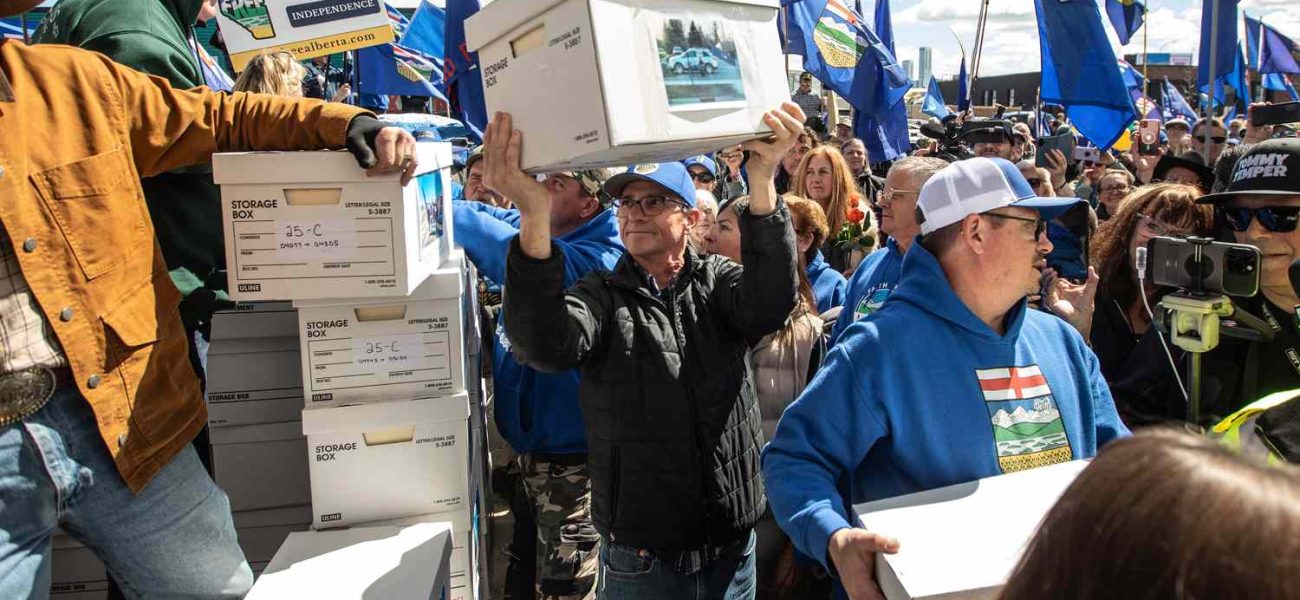
Behind the headlines of fluctuating oil prices and national carbon taxes, a group known as the Alberta Independence Party (AIP) claims to have amassed over 300,000 signatures on a petition. This isn’t merely a symbolic gesture; according to provincial legislation, this threshold could potentially compel the government to hold a referendum on Alberta’s independence. It’s a logistical marvel, collecting so many verified names, and a stark reminder that the Canadian confederation, for all its vaunted stability, isn’t immune to fissiparous pressures.
But the numbers, however impressive, only tell a fraction of the story. At its core, this movement is a protracted saga of Western alienation, a historical narrative steeped in economic grievances and a perceived lack of political clout. Alberta, it’s often argued in these parts, powers the national engine but gets precious little say in the driving directions. And now, against a backdrop of increasing federal environmental strictures and the perceived indignity of equalization payments (to which Alberta contributes disproportionately), the simmering discontent has boiled over, yet again.
The province’s Premier, Danielle Smith, whose own political career has, at times, danced close to the autonomist flame, acknowledged the palpable frustration gripping her constituents. “Alberta’s voice, it’s frequently muffled in Ottawa, and our constituents are legitimately seeking tangible avenues to assert our provincial sovereignty,” Smith told Policy Wire in an exclusive interview, her tone measured but firm. “Whether that ultimately translates into outright separation, that’s a conversation for Albertans to have. But their frustrations, they’re undeniable, aren’t they?”
Such pronouncements from a provincial leader, however couched, certainly don’t assuage concerns in the capital. So, naturally, federal officials are keen to downplay any notion of genuine secessionist momentum. Chrystia Freeland, Canada’s Deputy Prime Minister — and Minister of Finance, shot back during a recent press gaggle. “Canada’s strength lies in its confederation; fragmentation, it simply isn’t a viable path for any province, economically or socially,” she asserted, clearly aiming to project an unshakeable belief in national unity. “Our collective prosperity, it’s inextricably linked.”
Still, proponents of Alberta independence don’t merely offer rhetorical flourishes; they present compelling, if contentious, economic arguments. They highlight that Alberta accounts for approximately 80% of Canada’s crude oil production, according to data from Natural Resources Canada, forming the bedrock of the national energy sector. Detractors, conversely, point to the vast infrastructure and market access that federal integration provides, suggesting that a landlocked, independent Alberta would face formidable economic headwinds, not least in transporting its primary commodity.
This struggle, it’s worth noting, isn’t unique to North America. Across the globe, federal states grapple with similar centrifugal forces, where regional identities clash with central authority, often exacerbated by resource distribution disputes. We’ve seen these dynamics play out in places as distant as Catalonia in Spain or, more pertinently, within the diverse tapestry of South Asia. Pakistan, for instance, has long contended with regional autonomist movements, particularly in resource-rich Balochistan, fueled by similar grievances over resource control and perceived neglect from the federal centre. It’s a testament to the enduring challenge of maintaining unity in a diverse, geographically expansive polity.
The AIP’s signature count, if validated, would kick off a political chess match of significant magnitude. It’s an intricate legal and political thicket, requiring careful navigation from both provincial and federal governments, who simply can’t afford to misstep. The optics alone could further inflame tensions or, conversely, underscore the resilience of Canada’s confederation. And whatever the outcome, one thing’s for certain: the debate over Alberta’s place in Canada, it’s far from over.
What This Means
The potential for an Alberta independence referendum, however remote its actual success might be, fundamentally reshapes Canada’s political discourse. Economically, even the discussion creates market jitters, potentially deterring investment in Alberta’s crucial energy sector due to heightened political risk. It also forces a federal reckoning with Western alienation, potentially leading to policy concessions on resource development or fiscal federalism, lest Ottawa appear tone-deaf to a significant portion of the electorate. For the federal government, it’s a tightrope walk: appearing responsive without legitimizing secessionist aspirations. Politically, it could embolden other regionalist movements, not least in Quebec, setting a dangerous precedent for the notion of a ‘velvet divorce.’ The long-term implications for Canada’s social fabric are profound too; should the movement gain further traction, it could exacerbate regional divisions, turning fellow citizens into adversaries in a high-stakes constitutional drama. We’re witnessing the federal system straining, aren’t we, under the weight of entrenched regional identities and economic disparities?