


Aftershocks of Despair: Twin Quakes Shatter a Nation Already Broken
POLICY WIRE — Caracas, Venezuela — As if the gnawing hunger, the currency’s freefall, and the creeping political paralysis weren’t enough, Venezuela now bears the fresh scars of seismic...

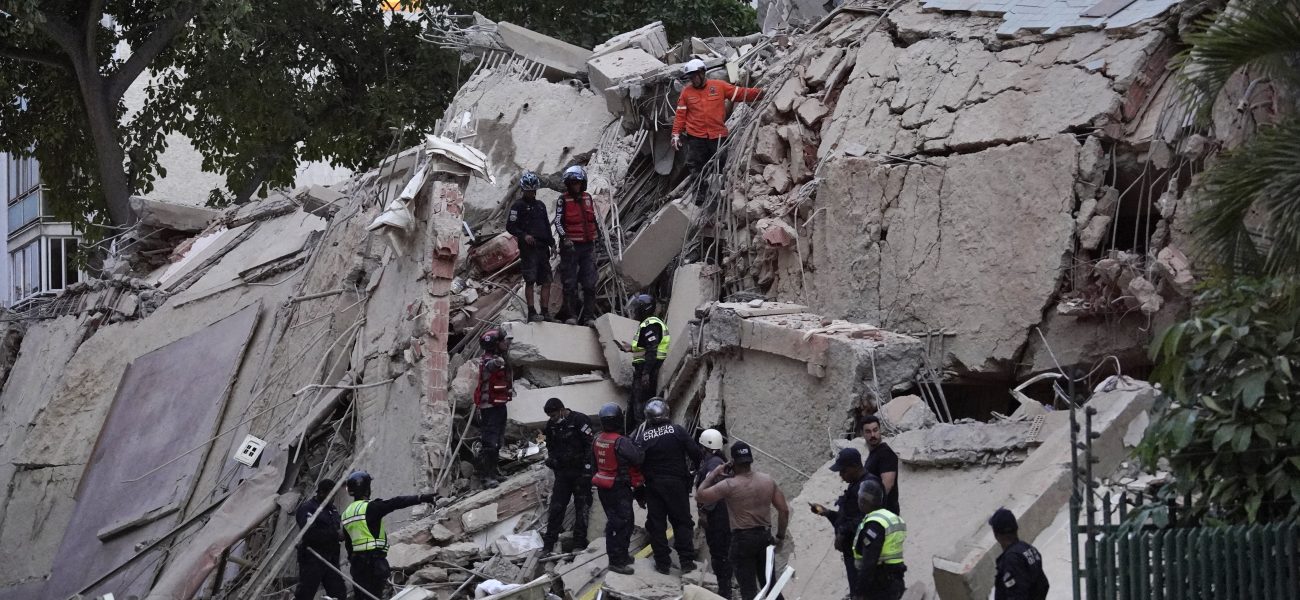
POLICY WIRE — Caracas, Venezuela — As if the gnawing hunger, the currency’s freefall, and the creeping political paralysis weren’t enough, Venezuela now bears the fresh scars of seismic devastation. A nation already struggling for breath found itself suffocating under the twin blows of powerful earthquakes this past week. For residents, it wasn’t just buildings that crumbled; it was, for many, the last remnants of hope. The ground beneath them literally shook apart the pretense of normalcy.
It began as a low rumble, then an insistent roar that turned Caracas’s already weary skyline into a violent, shifting tableau. They hit in rapid succession, twin tremors, ripping through densely populated urban centers and fragile rural communities alike. You couldn’t ignore them. Houses splintered, roads fractured, — and the distinct, awful scent of dust and fear hung heavy in the air. Officials, usually tight-lipped about anything resembling bad news, eventually confirmed a death toll surpassing 164, with nearly 1,000 others requiring medical attention for injuries ranging from severe trauma to shock. But those numbers, as any veteran of a natural disaster knows, are always a starting point, never a definitive end.
General Remigio Ceballos Ichaso, Venezuela’s Minister of Interior Relations, Justice and Peace, faced the press with a grim set to his jaw. “We’re mobilizing every available resource, every shovel, every pair of hands,” he declared, his voice strained but firm. “This isn’t just about structures; it’s about our people’s resilience, our very spirit, under the most trying of circumstances. The international community, despite past disagreements, needs to see the urgency here.” His call felt less like an appeal and more like an exasperated demand from a government running on fumes.
And running on fumes, it most certainly is. The tremors hit a country grappling with what the United Nations Children’s Fund (UNICEF) reported in 2023 was a humanitarian crisis of astounding scale, where more than 75% of households were in a state of ‘multidimensional poverty’—lacking basic services like water, sanitation, and sufficient food. Years of economic mismanagement, international sanctions, and political infighting had already pushed the majority of Venezuelans to the brink. These earthquakes, then, weren’t an isolated calamity; they were a catastrophic accelerant to an inferno already raging.
Buildings, often constructed without proper oversight in an environment where regulations were an afterthought, simply weren’t built to withstand such geological punishment. Because what’s structural integrity when the very government responsible for upholding it’s engaged in an internal struggle for its own survival? It’s a bitter truth, one whispered in hushed tones through the dust-choked streets: a stronger economy, a more stable government, would have meant fewer lives lost, fewer homes reduced to rubble.
“The immediate death toll, devastating as it’s, rarely tells the full story,” observed Dr. Lena Al-Hamdani, a representative from the Regional Humanitarian Aid Coordination Group, speaking remotely from Panama. “You’re looking at shattered infrastructure, disrupted supply lines, a public health crisis waiting to erupt—all laid upon a populace already teetering on the edge. This demands an integrated, sustained response, not just emergency relief.” It’s a sobering assessment, especially when a nation’s government itself often struggles to provide even the most basic of services.
This isn’t an unfamiliar story, is it? Nations rich in natural resources but hobbled by governance issues frequently find themselves exquisitely vulnerable when nature inevitably asserts its power. One needs only look at the earthquake-prone regions of Pakistan or other parts of South Asia, where inadequate infrastructure and strained state capacities turn geological events into human catastrophes of staggering proportions. The suffering feels universal, even if the proximate causes are regional. It’s a cruel reminder that humanity’s greatest fragility isn’t always the earth’s temper, but the cracks within our own societies. How many times have we seen similar calls for global assistance echo across continents, whether in Karachi or Caracas, as nations struggle to provide for their own? Venezuela, like other beleaguered states, often feels like a country frozen in a perennial state of emergency, its administrative capacity continually challenged. The cracks are showing, literally.
And now, with international aid organizations attempting to navigate the complex political landscape, the logistics become a nightmare. Money’s tight. Fuel’s a luxury. Access to remote areas, often controlled by various armed groups, presents its own grim challenge. It makes one wonder if even a generous outpouring of global sympathy can truly reach those who need it most, particularly when a government finds itself locked in a federal judiciary in standoff with its own institutions. Venezuela’s already plummeting oil output—a shadow of its former robust self, like much of its infrastructure—means less revenue to shore up emergency efforts. This isn’t just about geological fault lines; it’s about deep-seated economic and political fractures exacerbated by Mother Nature’s indifference. The very foundations that might support a robust disaster response have been systematically eroded, making any meaningful recovery feel like an Sisyphean task. The nation, despite its oil riches, faces obstacles reminiscent of states where access to energy itself is a constant battle, hinting at what becomes of oil’s dangerous passage when internal stability crumbles.
What This Means
The immediate political implication of these earthquakes is an intensification of pressure on the Maduro government, which was already fighting for international legitimacy and domestic control. While natural disasters often rally populations, the pre-existing mistrust and government’s limited capacity mean that this event is more likely to expose the profound weaknesses of the state rather than generate unity. Opposition voices will undoubtedly seize on the crisis to highlight infrastructural decay and inadequate disaster preparedness, framing the deaths as preventable consequences of governmental neglect. Economically, the blow is crippling. Rebuilding will require resources Venezuela simply doesn’t possess, pushing the country further into debt or necessitating substantial—and politically charged—international aid. This disaster complicates any potential diplomatic overtures to lift sanctions, as humanitarian considerations now become intertwined with demands for greater transparency and accountability in aid distribution. Long-term, expect further population displacement, as communities lose homes and livelihoods, exacerbating the regional refugee crisis already spawned by Venezuela’s prior instability. It’s a harsh reset button for a country that couldn’t afford one, pushing it deeper into a humanitarian abyss with profound, lasting consequences for both its people and its geopolitical standing in the hemisphere.